
A dedicated designer
One expert owns your journey from first sketch to final boarding pass.
Welcome to our specialist guide to exploring Laos. From iconic landmarks to hidden local gems, our destination experts share their curated insights to help you craft the perfect tailor-made holiday.
Every journey with My Way Travel is individually designed around your dates, pace, and passions. Read on for our recommendations on must-see highlights, insider tips, and practical travel advice.

“Exploring Laos with private guides and hand-picked boutique stays uncovers a depth and intimacy that ordinary group travel simply cannot provide.”
Luang Prabang is the former royal capital of Laos, a UNESCO World Heritage town of golden temples, French-colonial houses and saffron-robed monks, set where the Nam Khan meets the Mekong. It is small enough to walk, and slow enough that you will want to. Here are the best things to do in Luang Prabang.
Each dawn, around 5:30 to 6:30am, monks walk in silent procession to collect offerings of sticky rice. Watch respectfully from a distance, dress modestly, do not use flash, do not block the monks’ way and never touch them. Be careful of vendors selling rice to tourists; local guides can arrange a more respectful way to take part.
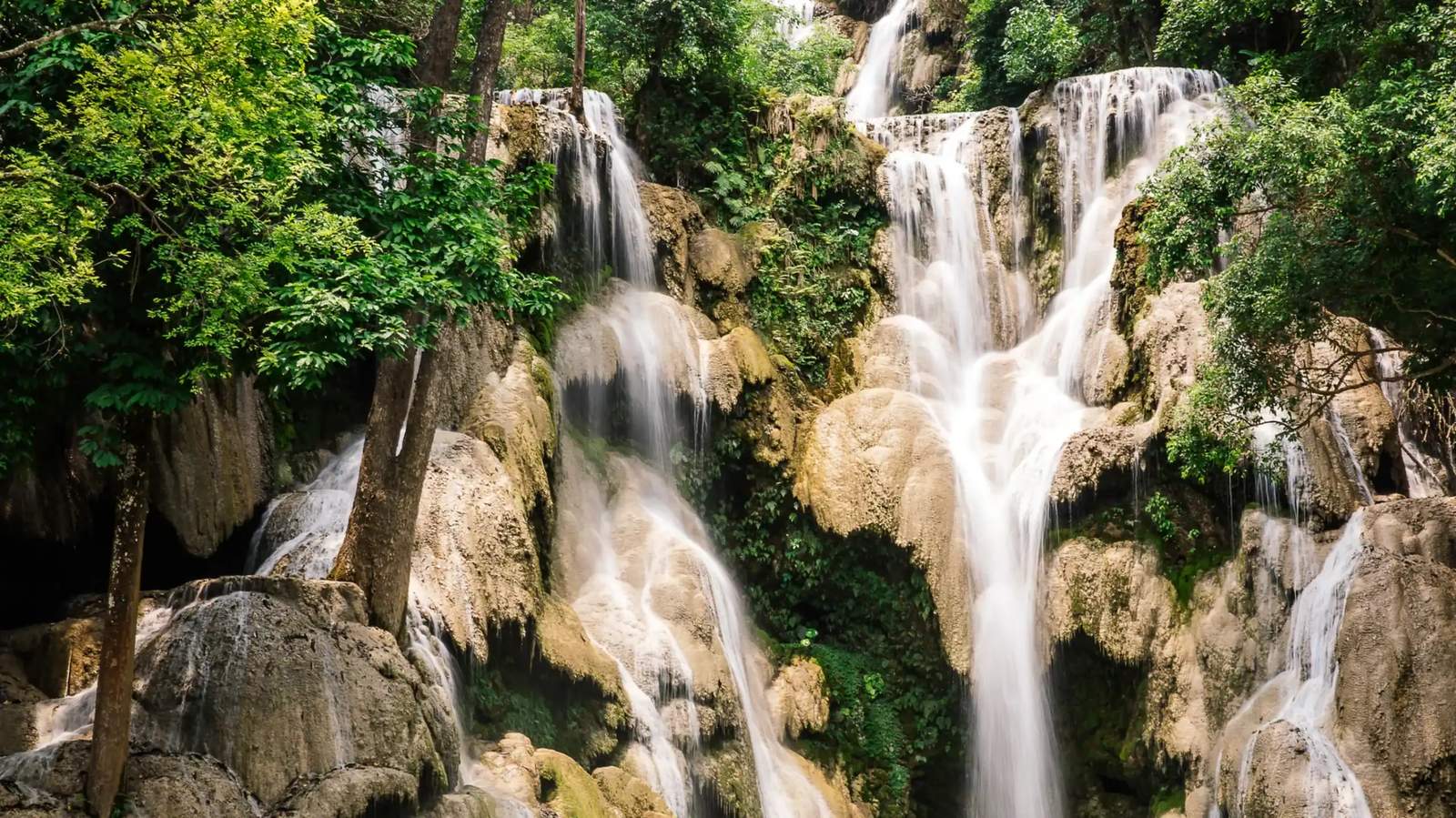
Turquoise pools step down a forested hillside about 30 km south of town, roughly 45 to 60 minutes by tuk-tuk or car. Swim in the lower pools, then climb the steep path beside the main drop for a view from above. Entry is a small fee, and a nearby sanctuary cares for rescued Asiatic black bears. Go early to beat the crowds.
A climb of a few hundred steps up this 150-meter hill in the center of town rewards you with a panorama over the Mekong, the old town and the surrounding mountains. Go in the late afternoon, since sunset is crowded.
Wat Xieng Thong is the finest temple in Luang Prabang, with sweeping roofs and glass-mosaic walls. The former royal palace, now the National Museum, shows the lives of Laos’s last kings.
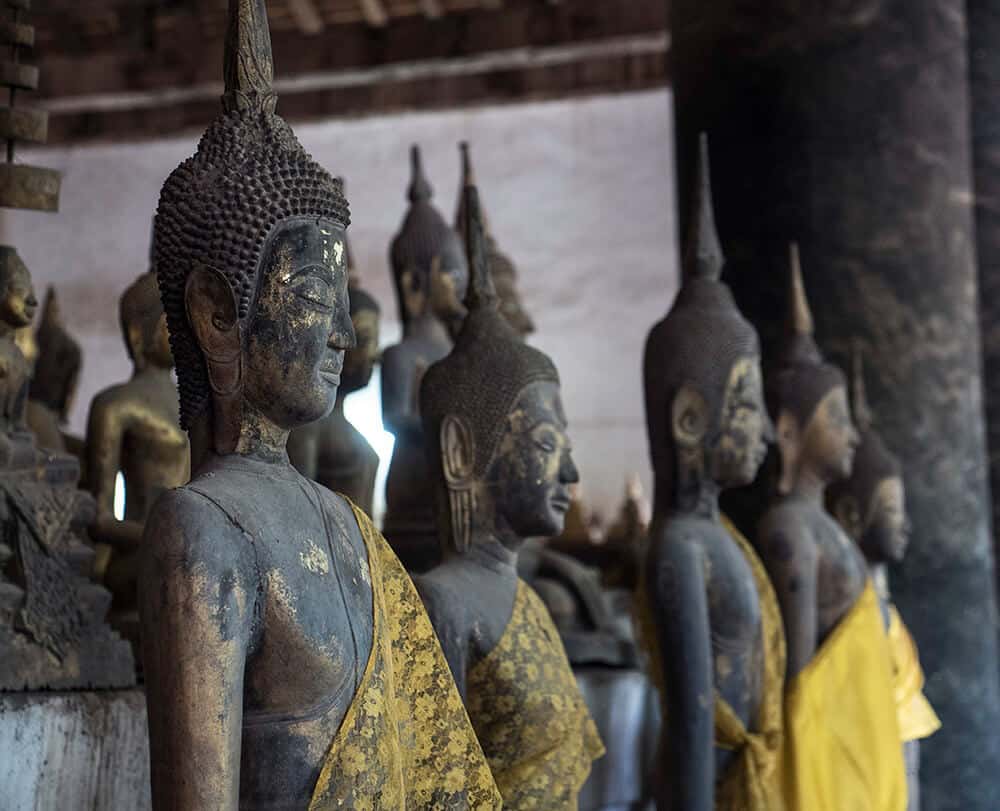
A boat ride about 25 km upriver from town takes you to two limestone caves where the Ou River meets the Mekong. They hold thousands of gilded Buddha images left by pilgrims. Many tours also stop at Ban Xang Hai, a village known for rice whisky.
Each evening the main road, Sisavangvong, fills with stalls selling hand-woven textiles, paper lanterns, silver and crafts. Bargain gently and look for quality weaving from the villages.
A slow longtail boat at golden hour is one of the most relaxing ways to see the town.
Learn to cook Lao dishes such as laap and sticky rice with jeow dips, or visit weaving workshops that support local artisans.
Choose sanctuaries that focus on observation and care; avoid riding. Our specialists recommend only operators with a clear welfare policy.
Less famous than Kuang Si, the Tad Sae falls are reached by a short boat ride on the Nam Khan river. They are at their best in the rainy season and early dry season, when the water is high, and can be almost dry by the hot months. Check before you go.
This small, excellent museum explains the textiles, costumes, beliefs and festivals of Laos’s many ethnic groups. Visit early in your stay: it adds meaning to everything you see in the markets and villages later.
After the alms round, walk to the morning market in the lanes near the old palace, where villagers sell river fish, forest vegetables, herbs, buffalo skin and sticky-rice baskets. It is a vivid glimpse of daily life, so be discreet with your camera.
In the dry season, local families build bamboo footbridges across the Nam Khan, charging a small toll to cross to the villages and cafés on the far bank. The bridges are washed away by the rains each year and rebuilt when the water drops.
A small but powerful exhibition explains the legacy of the bombs dropped on Laos during the Indochina wars, and the work of clearing them from farmland. It is an important counterpoint to the town’s peaceful image.
The baci is a Lao ritual for welcoming guests, marking journeys and calling back the wandering spirits of the soul. Elders tie white cotton strings around your wrists and wish you good luck. Some hotels and cultural centers arrange a ceremony for visitors.
For a historic, luxurious stay, our favorites include the Amantaka, the Rosewood Luang Prabang, the Sofitel Luang Prabang and Belmond La Résidence Phou Vao.
Luang Prabang’s airport has flights from Vientiane and from regional hubs such as Bangkok and Hanoi. The Laos–China Railway links the town with Vang Vieng and Vientiane in a few hours. The slowest and most scenic approach is the two-day Mekong boat from the Thai border at Huay Xai. In town, the old quarter is best explored on foot or by bicycle. Tuk-tuks take you to the falls and outlying sights.
Food to try: Luang Prabang has its own specialties, including khai paen, crispy sheets of Mekong river weed with sesame, or lam, a herby stew with eggplant and a woody chili, and Luang Prabang sausage. Eat by the river in the evening and finish with Lao coffee from the Bolaven Plateau.
The peninsula of the old town, between the Mekong and the Nam Khan, is the most atmospheric base, with temples, cafés and the night market on your doorstep. Hotels on the Nam Khan side are quieter, with views of the bamboo bridges and the forested far bank. Resorts on the hills just outside town, such as the Sofitel and La Résidence Phou Vao, are a short tuk-tuk ride away and offer more space, gardens and pools.
Yes, in the marked pools on the lower tiers. Bring swimwear and shoes with good grip, and change in the facilities near the pools.
Light clothing that covers your shoulders and knees for temples and the alms round, plus a warm layer for cool mornings from December to February.
November to February is cool and dry, the best time to visit. March and April can be smoky and hot from farmers’ burning, and the rainy season runs roughly May to October. See our best time to visit Laos.
Many visitors, including most US passport holders, can obtain a visa on arrival at Luang Prabang’s airport, usually paid in cash in US dollars; fees reported by travel guides range from about US$35 to US$40, so confirm the current amount and requirements before you fly.
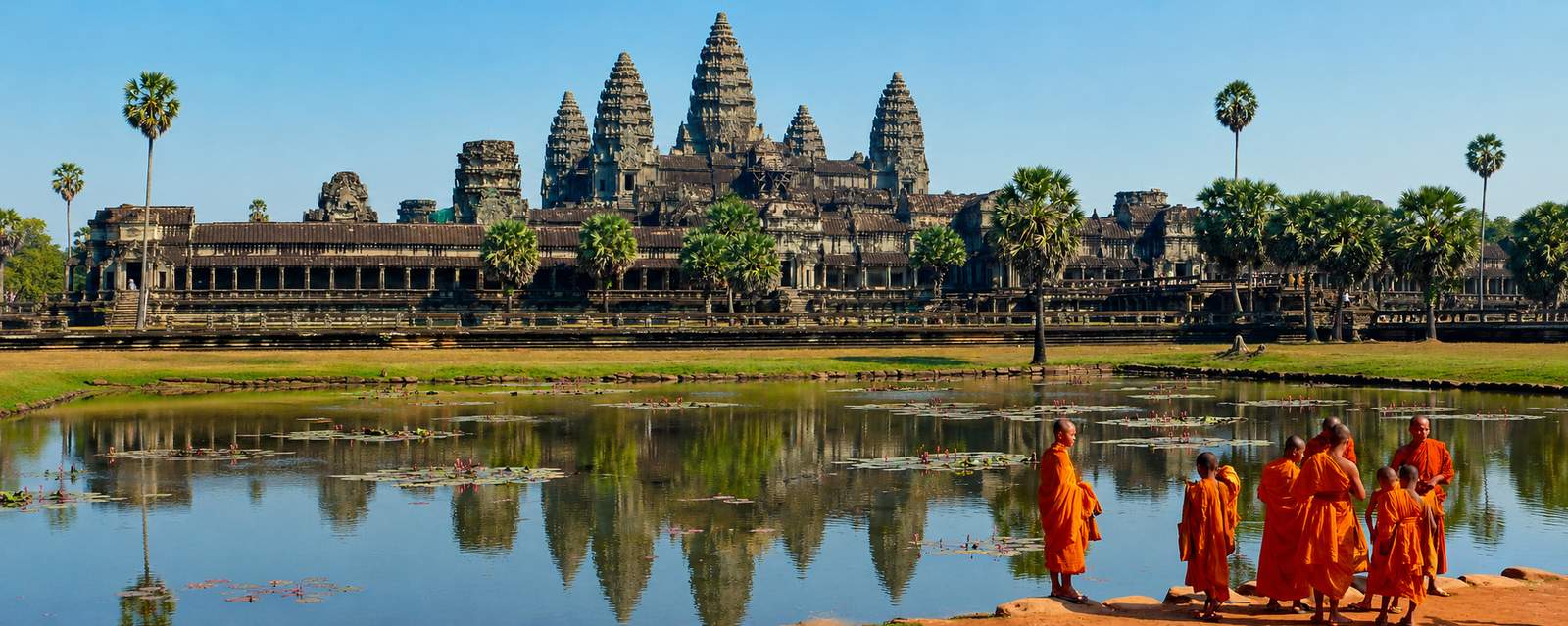
Explore our private Laos tours, read about Luang Prabang, or compare it with Cambodia’s temples in our guide to Luang Prabang vs Siem Reap.
Planning more of the trip? Read our guides to Things to See in Laos and Laos Facts for Travelers.
Three days for the town, Kuang Si Falls and the Pak Ou Caves.
Yes, especially if you want a slow, culturally rich stop.
Around 5:30 to 6:30am; observe quietly from a distance.
About 30 km, 45 to 60 minutes by tuk-tuk or car.
November to February.
Yes. The Laos–China Railway links Luang Prabang with Vang Vieng and Vientiane in a few hours. Book tickets in advance.
Yes. It is calm and walkable, and children usually love Kuang Si Falls, the bear rescue center, the boat ride to the Pak Ou Caves and the night market.
The ideal travel season generally falls during the dry, sunny months. Speak with our specialists for month-by-month climate recommendations tailored to your specific itinerary.
Yes, 100%. All My Way Travel itineraries are bespoke. We adjust durations, accommodations, activities, and destinations to suit your exact preferences.
All our private journeys are 100% tailor-made around your dates, pace, and passions. Talk to our specialists to customize any itinerary below or create a completely bespoke trip.
Direct advice: +1 (888) 898-0888 • Free tailor-made proposal
Why journey with us
One expert owns your journey from first sketch to final boarding pass.
Closed doors open quietly: ateliers, cellars, private homes, museums after dark.
A real voice at 3 a.m. in any time zone, whatever the question.
Bonded, insured and transparent about every dollar before you commit.
Begin
Tell us how you dream of travelling. Within 24 business hours, an in-country specialist will curate the first sketch of your route — bespoke ideas first, commitment never.
Concierge available 24/7 across all Asian time zones · New York registered