
A dedicated designer
One expert owns your journey from first sketch to final boarding pass.
Welcome to our specialist guide to exploring Thailand. From iconic landmarks to hidden local gems, our destination experts share their curated insights to help you craft the perfect tailor-made holiday.
Every journey with My Way Travel is individually designed around your dates, pace, and passions. Read on for our recommendations on must-see highlights, insider tips, and practical travel advice.

“Exploring Thailand with private guides and hand-picked boutique stays uncovers a depth and intimacy that ordinary group travel simply cannot provide.”
Chiang Rai is Thailand’s quieter northern city, and it offers some of the most unusual temples and art in the country. Most travelers arrive from Chiang Mai, see the highlights in a day or two, and leave wishing they had stayed longer. Here are the best things to do in Chiang Rai and how to fit them together.
Chiang Rai’s signature sight is a gleaming, hand-sculpted temple of white plaster and mirror glass, designed by the artist Chalermchai Kositpipat. About 15 km south of the center, it is best visited early, before the tour buses arrive. Foreign visitors are reported to pay 200 THB from 1 January 2026, which includes the Cave of Art; Thai residents are free, and some children and seniors are exempt. Cover your shoulders and knees, and take off your shoes before entering the main hall. Opening hours differ between sources (roughly 8am to 5pm or 5:30pm), so confirm locally.
A vivid blue and gold temple in the city, about 3 km north of the center. Entry is free, and it is generally open from about 7am to 8pm. It is a working temple, so dress modestly. Go early or late in the day for fewer visitors.
Not a temple but an open-air art complex by the late national artist Thawan Duchanee, with dozens of dark teak buildings filled with animal horns, skins and carvings. It is reported to charge around 80 THB, with opening hours of about 9am to 5pm and a lunch break from 12pm to 1pm, so plan to arrive in the morning. It sits north of the center, on the opposite side of town from the White Temple.
A large working farm and park with tea fields, a tram, zip line and bike rental, about 6 km from the White Temple. It is reported to be open roughly 9am to 6pm. Allow at least two hours; it is easiest with your own car or a driver.
A relaxed walk around the clock tower, local cafés and the evening market. Good for dinner after a day of temples.
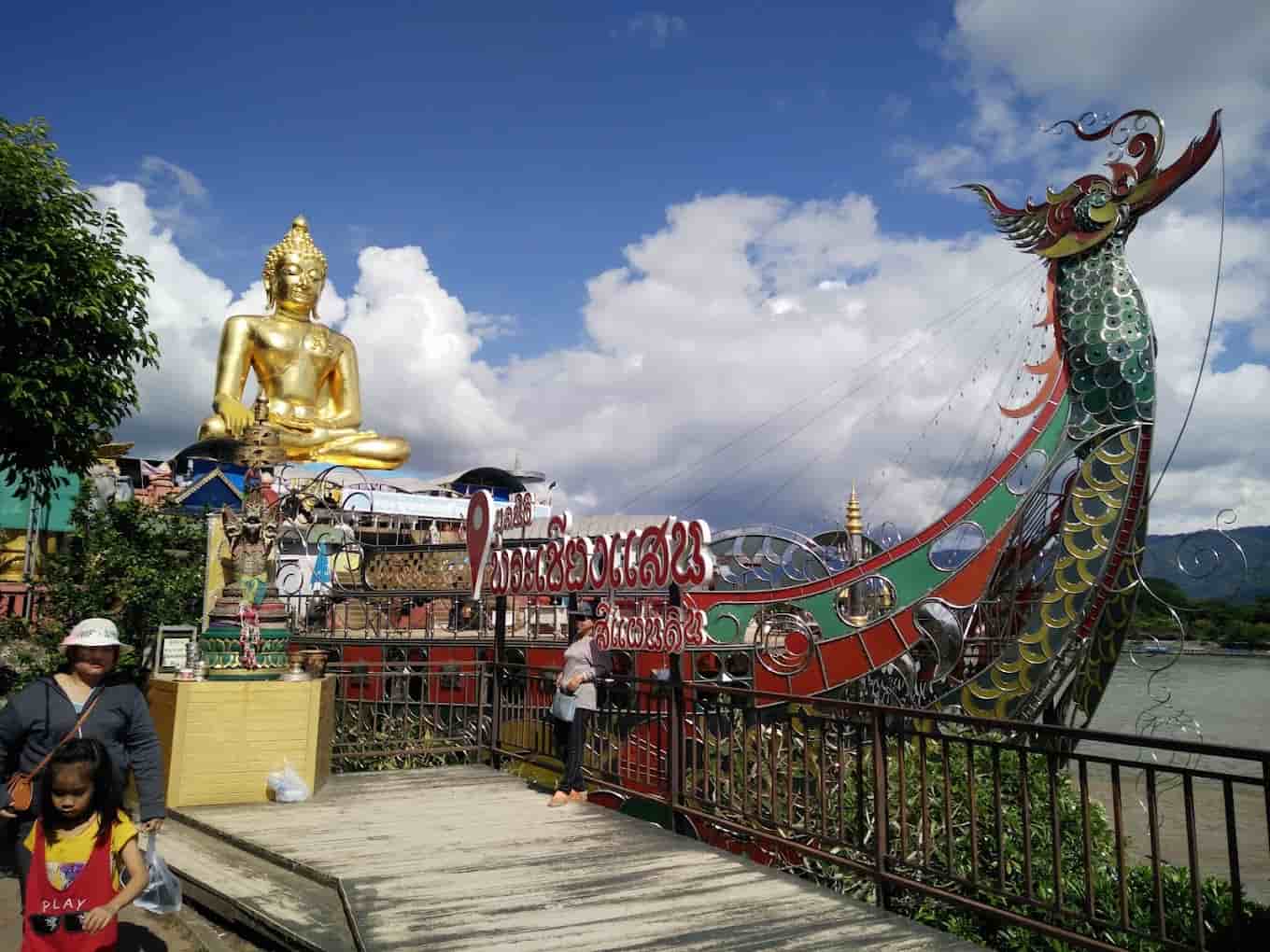
The area where Thailand, Laos and Myanmar meet on the Mekong. Add it if you have a second day, together with hill-tribe villages and viewpoints in the north.
This quiet temple in the town center is where the Emerald Buddha, now Thailand’s most sacred image in Bangkok, was discovered in the 15th century when lightning struck a chedi. A jade replica is kept in the temple today, and the grounds include a small museum of Lanna art.
On a hillside northwest of town, a giant white statue of the goddess Guanyin overlooks the countryside next to a nine-tiered pagoda in a Chinese style. The view from inside the statue’s head is often open to visitors. Go in the late afternoon for softer light.
Chiang Rai’s golden clock tower in the city center was designed by Chalermchai Kositpipat, the artist behind the White Temple. In the evenings, it comes alive with a short light-and-music show at fixed times. Check the current schedule locally.
About an hour north of town, Doi Tung is a mountain once known for opium cultivation and transformed by a royal development project. Visit the Mae Fah Luang Garden, the Royal Villa of the late Princess Mother and the cafés and craft shops that support the local hill-tribe communities.
The mountain village of Mae Salong (Santikhiri) was settled by soldiers of the Chinese Nationalist army after 1949, and it still feels distinctly Yunnanese. Tea plantations line the slopes, and tastings of oolong tea are the main reason to visit. The Choui Fong plantation, on the way, has a modern tea house with valley views.
Just outside town, this peaceful park houses a collection of Lanna teak buildings and Buddhist art, including a beautiful teak hall. It is a calm counterpoint to the bold modern temples.
The White Temple and Black House are on opposite sides of the city, so a driver saves a lot of time. For more on the main sight, read our White Temple guide.
Staying in town, near the clock tower, puts you within walking distance of the night market and restaurants. Resorts along the Kok River offer a quieter, greener setting a short drive from the center. For the Golden Triangle, luxury camps and resorts at Sop Ruak make a peaceful base for a night or two.
The second day involves several hours of driving on mountain roads, so start early and use a private car with a driver who knows the area.
On Saturday evenings, a walking street market fills Thanalai Road with food and crafts. The night bazaar near the bus station is open daily. Try northern dishes such as khao soi (curry noodle soup), sai ua (herb sausage) and nam prik ong (a tomato and pork dip with vegetables). Chiang Rai province is also known for its tea and its coffee from the hills around Doi Chang.
Chiang Mai has more restaurants, nightlife and day trips; Chiang Rai is smaller, calmer and better for art and temples. Many travelers spend two or three nights in Chiang Mai first. See our Chiang Mai guide.
From Chiang Mai, the road trip is a few hours by private car, bus or tour, and Chiang Rai also has its own airport. A private car with a driver is the easiest way to combine the temples in one day.
The cooler, drier months from roughly November to February are the most comfortable for temple walking. Air quality in the north can be poor around March. See our best time to visit Thailand.
Explore our Thailand tours and places to visit in Thailand.
One full day covers the main temples; two days adds the Golden Triangle and the countryside.
The White Temple (Wat Rong Khun).
Yes, entry is free; donations are welcome.
Yes, especially for the unique temples and art, and for a quieter alternative to Chiang Mai.
Foreign visitors are reported to pay 200 THB from 2026; confirm at the entrance.
The point on the Mekong River where Thailand, Laos and Myanmar meet, about an hour north of Chiang Rai. The Hall of Opium museum nearby explains the region’s history.
The ideal travel season generally falls during the dry, sunny months. Speak with our specialists for month-by-month climate recommendations tailored to your specific itinerary.
Yes, 100%. All My Way Travel itineraries are bespoke. We adjust durations, accommodations, activities, and destinations to suit your exact preferences.
All our private journeys are 100% tailor-made around your dates, pace, and passions. Talk to our specialists to customize any itinerary below or create a completely bespoke trip.
Direct advice: +1 (888) 898-0888 • Free tailor-made proposal
Why journey with us
One expert owns your journey from first sketch to final boarding pass.
Closed doors open quietly: ateliers, cellars, private homes, museums after dark.
A real voice at 3 a.m. in any time zone, whatever the question.
Bonded, insured and transparent about every dollar before you commit.
Begin
Tell us how you dream of travelling. Within 24 business hours, an in-country specialist will curate the first sketch of your route — bespoke ideas first, commitment never.
Concierge available 24/7 across all Asian time zones · New York registered