
A dedicated designer
One expert owns your journey from first sketch to final boarding pass.
Welcome to our specialist guide to exploring Thailand. From iconic landmarks to hidden local gems, our destination experts share their curated insights to help you craft the perfect tailor-made holiday.
Every journey with My Way Travel is individually designed around your dates, pace, and passions. Read on for our recommendations on must-see highlights, insider tips, and practical travel advice.

“Exploring Thailand with private guides and hand-picked boutique stays uncovers a depth and intimacy that ordinary group travel simply cannot provide.”
Chiang Mai, the cultural capital of northern Thailand, was founded in 1296 as the capital of the Lanna Kingdom and still feels like a place apart: a walled, moated Old City packed with golden temples, craft villages, great food and mountains on the horizon. Here are the best things to do in Chiang Mai.
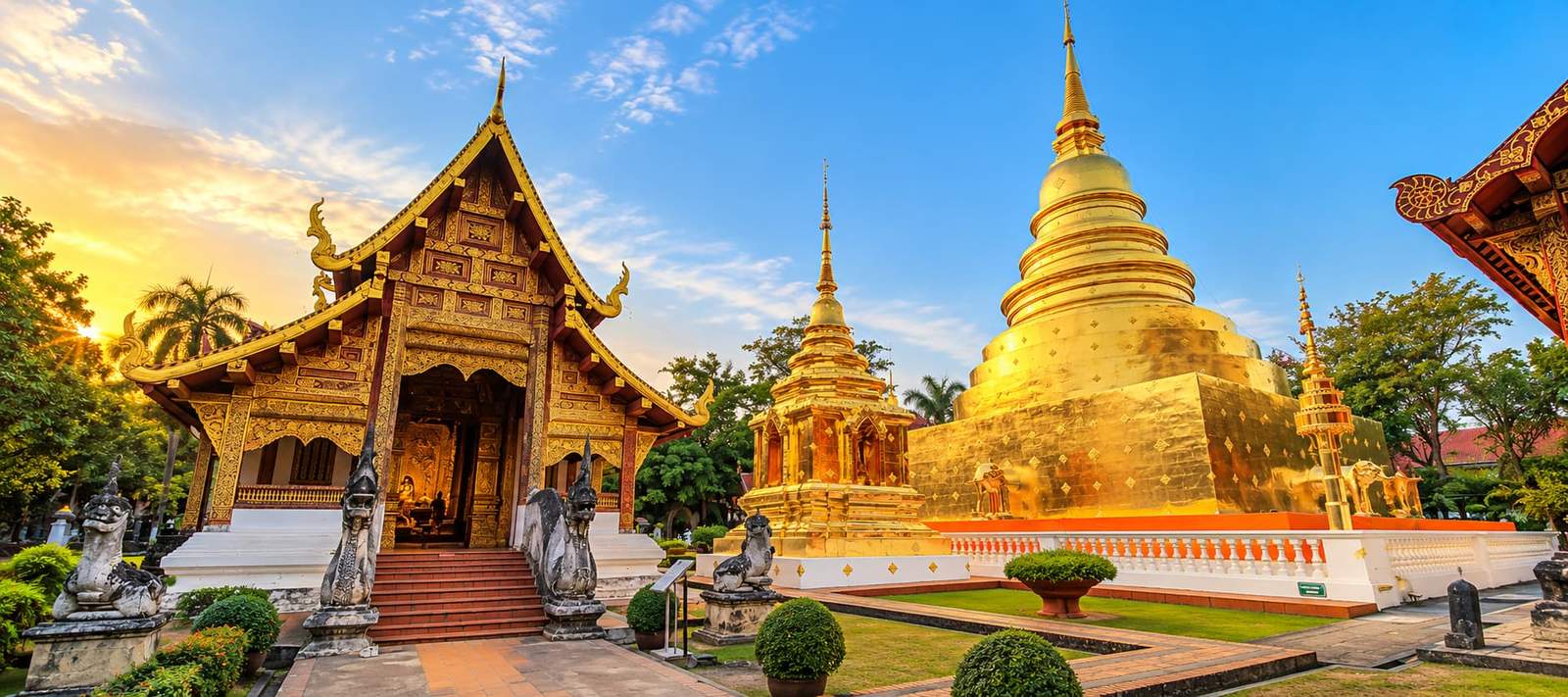
The Old City is a square of moats and gates, easily explored by bicycle or on foot. Highlights include Wat Phra Singh, home to the city’s most revered Buddha image; Wat Chedi Luang, with its huge ruined chedi; and Wat Chiang Man, the oldest temple in the city. Arrive early for peace.
The gilded temple of Wat Phra That Doi Suthep crowns a mountain northwest of the city. Climb the stairs (about 300 steps) flanked by naga serpents, or ride the short cable tram for a small fee; foreign visitors pay a modest entry fee. Go early in the morning when mist often clings to the hillside and the views over Chiang Mai are clearest.
Every Sunday evening, Ratchadamnoen Road in the Old City closes to traffic from Tha Phae Gate to Wat Phra Singh and fills with stalls of crafts, textiles and food. Arrive around 5pm; at 6pm everyone pauses for the Thai national anthem. Do not drive into the Old City on Sunday evening; walk or take a songthaew. The smaller Saturday walking street on Wua Lai Road is quieter. Foodies should also try the Jing Jai Market, a weekend market of local produce and café stalls.
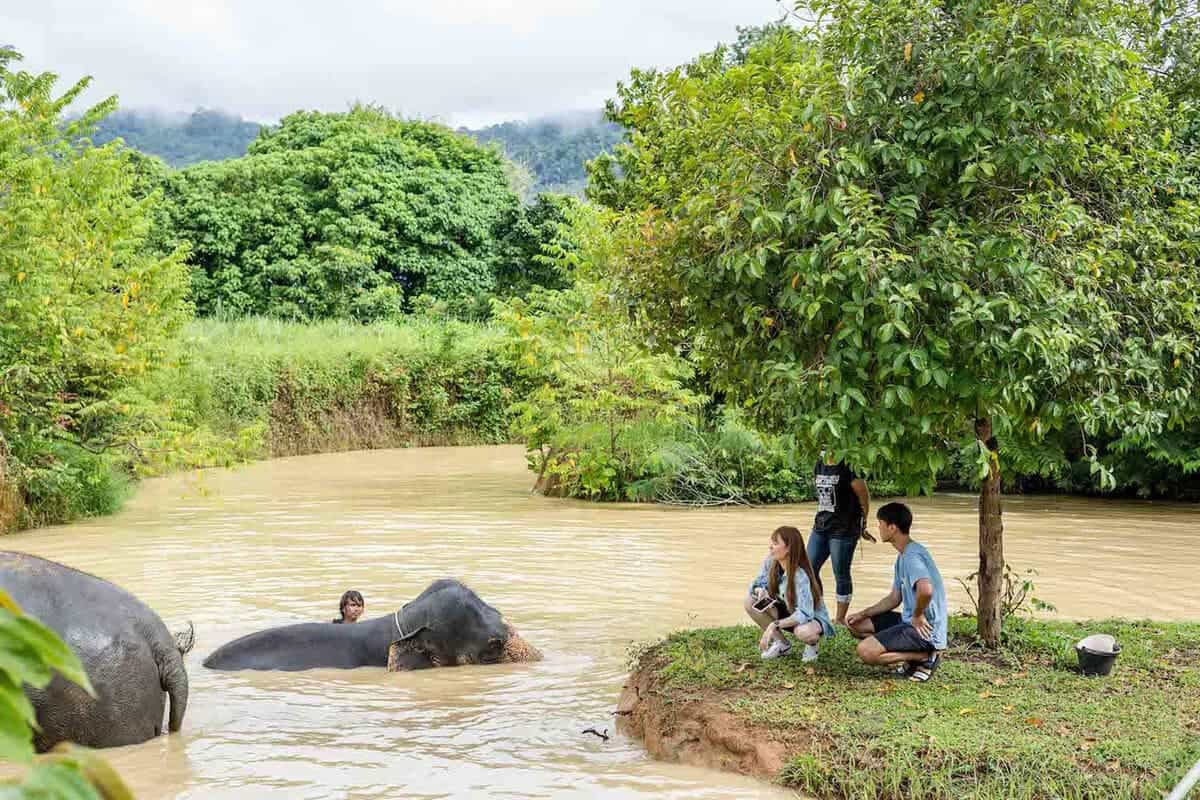
Elephant Nature Park, about an hour to ninety minutes from the city, is a well-known rescue sanctuary where elephants are not ridden and every animal was rescued from exploitative work. Choose experiences that focus on observation and care. Book ahead, leave drones behind and ask about the sanctuary’s welfare policies before you go.
Thailand’s highest mountain, at 2,565 meters, lies about two hours southwest of Chiang Mai, with waterfalls, hill-tribe villages and cool, misty cloud forest.
Visit the villages of Baan Tawai (woodcarving), Bo Sang (umbrellas) and San Kamphaeng (silk), learn to cook khao soi, the northern noodle curry, and unwind with a traditional Lanna massage.
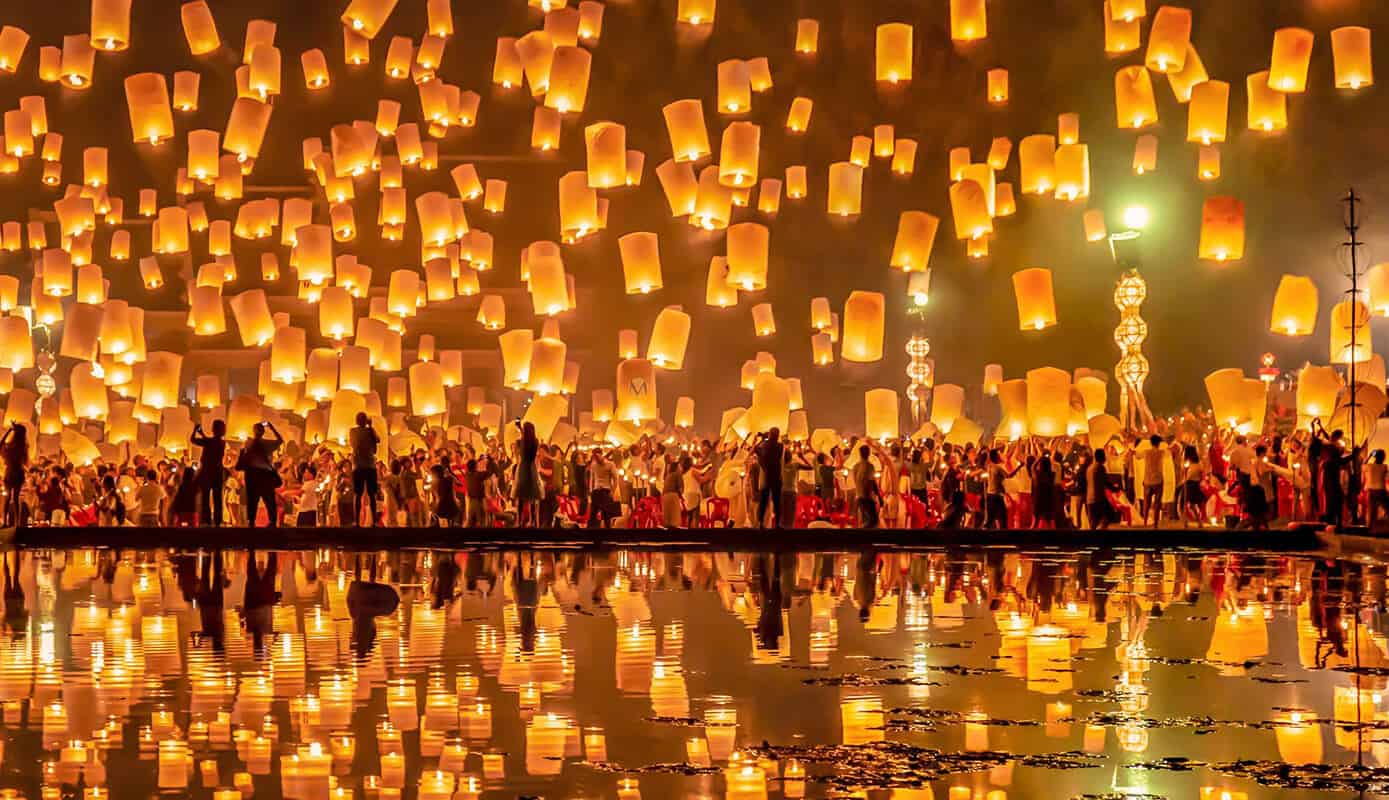
Yi Peng takes place on the full-moon night of the twelfth month of the Thai lunar calendar, usually in November, when thousands of lanterns are released into the night sky. The exact dates are announced only weeks ahead, rooms book out early and prices rise, so plan far in advance and stay in or near the Old City. Be careful with lanterns, which are a fire hazard.
West of the Old City, Wat Umong is a forest temple with brick tunnels where monks once meditated, quiet ponds and talking trees hung with proverbs. Nearby Wat Suan Dok is known for its whitewashed chedis holding the ashes of Chiang Mai’s royal family, beautiful at sunset with Doi Suthep behind.
On Saturday evenings, Wualai Road, the old silversmiths’ street just south of the Old City, becomes a smaller and more local market than Sunday’s. Visit Wat Sri Suphan, whose ordination hall is covered inside and out in silver work; by local tradition, only men may enter the hall itself.
Warorot, known locally as Kad Luang, is where Chiang Mai shops for northern sausage, chili dips, dried fruit and fabric. The Night Bazaar on Chang Klan Road is more tourist-oriented, but fun for an evening stroll and souvenirs.
The Bua Thong “Sticky” Waterfall, about an hour north, has limestone so grippy you can walk straight up the cascades. Mae Kampong is a cool hill village of wooden houses and coffee farms, and Chiang Dao, two hours north, has a cave temple and one of Thailand’s highest limestone peaks. All three make easy half or full days with a driver.
Among the most rewarding things to see and do in Chiang Mai is simply talking to a monk. Wat Chedi Luang and Wat Suan Dok run informal “monk chat” sessions where young monks practice their English and answer questions about Buddhism and daily life in the temple. When visiting any temple, cover your shoulders and knees, take off your shoes before entering a hall, never point your feet at a Buddha image, and remember that women should not touch a monk or hand him something directly.
Northern Thai food is a reason to visit in itself. Try khao soi, curried egg noodles topped with crispy noodles; sai oua, a herb-packed grilled sausage; nam prik noom, a smoky green-chili dip eaten with vegetables and pork crackling; and gaeng hang lay, a rich Burmese-influenced pork curry. A market tour with a cooking class is the best way to learn the flavors.
Chiang Mai is one of Thailand’s easiest cities for families. Children usually love a morning at an ethical elephant sanctuary, a cooking class where they make their own spring rolls, the canopy walks and waterfalls of Doi Inthanon and the evening markets with their snacks and street performers. Choose a hotel with a pool for the hot afternoons, and keep the day trips short: the drive to Chiang Rai and back is too long for most young children.
The Old City is compact enough to walk or cycle. For longer hops, flag down a red songthaew, the shared pickup trucks that work like taxis, and agree the fare before you get in, or use a ride-hailing app. Hire a car and driver for Doi Suthep, Doi Inthanon and the countryside; mountain roads are steep and winding.
Add a fourth day to continue to Chiang Rai and the White Temple, or to Chiang Dao. Our Chiang Mai itinerary has a detailed plan.
Choose the Old City for temples and markets, the Nimman area for cafés and boutiques, or a countryside resort in the Mae Rim valley for peace. Our specialists can recommend luxury properties in each. The riverside along the Ping, east of the Old City, has some of the city’s most elegant boutique hotels and is a short walk from the Night Bazaar. Wherever you stay, choose a hotel with a pool for the hot afternoons from March onward.
November to February is the coolest and most pleasant time, with clear skies. March to May is hot and often smoky from farmers’ burning, so air quality can be poor. The rainy season, June to October, brings afternoon showers but lush scenery and fewer visitors. See our best time to visit Thailand.
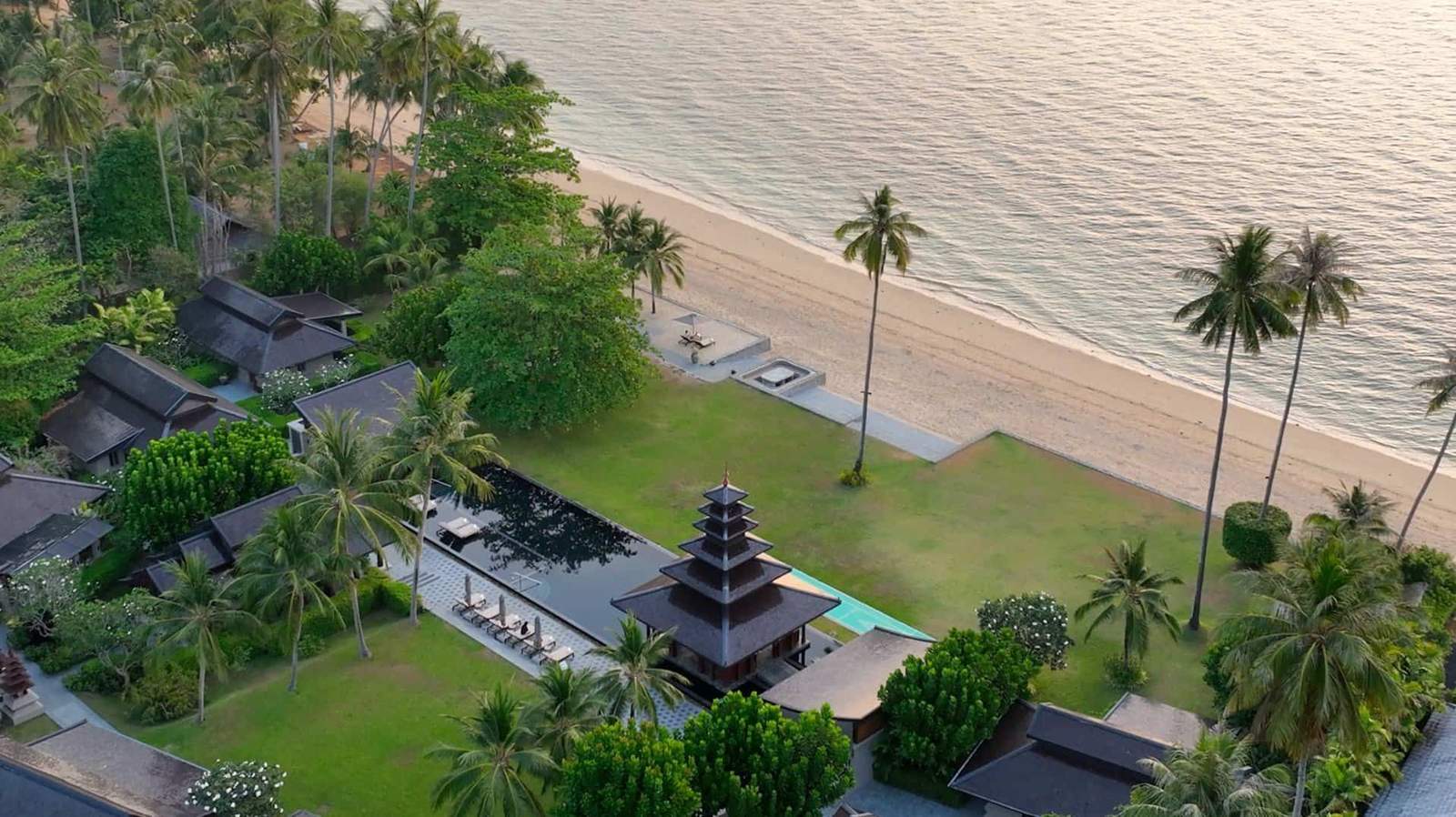
Chiang Mai fits perfectly between Bangkok and the southern islands. Explore our private Thailand tours and Luxury tour of Thailand, and read about nearby Chiang Rai and the White Temple.
Three days covers the Old City, Doi Suthep and an elephant sanctuary.
Watch sunset from Doi Suthep or Wat Suan Dok, then eat your way through a night market: the Sunday and Saturday walking streets, the Night Bazaar or Warorot.
Wat Phra That Doi Suthep, the Old City temples, the Sunday Walking Street, ethical elephant sanctuaries and Doi Inthanon National Park.
Temples, markets, craft villages and northern Thai food.
Usually in November, on the full moon; dates are announced weeks ahead.
Yes, for culture and a gentler pace than Bangkok.
November to February.
Yes. Ethical elephant sanctuaries, cooking classes, waterfalls and night markets work well for children, and the city is relaxed and easy to get around.
The ideal travel season generally falls during the dry, sunny months. Speak with our specialists for month-by-month climate recommendations tailored to your specific itinerary.
Yes, 100%. All My Way Travel itineraries are bespoke. We adjust durations, accommodations, activities, and destinations to suit your exact preferences.
All our private journeys are 100% tailor-made around your dates, pace, and passions. Talk to our specialists to customize any itinerary below or create a completely bespoke trip.
Direct advice: +1 (888) 898-0888 • Free tailor-made proposal
Why journey with us
One expert owns your journey from first sketch to final boarding pass.
Closed doors open quietly: ateliers, cellars, private homes, museums after dark.
A real voice at 3 a.m. in any time zone, whatever the question.
Bonded, insured and transparent about every dollar before you commit.
Begin
Tell us how you dream of travelling. Within 24 business hours, an in-country specialist will curate the first sketch of your route — bespoke ideas first, commitment never.
Concierge available 24/7 across all Asian time zones · New York registered