

A dedicated designer
One expert owns your journey from first sketch to final boarding pass.
Last updated:
Quick answer: Singapore’s Chinatown is a conserved historic district made up of four precincts: Telok Ayer, Kreta Ayer, Tanjong Pagar and Bukit Pasoh. For a first visit, walk from Chinatown MRT through the religious monuments and shophouses around Kreta Ayer, then continue to Telok Ayer if you have time. Treat it as a living neighborhood, not an open-air museum.
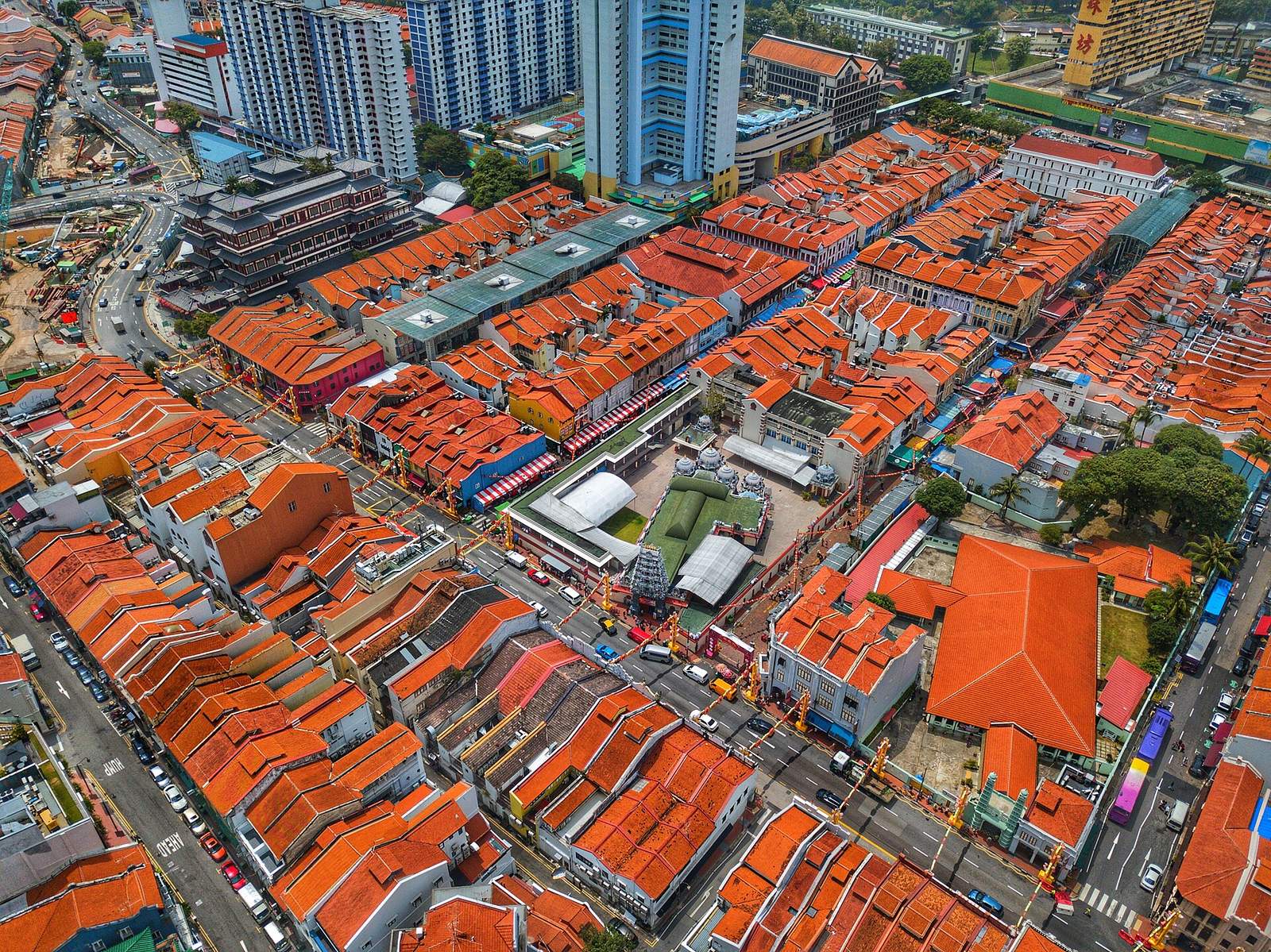
Featured photograph: Aerial view of Singapore’s Chinatown. Photo by Bob Tan (Wanderingchina), CC BY-SA 4.0. View original file · license.
Kreta Ayer: URA associates this precinct with lively streets and festivals. Pagoda Street, Temple Street and South Bridge Road give a compact introduction to conserved shophouses, food businesses and places of worship. The National Heritage Board’s registry highlights long-running Chinatown businesses; choose a few to support rather than treating storefronts as photo props.
Telok Ayer: This precinct has a notable cluster of historic religious buildings. URA identifies Thian Hock Keng Temple, Nagore Durgha Shrine and Al-Abrar Mosque among the Chinatown Historic District’s national monuments. Plan a respectful walk and check each institution’s visitor rules before entering.
Other heritage stops: Sri Mariamman Temple and Jamae Mosque are in Kreta Ayer. The Chinatown Heritage Centre presents stories of early residents through recreated shophouse interiors. Its visitor information can change, so check the venue’s current access and booking page before building your day around it.
| Route block | Suggested focus | Allow for |
|---|---|---|
| Start: Chinatown MRT | Pagoda Street, Temple Street and Kreta Ayer shophouses | Heat, crowd levels and pedestrian crossings |
| Heritage stop | One museum or heritage business, if open | Current opening schedule and ticket rules |
| South Bridge Road | Sri Mariamman Temple, Jamae Mosque and nearby food streets | Worship times, modest clothing and photography rules |
| Optional extension | Continue toward Telok Ayer’s monument cluster | Extra walking time and opening access |
A half-day is a reasonable first-visit outline for a focused walk; allow longer for a museum, meal and Telok Ayer. This is a planning estimate, not an official route duration. Singapore’s weather is warm and humid year-round, so use shaded indoor stops and carry water.
URA describes Chinatown as the original settlement of Singapore’s Chinese community and documents four precincts that developed at different times. Its history also includes South Indian Hindu and Muslim communities: the temple and mosque sites grew alongside Chinese temples and trading streets. The district’s importance is therefore multi-faith and commercial as well as architectural.
Visitors should keep entrances clear, lower their voices near worship and ask before photographing people. At a temple or mosque, follow posted clothing, footwear and photography guidance. Businesses and homes remain part of the district; respect private thresholds and avoid blocking narrow walkways.
Chinatown can pair with nearby civic and waterfront areas, but choose one additional district rather than trying to cover the whole city on foot in one day. If you want to compare it with Little India or Kampong Glam, allow time for separate walks and transit. A private itinerary should specify guide language, walking pace, transport between districts and any museum or food inclusions.
Allow at least half a day for the core precinct walk. Add time for a museum visit, a meal and the Telok Ayer extension.
No. URA documents Chinese, Hindu and Muslim monuments within the district, alongside commercial and residential streets.
Rules and access differ by site and time. Check the institution’s current visitor guidance, follow staff instructions and avoid entering during restricted services or events.
Singapore sources checked 3 November 2026: Urban Redevelopment Authority: Historic Districts; URA: Kreta Ayer Conservation Area; National Heritage Board: Chinatown heritage businesses; Chinatown Heritage Centre visitor information. Photo: Bob Tan, CC BY-SA 4.0; original file.
Editorial method: This desk-researched guide uses Singapore’s planning, heritage and tourism sources. It is not a first-hand field report. Confirm venue status, religious-site rules and any guided-walk arrangements before travel.
Plan a Singapore heritage itinerary: Share your dates, walking pace and interest in food, architecture or religious heritage in the trip-planning form. Ask for guide language, transport and included admissions in the written proposal.
“A private tailor-made journey in Chinatown & Heritage allows you to explore at your own unhurried pace, with private transfers and local guides revealing cultural layers that standard tours overlook.”
— Emily, Singapore Destination Specialist at My Way Travel
Call our direct travel designer desk or request your complimentary bespoke proposal.


The World On Your Terms reveals what awaits when you explore the globe with our specialists. Covering six continents, this volume features handpicked routes, insider tips, and signature experiences.
Request Your Copy
Why journey with us
One expert owns your journey from first sketch to final boarding pass.
Closed doors open quietly: ateliers, cellars, private homes, museums after dark.
A real voice at 3 a.m. in any time zone, whatever the question.
Bonded, insured and transparent about every dollar before you commit.
Begin
Tell us how you dream of travelling. Within 24 business hours, an in-country specialist will curate the first sketch of your route — bespoke ideas first, commitment never.
Planning team Mon–Sat 8am–8pm EST · 24/7 emergency line while you travel · New York registered