
A dedicated designer
One expert owns your journey from first sketch to final boarding pass.
The easiest way to take grandparents and grandchildren to Japan is a private trip of 10 to 12 days with only three bases: Tokyo, Hakone and Kyoto. Stay three or four nights in each, keep a private van and driver for the airport and the mountains, send the big suitcases ahead between cities, and plan mornings together and afternoons apart, so the grandparents can rest while the kids burn off energy. Our estimate for a private 12-day family trip starts at about US$6,700 per adult, with upscale hotels and without international flights. May, October and November are the most comfortable months.
| Key facts | For a three-generation trip |
|---|---|
| Length | 10 to 12 days, three bases |
| Route | Tokyo 4 nights, Hakone 2, Kyoto 4, back to Tokyo or out of Osaka |
| Getting around | Private van for airport and Hakone legs; reserved Shinkansen seats between Tokyo and Kyoto |
| Luggage | Bags of 160 to 250 cm (length, width and height added) need an oversized-luggage seat on the Tokaido Shinkansen |
| Children on JR trains | Ages 6 to 11 half fare; up to two preschoolers ride free with each adult, without their own reserved seat |
| Best months | May (after Golden Week), October, November |
| Estimated cost | From about US$6,700 per adult for 12 days, flights excluded |
| 24-hour help in English | Japan Visitor Hotline, 050-3816-2787 |
Every hotel change with a big family means a packing morning, a check-out, a transfer and a check-in, and with eight people that’s half a day gone. Three bases keep the moving days to two. Tokyo gives the kids the city they’ve seen in films and gives everyone the food. Hakone breaks up the trip with a night or two in the mountains, often with a hot-spring bath at the hotel. Kyoto is the temples, the gardens and the old streets. If you have 14 days, add Hiroshima and Miyajima as a fourth stop rather than squeezing in more cities.
The pattern on most days: a sight everyone enjoys in the morning, a long lunch, then the group splits. Your guide stays with whichever half needs them more, and the driver or a taxi brings everyone back together for dinner.
| Days | Base | Together | Afternoon options |
|---|---|---|---|
| 1 to 4 | Tokyo | Senso-ji in Asakusa, a boat on the Sumida River, Meiji Jingu, a sushi lunch | Grandparents: a garden such as Hama-rikyu, a hotel spa. Kids: teamLab, a Pokémon Center, Tokyo Disney on a separate day |
| 5 to 6 | Hakone | Romancecar train from Shinjuku (about 1 hour 20 minutes) or the private van; the ropeway over Owakudani; a lake cruise | Grandparents: the hotel’s hot-spring bath. Kids: the Open-Air Museum, which has play sculptures they can climb into |
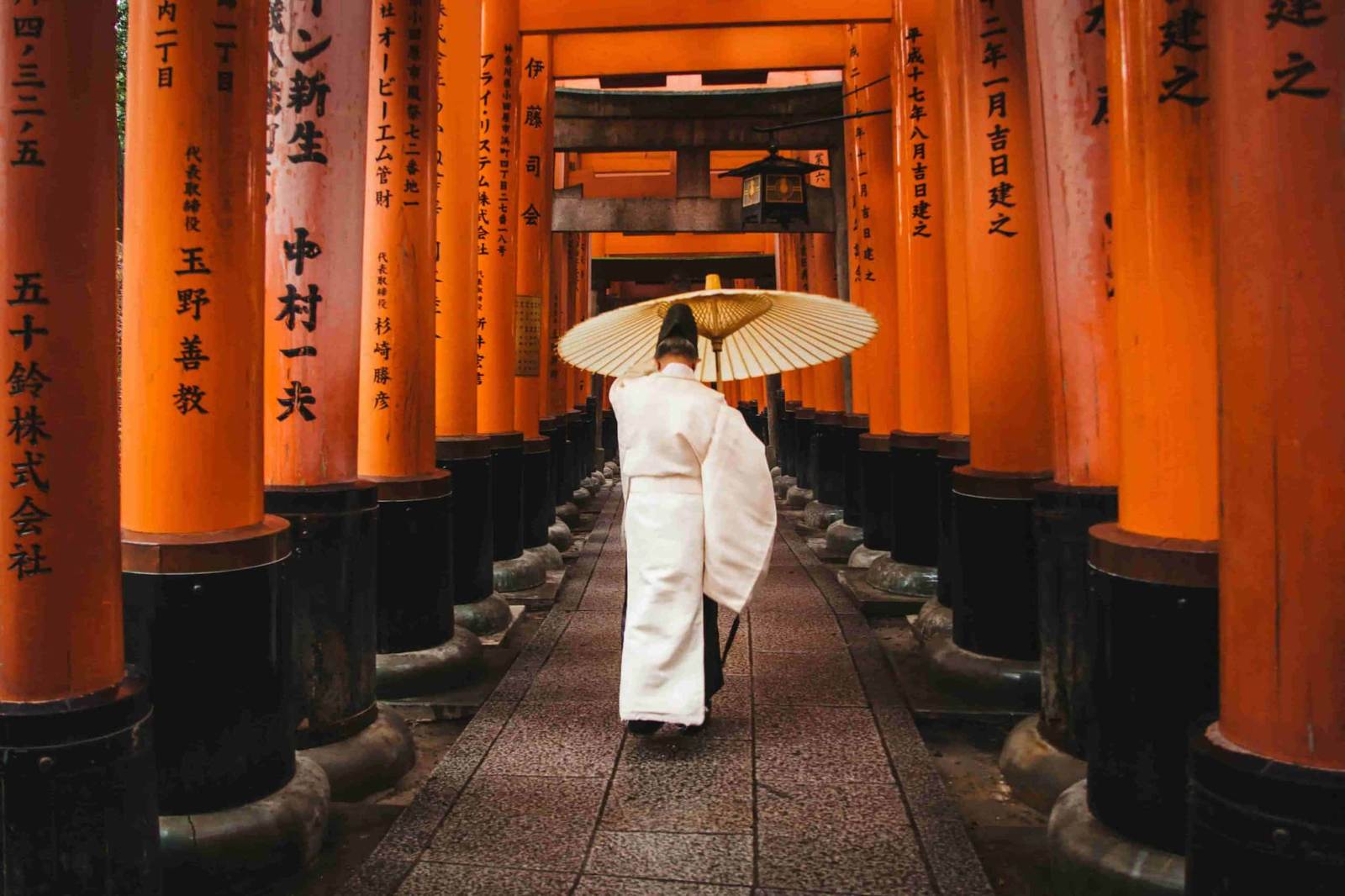
| 7 to 10 | Kyoto | Kinkaku-ji, the Arashiyama bamboo grove early in the morning, a tea ceremony, a day in Nara with the deer | Grandparents: a gentle walk in Gion, a craft workshop. Kids: the lower torii tunnels at Fushimi Inari, a samurai or ninja class |
| 11 to 12 | Osaka or Tokyo | Street food in Dotonbori, or a last shopping day in Tokyo | Universal Studios Japan for the kids if you finish in Osaka |
Our Japan family adventure follows a similar line over 14 days, with Hiroshima and Miyajima added.
Hotel rooms in Tokyo and Kyoto are small, and connecting rooms are rare, so ask early and get the answer in writing.
Vehicle. A private van with a driver is the easiest way from the airport to the hotel and around Hakone. Taxis in Tokyo and Kyoto mostly take four passengers, so a group of eight needs two cars or a booked van.
Shinkansen. Reserve seats for everyone together. On the Tokaido Shinkansen between Tokyo and Kyoto, a suitcase measuring 160 to 250 cm in total (length, width and height added up) needs a seat with an oversized-luggage area booked in advance. Board without one and there’s a ¥1,000 charge, and the crew decides where the bag goes. Strollers and wheelchairs don’t need a reservation.
Send the big bags ahead. Japan’s luggage delivery services, often called takkyubin, collect suitcases at one hotel and deliver them to the next, so the family travels on the train with day bags only. Japan’s transport and tourism ministry (MLIT) uses Tokyo-to-Kyoto hotel delivery as its standard example. Allow at least a day for delivery and keep one night’s clothes with you.
Children’s fares. On JR trains, children aged 6 to 11 pay half fare. Up to two children under 6 ride free with each adult, but only without a reserved seat of their own; if you want a reserved Shinkansen seat for a small child, it’s charged at the child fare.
| Sight | What the walking is like | The easier way |
|---|---|---|
| Fushimi Inari, Kyoto | The full loop over Mount Inari is about 4 km, climbing to 233 m, and takes around two hours, mostly on steps | Walk the first stretch of torii tunnels near the bottom (about 30 minutes) and turn back; the kids can go further with the guide |
| Kiyomizu-dera, Kyoto | Uphill shopping streets to the temple, crowded by late morning | Go at opening time and drive as close as the roads allow |
| Arashiyama bamboo grove | A short, mostly flat path | Go early, before the tour groups arrive |
| Kinkaku-ji, Kyoto | A one-way loop through the garden, mostly level | Fine for most grandparents |
| Meiji Jingu, Tokyo | A gravel avenue through the forest from the gate to the shrine | Have the driver drop you at the nearest gate |
| Owakudani, Hakone | Little walking if you arrive by ropeway | The ropeway can close when volcanic gas levels rise; have a lake cruise as the backup |
May (after Golden Week, the run of holidays from late April to early May), October and November are mild and comfortable for all ages. Cherry blossom season in late March and early April is beautiful but very crowded, and hotels for a big group sell out early. July and August are hot and humid, which is hard on both grandparents and small children, and mid-August (Obon) is a busy domestic travel week. Our best time to visit Japan guide goes month by month.
| Trip | Length | Estimated from, per adult |
|---|---|---|
| The 12-day route above | 12 days | US$6,700 |
| Japan Cultural & Scenic Discovery | 10 days | US$6,600 |
| Japan family adventure | 14 days | US$7,800 |
Children’s prices depend on their ages and on whether they share a room, so we quote them separately. Two taxes to budget for: Kyoto’s accommodation tax rose on 1 March 2026 and now runs from ¥200 up to ¥10,000 per person per night, depending on the room rate, and Japan’s departure tax is ¥3,000 per person from 1 July 2026, added to your air ticket (children under 2 are exempt).
Estimates per adult for two adults sharing a room, with international flights excluded, from our tour price guide, reviewed 15 November 2026. Your proposal gives the exact price for your family, dates and rooms.
Bring prescription medicines in their original packaging with a copy of the prescription. Japan lets you bring up to one month’s supply of a prescription drug for your own use without extra paperwork; more than that needs an import certificate (yunyu kakuninsho) applied for in advance, and some ingredients are restricted from the first tablet, so check each medicine before you fly. For help in English at any hour, call the Japan Visitor Hotline on 050-3816-2787; for an ambulance, dial 119. Buy travel insurance that covers medical care and evacuation for every traveler, including the grandparents.
We plan private trips across Asia with your own guides and drivers, named hotels and a written proposal for your family. Tell us everyone’s ages, how far the grandparents like to walk, the room setup you want and your dates. My Way Travel’s 10 Tripadvisor listings held 3,022 reviews, rated 4.7 to 5.0, when we counted them on 12 November 2026 (see our reviews page). Start planning your family trip to Japan.
Sources: JR Central and the JR group on oversized baggage on the Tokaido Shinkansen; JR East fare rules for children; Japan Tourism Agency (MLIT) on hands-free travel and luggage delivery; Fushimi Inari route guides; Odakyu Romancecar timings via Hakone Navi; Kyoto City on the accommodation tax from 1 March 2026; Ministry of Health, Labour and Welfare and Japan Customs on bringing medicines into Japan; JNTO on the Japan Visitor Hotline; My Way Travel tour price estimates (reviewed 15 November 2026). Last checked November 2026.
Ten to 12 days with three bases (Tokyo, Hakone and Kyoto) gives everyone time to rest. With 14 days you can add Hiroshima and Miyajima.
Four nights in Tokyo, two in Hakone and four in Kyoto, with mornings together and afternoons split so grandparents can rest while the kids do something more active.
Often, yes, in a Japanese-style room at a ryokan, where four to six people sleep on futons. For grandparents who need beds, ask for a Japanese-Western room or for connecting rooms confirmed in writing.
Send large suitcases ahead by hotel-to-hotel delivery. If you take them on board, bags of 160 to 250 cm in total need a reserved oversized-luggage seat, or you pay a ¥1,000 charge.
The full mountain loop is about 4 km of steps and takes around two hours, but the first torii tunnels near the bottom take about 30 minutes, and grandparents can turn back there.
We estimate from about US$6,700 per adult for 12 days with upscale hotels and private guiding, without international flights. Children’s prices depend on their ages and room setup.
May after Golden Week, October and November. Avoid the heat of July and August and the crowds of cherry blossom season if you can.
All our private journeys are 100% tailor-made around your dates, pace, and passions. Talk to our specialists to customize any itinerary below or create a completely bespoke trip.

Direct advice: +1 (888) 898-0888 • Free tailor-made proposal
Why journey with us
One expert owns your journey from first sketch to final boarding pass.
Closed doors open quietly: ateliers, cellars, private homes, museums after dark.
A real voice at 3 a.m. in any time zone, whatever the question.
Registered in New York, with every cost itemised in your quote before you commit.
Begin
Tell us how you dream of travelling. Within 24 business hours, an in-country specialist will curate the first sketch of your route — bespoke ideas first, commitment never.
Planning team Mon–Sat 8am–8pm EST · 24/7 emergency line while you travel · New York registered