
A dedicated designer
One expert owns your journey from first sketch to final boarding pass.
Welcome to our specialist guide to exploring Cambodia. From iconic landmarks to hidden local gems, our destination experts share their curated insights to help you craft the perfect tailor-made holiday.
Every journey with My Way Travel is individually designed around your dates, pace, and passions. Read on for our recommendations on must-see highlights, insider tips, and practical travel advice.

“Exploring Cambodia with private guides and hand-picked boutique stays uncovers a depth and intimacy that ordinary group travel simply cannot provide.”
Angkor Wat sits about six kilometers north of Siem Reap, so getting there is the easy part. The challenge is doing it well: the sun, the crowds and the sheer size of the Angkor Archaeological Park shape every visit. Here is how our specialists approach visiting Angkor Wat.
Buy your Angkor Pass first at the official ticket center, or book it online. See our guide to Angkor Wat tickets for prices and rules.
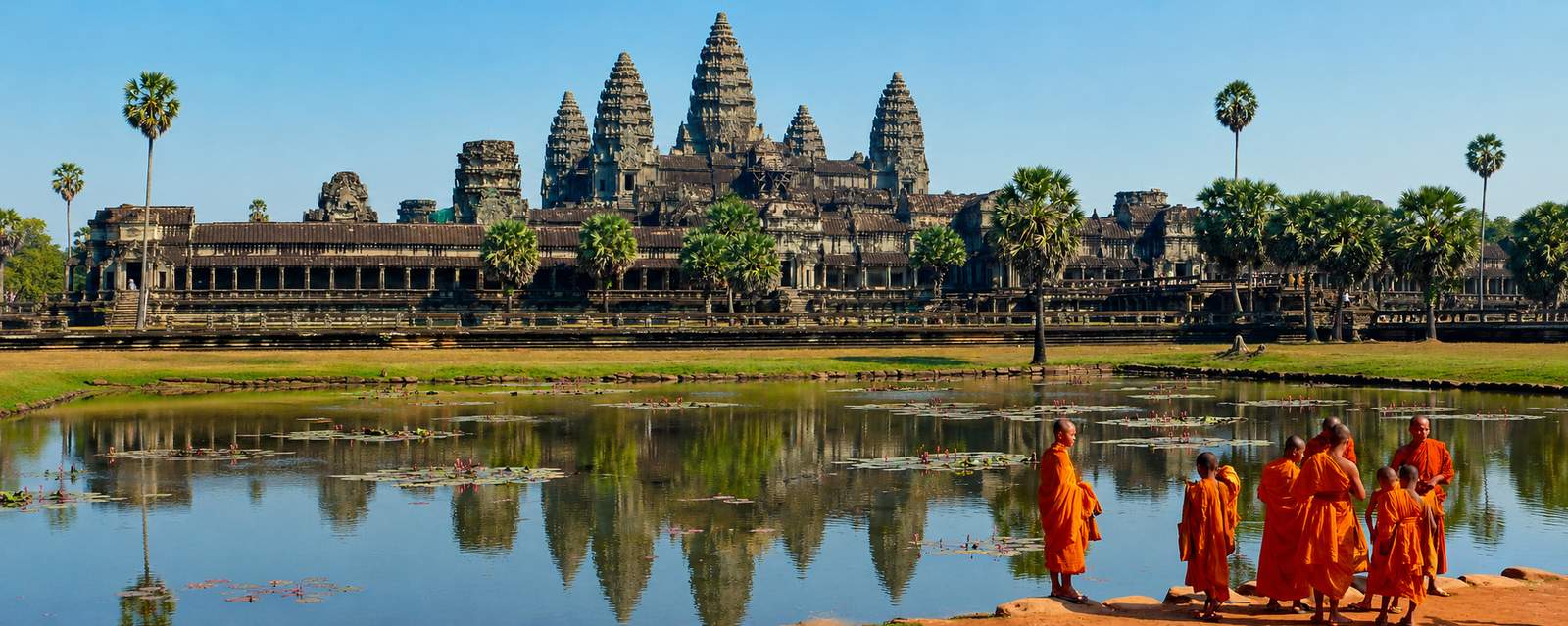
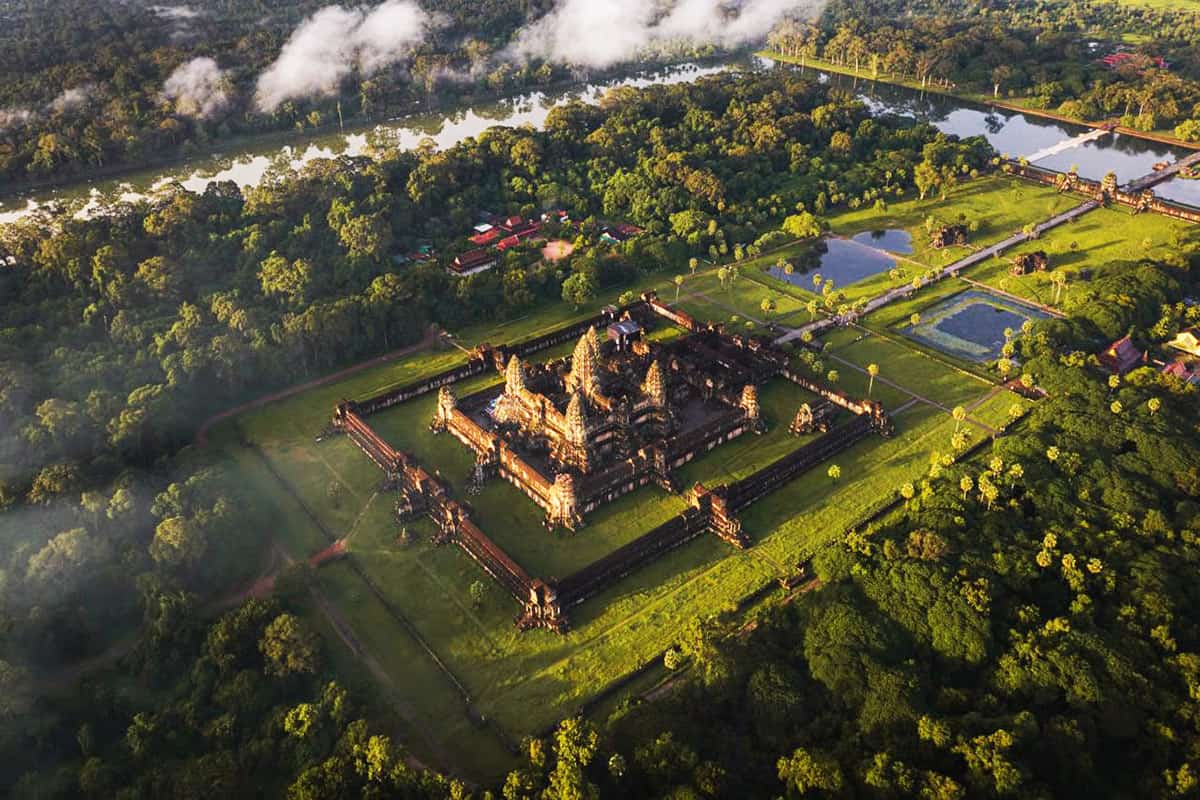
Built in the early twelfth century as a temple to Vishnu, Angkor Wat is the largest religious monument in the world. Visitors cross a moat on a stone causeway, enter through a gate tower and walk through three rising galleries toward the central towers.
Most Khmer temples face east, toward the rising sun, but Angkor Wat faces west, which scholars link to Vishnu and possibly to its role as a funerary temple for its builder, King Suryavarman II. In practice, this means the sun rises behind the towers in the morning, creating the famous silhouette, while the main facade is best lit in the afternoon. The temple was listed by UNESCO, as part of the Angkor archaeological park, in 1992.
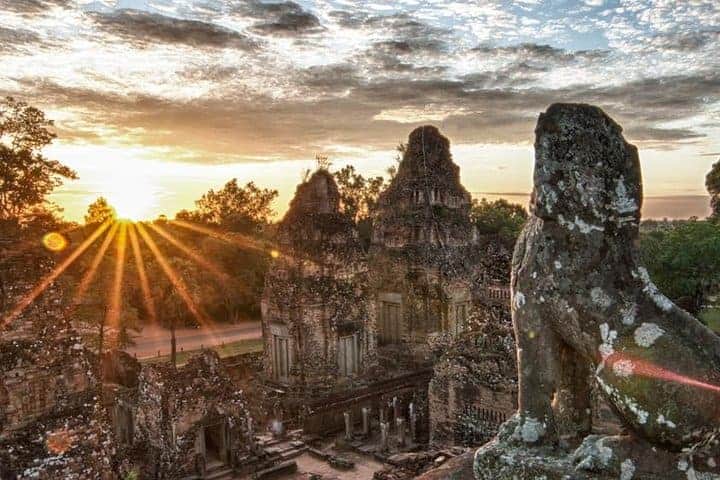
Sunrise is magical but crowded. Gates open at 5:00am, and the sun rises between roughly 5:30am in summer and 6:20am in winter. Arrive 30 to 45 minutes early. After sunrise, return to your hotel for breakfast and visit Angkor Wat itself later, when the crowds have thinned, or go late in the afternoon. The galleries glow gold in the afternoon light. For quieter sunrise, try Pre Rup or Srah Srang.
Angkor Wat at sunrise, then Angkor Thom with the faces of the Bayon, the Terrace of the Elephants and Ta Prohm, the temple wrapped in giant tree roots.
Add Banteay Srei, a small temple of pink sandstone carved so finely that it looks like jewelry, about 35 minutes north of Siem Reap, and the Grand Circuit temples of Preah Khan, Neak Pean and East Mebon. See our guide to Banteay Srei and the outer temples.
Spread the temples out across cooler mornings and late afternoons, with a midday rest by the pool. Add Pre Rup at dawn, Banteay Kdei and, if you have time, the jungle-covered temple of Beng Mealea.
Angkor Thom, the walled royal city built by Jayavarman VII in the late 12th century, is entered through monumental gates with giant faces. The South Gate is approached along a causeway lined with gods and demons pulling a serpent, from the Hindu myth of the Churning of the Ocean of Milk. At its center, the Bayon has more than 200 serene stone faces on its towers. Nearby, the Baphuon, the Terrace of the Elephants and the Terrace of the Leper King are an easy walk.
The Small Circuit (about 17 km) loops Angkor Wat, Angkor Thom, Ta Keo, Ta Prohm and Banteay Kdei. The Grand Circuit (about 26 km) continues northeast to Preah Khan, Neak Pean, Ta Som and East Mebon. A driver or guide makes both far easier.
Angkor Wat’s ground level and the bas-relief galleries are reasonably flat, and ramps or wooden steps have been added at some sites, but many temples have steep, uneven stairs. Choose the Bayon, Ta Prohm and Banteay Srei for easier walking, and use a car rather than a tuk-tuk in the heat. Children usually love Ta Prohm’s tree roots and the Bayon’s faces. Keep visits short and bring snacks and plenty of water.
A specialist guide turns the temples into a story and times each visit to the quietest hours. Explore our private Cambodia tours and the Angkor Heritage Exploration, or read more about Siem Reap.
About six kilometers, a 15 to 20 minute drive.
Two to three hours for Angkor Wat itself; one to three days for the whole park.
Yes for the atmosphere, but expect crowds. Consider a second visit later in the day to see the carvings in peace.
Yes, with an Angkor Pass and a tuk-tuk or car, but a guide brings the temples to life.
Cover your shoulders and knees, wear comfortable shoes and bring sun protection.
Sunrise, because the sun rises behind the towers. For sunset, choose Pre Rup or Srah Srang rather than Angkor Wat itself.
The ideal travel season generally falls during the dry, sunny months. Speak with our specialists for month-by-month climate recommendations tailored to your specific itinerary.
Yes, 100%. All My Way Travel itineraries are bespoke. We adjust durations, accommodations, activities, and destinations to suit your exact preferences.
All our private journeys are 100% tailor-made around your dates, pace, and passions. Talk to our specialists to customize any itinerary below or create a completely bespoke trip.
Direct advice: +1 (888) 898-0888 • Free tailor-made proposal
Why journey with us
One expert owns your journey from first sketch to final boarding pass.
Closed doors open quietly: ateliers, cellars, private homes, museums after dark.
A real voice at 3 a.m. in any time zone, whatever the question.
Bonded, insured and transparent about every dollar before you commit.
Begin
Tell us how you dream of travelling. Within 24 business hours, an in-country specialist will curate the first sketch of your route — bespoke ideas first, commitment never.
Concierge available 24/7 across all Asian time zones · New York registered