

A dedicated designer
One expert owns your journey from first sketch to final boarding pass.
Last updated:
Quick answer: Gyantse is a historic stop on overland routes through Tibet, best known for Pelkor Chöde Monastery and its multi-storey Kumbum stupa. Allow at least half a day for the monastery complex and surrounding town, and build acclimatization time into the wider itinerary. Foreign visitors need advance authorization to travel in the Tibet Autonomous Region and must arrange it through a specialist travel agent; verify current access, permits and road conditions before paying for non-refundable travel.
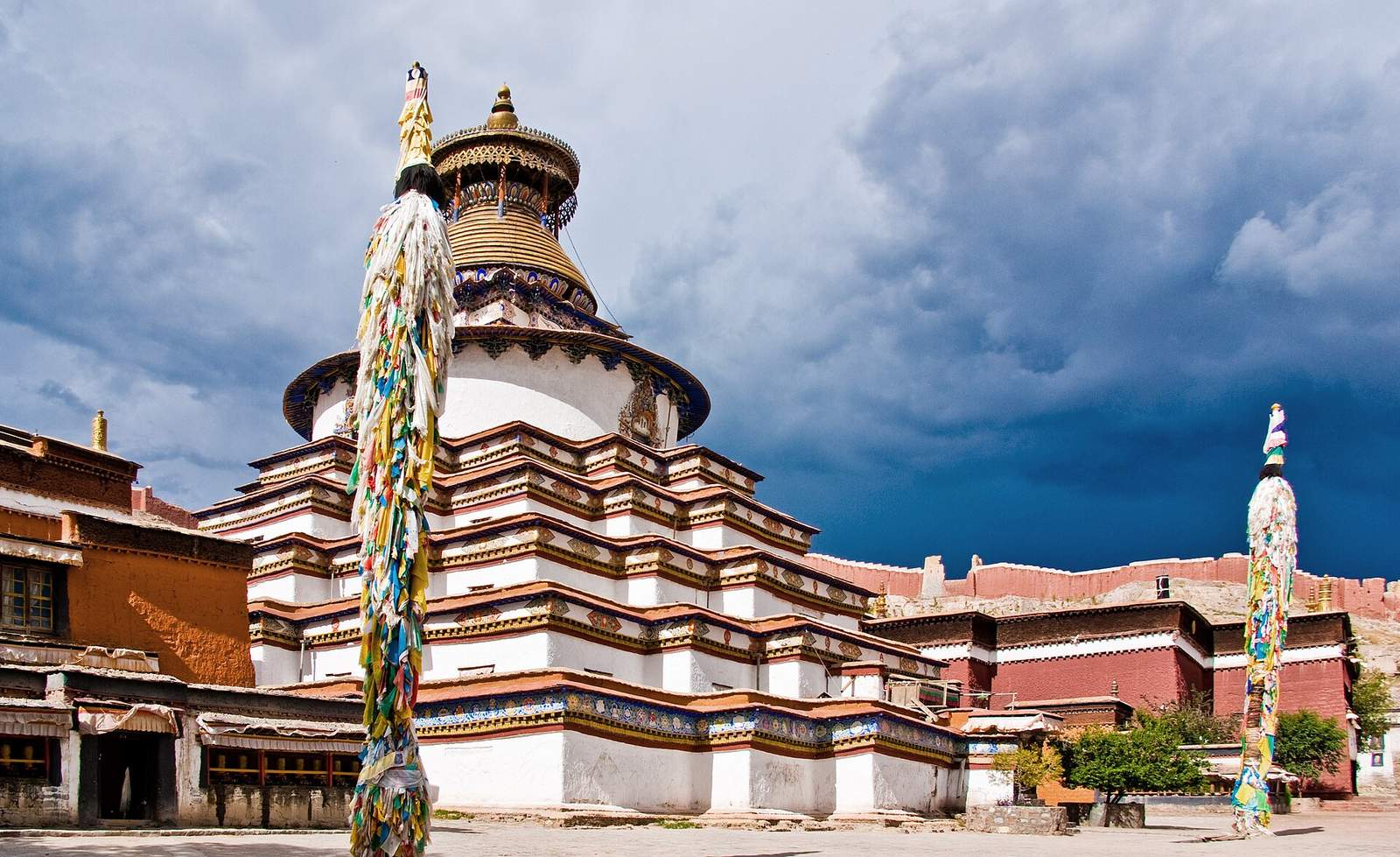
Featured photograph: Kumbum Stupa at Pelkor Chöde Monastery in Gyantse. Photo by Antoine Taveneaux via Wikimedia Commons, licensed under CC BY-SA 3.0.
Plan a private Gyantse visit: Request a tailored Gyantse itinerary. Share your passport nationality, China entry plan, travel dates, route, walking pace and health or mobility considerations. Ask the authorized operator to confirm permits, guide/vehicle arrangements, monastery admission, altitude pacing and a contingency for road or access changes.
Gyantse is known for the Pelkor Chöde monastery complex, its Kumbum (a tiered chörten with chapels) and the old fort above town. The Rubin Museum’s Project Himalayan Art dates the Kumbum to approximately 1427–1442 and identifies it as part of Pelkhor Chode in the Tsang region. Its design is a form of Buddhist architecture and pilgrimage route, not simply a tower to photograph from outside.
Pelkor Chöde is a living religious site. Visitors should move quietly, follow signs and the guide’s instructions, ask before photographing worshippers or ritual activity and avoid touching murals or objects. The Kumbum’s chapels involve stairs and confined interior spaces; allow time and assess whether the route is suitable for your group rather than assuming all areas are accessible.
| Stop | Why include it | Planning check |
|---|---|---|
| Pelkor Chöde Monastery | A historic religious complex and setting for the Kumbum. | Verify current foreign-visitor access, entry rules, guide requirements and photography restrictions. |
| Kumbum (Gyantse Kumbum) | A multi-level chörten with chapels and Buddhist imagery. | Expect stairs, narrow passages and an interior route; ask about access and pace. |
| Gyantse Dzong | A fortification overlooking town and the valley. | Check whether it is open to visitors; do not assume the exterior viewpoint means interior access. |
| Old town streets and market | A chance to see everyday town life beyond the monastery complex. | Visit respectfully and confirm any local restrictions or photography rules. |
| Overland route viewpoints | Landscape context between Lhasa, Gyantse and Shigatse. | Roadside stops depend on route permits, weather, road status and driver safety. |
A half-day is a practical minimum for Pelkor Chöde and the Kumbum if your route allows a calm visit. Add a night when you want time to acclimatize, explore the old town or avoid driving long distances on consecutive days. Gyantse is often included as part of a longer Tibet itinerary, but its value is reduced if you arrive late, rush through the monastery and depart immediately.
| Time block | Suggested plan | Planning detail |
|---|---|---|
| Arrival | Check in, hydrate and rest before a short town orientation. | Do not schedule strenuous activity immediately after a long high-altitude road transfer. |
| Morning | Visit Pelkor Chöde and the Kumbum with an authorized local guide. | Confirm the entry time and permit status before departure from your hotel. |
| Afternoon | Choose the town viewpoint or continue to the next confirmed overnight stop. | Protect daylight and road buffers; do not rely on a map estimate alone. |
The UK Foreign, Commonwealth & Development Office states that travelers need a permit for Tibet and the Tibet Autonomous Region, arranged through a specialist travel agent in China. Rules can differ by nationality, route and local access. Ask the operator to confirm the current permit process in writing, the exact route and whether any additional area-specific authorization applies. A Chinese visa or visa-free entry eligibility does not by itself settle Tibet travel authorization.
Keep your passport details consistent across the permit, hotel and transport booking, and carry the documents requested by your operator. Do not travel off the approved itinerary or assume an independent visit is permitted. Regulations, access and transport can change at short notice; use current government travel advice and authorized local guidance rather than cached forum posts.
Gyantse is at high elevation on the Tibetan Plateau, so altitude affects walking pace and how a day feels. Build gradual acclimatization into the overall trip, move slowly on stairs and tell your guide promptly if you feel unwell. Avoid scheduling strenuous hikes or alcohol-heavy evenings immediately after arrival. Travelers with heart, lung or other relevant health concerns should ask a clinician about high-altitude travel before departure.
Bring layered clothing, sun protection and water, and prepare for dry air and changing weather. The monastery’s stairs add physical effort on top of altitude. If a traveler needs step-free access, the Kumbum’s interior may not be suitable; confirm the actual route with the local operator before making a commitment.
Accommodation in Gyantse is generally part of an arranged regional itinerary. Confirm the property name, heating, hot water, oxygen availability if relevant, room accessibility and meal arrangements before travel. Do not assume every listing has the same service level as a large city hotel.
Overland transport and a guide are normally coordinated through the authorized Tibet operator. Ask for the vehicle type, driver hours, stop plan and backup if a road is closed or a permit is delayed. The road route, not a straight-line distance, determines travel time. Keep a flexible schedule and avoid buying a separate onward ticket that leaves no margin.
Gyantse suits travelers interested in Tibetan Buddhist architecture, cultural history and overland landscapes who can manage high-altitude travel. It is not a casual stop to add without route and permit coordination. The best timing depends on current access, weather and your acclimatization—not a blanket promise of clear skies or open monastery rooms.
A private Tibet itinerary can connect Gyantse with Lhasa, Yamdrok Lake and Shigatse where authorized and currently accessible. The operator should confirm each segment, permit coverage, overnight location and health buffer before booking. If the route changes, update the authorization before continuing.
It is a tiered Buddhist chörten with chapels at Pelkor Chöde. The Rubin Museum’s Project Himalayan Art dates it to approximately 1427–1442.
Current UK government advice says a permit is required to travel in Tibet and must be arranged through a specialist travel agent in China. Confirm the rules for your nationality and route before booking.
Set aside at least half a day for the monastery and Kumbum. An overnight stop provides more time to rest and avoid a rushed road itinerary.
The interior involves stairs and confined spaces. Ask the operator about the actual route; full access may not be possible for every traveler.
We can coordinate a request with an authorized Tibet operator, subject to current access and permit approval. The proposal should specify authorization, guide, vehicle, entry and contingency terms.
Official and specialist references checked 4 November 2026: UK FCDO: China regional risks and Tibet permit requirement; Rubin Museum, Project Himalayan Art: Gyantse Kumbum. Confirm live access, permits and operating hours with the authorized operator. Photo: Wikimedia Commons original, Antoine Taveneaux, CC BY-SA 3.0.
Editorial method: This desk-researched guide uses government travel advice and museum scholarship; it does not claim a first-hand visit. Permit conditions, access, altitude effects and road status change. Reconfirm current arrangements before travel.
“A private tailor-made journey in Gyantse allows you to explore at your own unhurried pace, with private transfers and local guides revealing cultural layers that standard tours overlook.”
— Emily, Tibet Destination Specialist at My Way Travel
Call our direct travel designer desk or request your complimentary bespoke proposal.


The World On Your Terms reveals what awaits when you explore the globe with our specialists. Covering six continents, this volume features handpicked routes, insider tips, and signature experiences.
Request Your Copy
Why journey with us
One expert owns your journey from first sketch to final boarding pass.
Closed doors open quietly: ateliers, cellars, private homes, museums after dark.
A real voice at 3 a.m. in any time zone, whatever the question.
Registered in New York, with every cost itemised in your quote before you commit.
Begin
Tell us how you dream of travelling. Within 24 business hours, an in-country specialist will curate the first sketch of your route — bespoke ideas first, commitment never.
Planning team Mon–Sat 8am–8pm EST · 24/7 emergency line while you travel · New York registered