

A dedicated designer
One expert owns your journey from first sketch to final boarding pass.
Welcome to our specialist guide to exploring Cambodia. From iconic landmarks to hidden local gems, our destination experts share their curated insights to help you craft the perfect tailor-made holiday.
Every journey with My Way Travel is individually designed around your dates, pace, and passions. Read on for our recommendations on must-see highlights, insider tips, and practical travel advice.

“Exploring Cambodia with private guides and hand-picked boutique stays uncovers a depth and intimacy that ordinary group travel simply cannot provide.”
Update, October 2026: the land border between Cambodia and Thailand, including the Koh Kong to Koh Chang crossing described below, has been closed to travelers since 2025, and in July 2026 Thai officials said the checkpoints would stay closed except for repatriation. For now, combine the two countries by flying between Siem Reap or Phnom Penh and Bangkok. Our Vietnam, Cambodia and Thailand trip guide has current routes.
Crossing the Border: Traveling to Several Countries in Southeast Asia are a fantastic way to explore the region. Asia Travel Guide suggests Southeast Asia’s patchwork of countries makes blending locations, cultures, and vacations easy. We’ve selected five tours that, in around two weeks, provide a glimpse into a pocket of the subcontinent, but you’d need months or years to explore the area properly with My Way Travel.
Each pair of countries has something unique to offer, whether on a popular or less-visited itinerary. Traveling by land or water allows you to pause and explore some of Cambodia’s lesser-known attractions, such as ancient Khmer temples and pristine national parks.
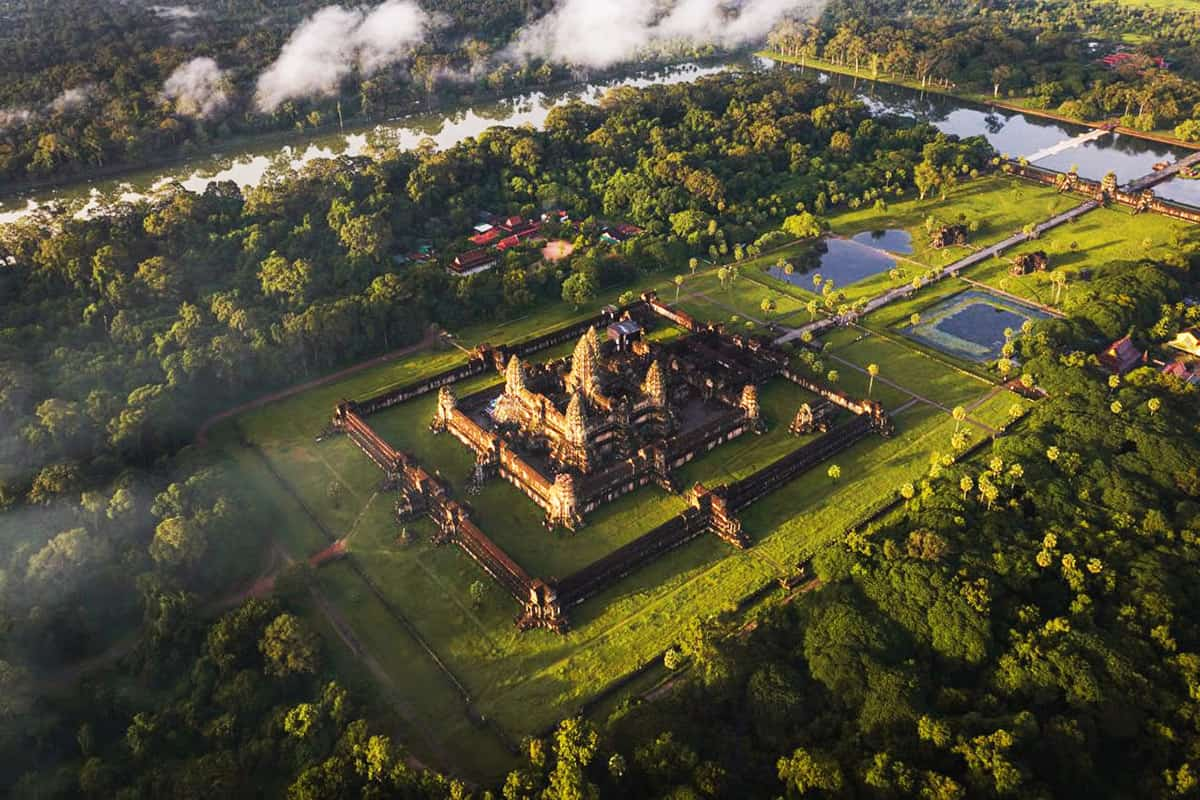
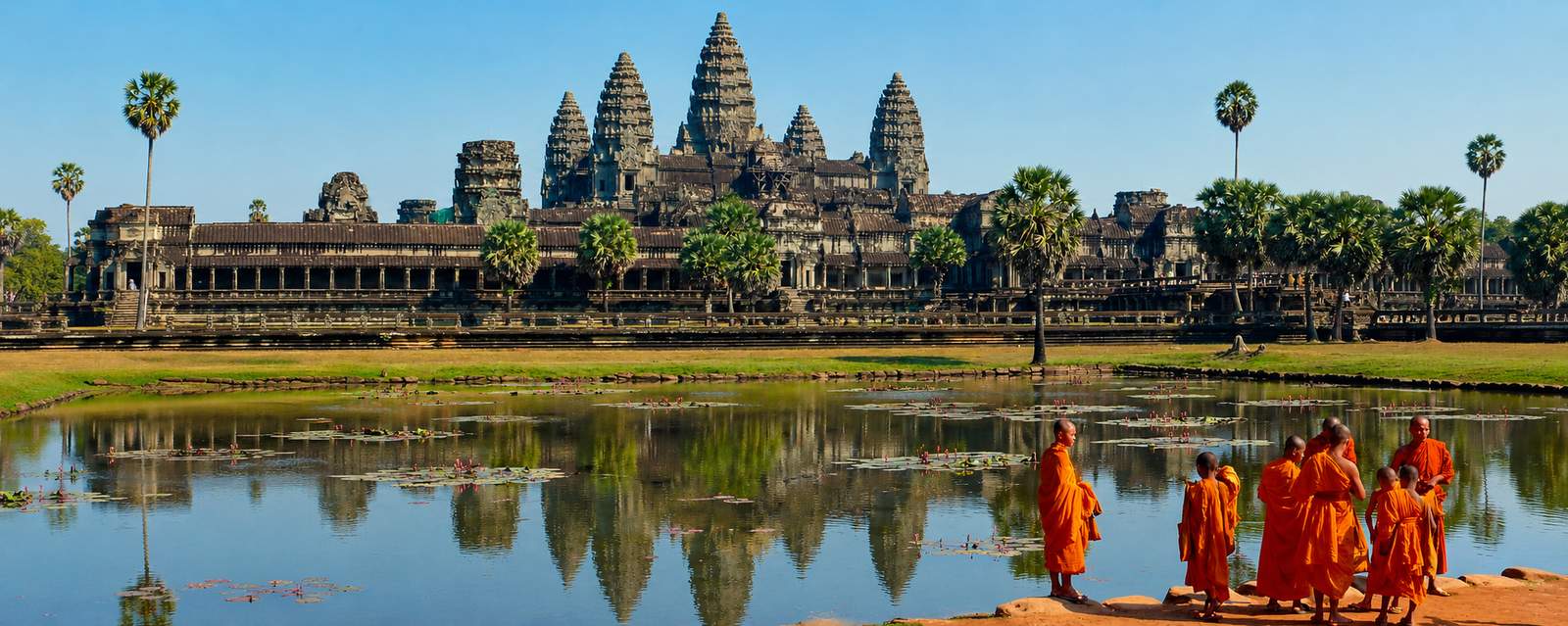
Since most of the country’s “must-see” sites are there, most visitors stay in Siem Reap or Phnom Penh. Although the silent capital and the magnificent temples of Angkor are undeniably important, they only provide a glimpse of the nation.
Beginning in Siem Reap, your two-week trip will take you south through rural Cambodia to the commercial port of Kampot and the mangrove forests of Koh Kong. Follow this, and you’ll reach Cambodia’s pristine coast, where you may choose between crowded public beaches and secluded private isles.
The best beaches are in Thailand, which you can reach by driving north along the Cambodian coast. From here, you may reach Koh Chang in a matter of minutes by boat. Despite being one of Thailand’s biggest islands, Mu Ko Chang National Park has kept it relatively unspoiled.
Koh Chang is more accessible from Cambodia than the rest of Thailand, which helps keep the island peaceful and the hotel rates low. The modern, sustainably built Dewa Hotel beach was perfect for me: a wide strip of white sand that gently sloped into the clear water.
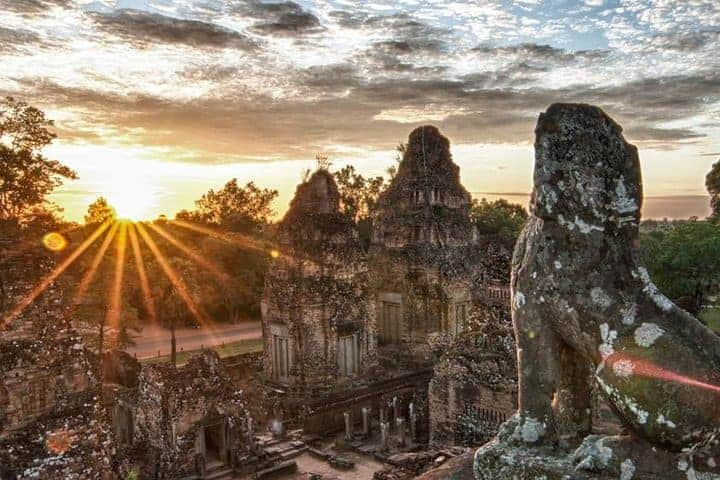
The dawn at Angkor Wat is a major draw for tourists. Avoid the morning rush at Angkor Wat by visiting one of the lesser-visited temples, such as Banteay Srei. Wait till sunset to take advantage of the superior light quality it provides for photography.
If you want to see Southeast Asia’s most stunning landscapes and have two weeks to spare, visit the northern parts of Vietnam and Laos.
In this area, national boundaries are absent. The border crossing is unremarkable, but getting here is challenging due to the steep valley walls, dense vegetation, and swift rivers. The local hill tribes have never legally recognized the boundary, so their traditions and dialects are distinct from those of neighboring settlements.
I suggest going to one of Laos’ major towns, Luang Prabang, located west of Hanoi. The journey from Hanoi to the White Tai settlement of Mai Chau takes around three hours, and it is here that the first wooded mountains appear on the horizon. If you keep heading west into Laos, you’ll reach the kind of environment that most people will only see in a nature documentary. The ethnic hill tribes and their riverbank villages are yours to explore until you reach Luang Prabang.
The Vietnam Museum of Ethnology in Hanoi is a great place to start. This comprehensive museum will introduce you to the many cultural groups you may encounter in the future.
Even if you’ve previously visited Myanmar and Thailand and seen all the top sights, you should consider going back. In little over two weeks, you can travel from Bangkok to the southern border of Myanmar, stopping at secluded temples, border towns, and little-visited islands.
Chiang Mai is one of the culinary hubs of northern Thailand, and it is the perfect place to take a cooking class with a local family and sample dishes from all across the city. For its tranquil environment of ruins sprinkled with statues of Buddha and spires fashioned like lotuses, the medieval city of Sukhothai is now a UNESCO World Heritage Site.
If you start your journey in northern Thailand, you’ll be in an ideal spot to enter uncharted southern Myanmar and then make your way west along a less-traveled path to Yangon. Kipling’s poem “Mandalay” was based on the Burmese capital of Moulmein, located in British-ruled Myanmar.
You may use the Thanlyin River from Moulmein to go to Hpa-An, the little state capital. The four-hour ride takes you through temples and communities in the bush along the river’s narrow banks.
You’ll find yourself in contemporary Myanmar in the country’s main city, Yangon, to the west.
For a cool dip in the middle of bustling downtown Yangon, check at the Victorian-era Strand Hotel.
Repeat tourists to Southeast Asia sometimes want me to arrange something special for them. This tried-and-true tour of ten days would do the trick. It crosses northern Cambodia after passing through southern Laos and is close to the Thai border. Aside from a handful of hardy travelers, I didn’t see many other tourists. If you want to take it easy on your last day of travel, I recommend spending more time in Siem Reap.
Vientiane, the capital of Laos, is a major town before you leave it and go south, where you’ll see narrow river valleys slicing through limestone hills.
You may take a boat into the gaping mouth of Kong Lor Cave or stop at riverbank towns that seldom see a fresh face, but the journeys are lengthy, and the valleys are endless. Nam Theun National Protected Area has a diverse ecology, including evergreen forests, pine stands, cloud forests, and riverine wetlands. I was one of the first tourists to camp there.
Continuing southward in Laos, the topography flattens out when the Mekong and its tributaries enter the country. Among the wooden-stilt homes are the crumbling foundations of colonial-era structures and once-grand temples, reminders that this was once the Kingdom of Champasak.
Once you’ve entered Cambodia, the border town of Preah Vihear is only a short drive away. After a lengthy disagreement over who owns the adjoining Wat Phou Temple, it has reopened to the public. You may take a historic trade route to Siem Reap, and the Angkor Road connects with this 9th-century Khmer edifice.
You won’t find any five-star service at SpringRiver Resort near Kong Lor Cave, but I like the seclusion very well. Here, you may relax in one of 16 classic stilted bungalows beside the banks of a moss-green river and watch the world go by.
The best part of any trip is getting there. While short flights help you get through Southeast Asia more quickly, traveling by land is a great way to do things at your speed and see more of the region.
That is not to say that you must always remain on solid ground. As part of the two-week itinerary I put up for my clients, we frequently spend a day boating the Mekong from the Laos border, stopping to see communities inhabited by ethnic minorities.
From Chiang Mai in northern Thailand, you may drive northeast to Chiang Rai, where the roads grow narrower, the towns become more sparsely populated, and the ATMs disappear as you approach the Laotian border. For stability and ease, it is only natural to carry on to Laos, where you will first travel by boat and then by automobile through stilted dwellings and remote towns before arriving at Luang Prabang.
There are Shan-descended tribes living in the borders between Chiang Rai and Luang Prabang. The Shan are a people group who migrated from northern China. There are a lot of distinct tribes in the area, and although they all share a common past, they also have their unique customs and beliefs.
After a long day of seeing Laos, come to Muang La Lodge to unwind in style. The riverbank bungalows are a product of local craftsmanship, and most of the staff comprises indigenous people. I recommend the five-course taster meal at the outdoor restaurant after a bath in the natural hot springs.
Ready to plan? Explore our private Thailand tours, or read our guides to Koh Kood, Thailand and Koh Samet, Thailand.
Yes, but fly between them for now. The land border has been closed to travelers since 2025, so a route that once crossed from Koh Kong to Koh Chang now needs a flight between Cambodia and Bangkok.
It used to be an easy hop across the border from Koh Kong. With the land border closed since 2025, you now reach Koh Chang from Bangkok by road and ferry, or fly to Trat and take the ferry.
Skip the sunrise rush at Angkor Wat and visit a quieter temple such as Banteay Srei, returning for sunset light.
Cambodia and Koh Chang, northern Vietnam and Laos, Thailand and Myanmar, Laos and Cambodia, and northern Thailand with Laos.
The ideal travel season generally falls during the dry, sunny months. Speak with our specialists for month-by-month climate recommendations tailored to your specific itinerary.
Yes, 100%. All My Way Travel itineraries are bespoke. We adjust durations, accommodations, activities, and destinations to suit your exact preferences.
All our private journeys are 100% tailor-made around your dates, pace, and passions. Talk to our specialists to customize any itinerary below or create a completely bespoke trip.
Direct advice: +1 (888) 898-0888 • Free tailor-made proposal
Why journey with us
One expert owns your journey from first sketch to final boarding pass.
Closed doors open quietly: ateliers, cellars, private homes, museums after dark.
A real voice at 3 a.m. in any time zone, whatever the question.
Bonded, insured and transparent about every dollar before you commit.
Begin
Tell us how you dream of travelling. Within 24 business hours, an in-country specialist will curate the first sketch of your route — bespoke ideas first, commitment never.
Concierge available 24/7 across all Asian time zones · New York registered