

A dedicated designer
One expert owns your journey from first sketch to final boarding pass.
Last updated:
Quick answer: Wiang Kum Kam is an archaeological area and living community in Saraphi District, southeast of Chiang Mai’s old city. It is best explored as a half-day visit by private car, local tram or another locally arranged transfer, with stops chosen in advance because the ruins are spread across several neighborhoods. Check the visitor information point and monument access on the day.
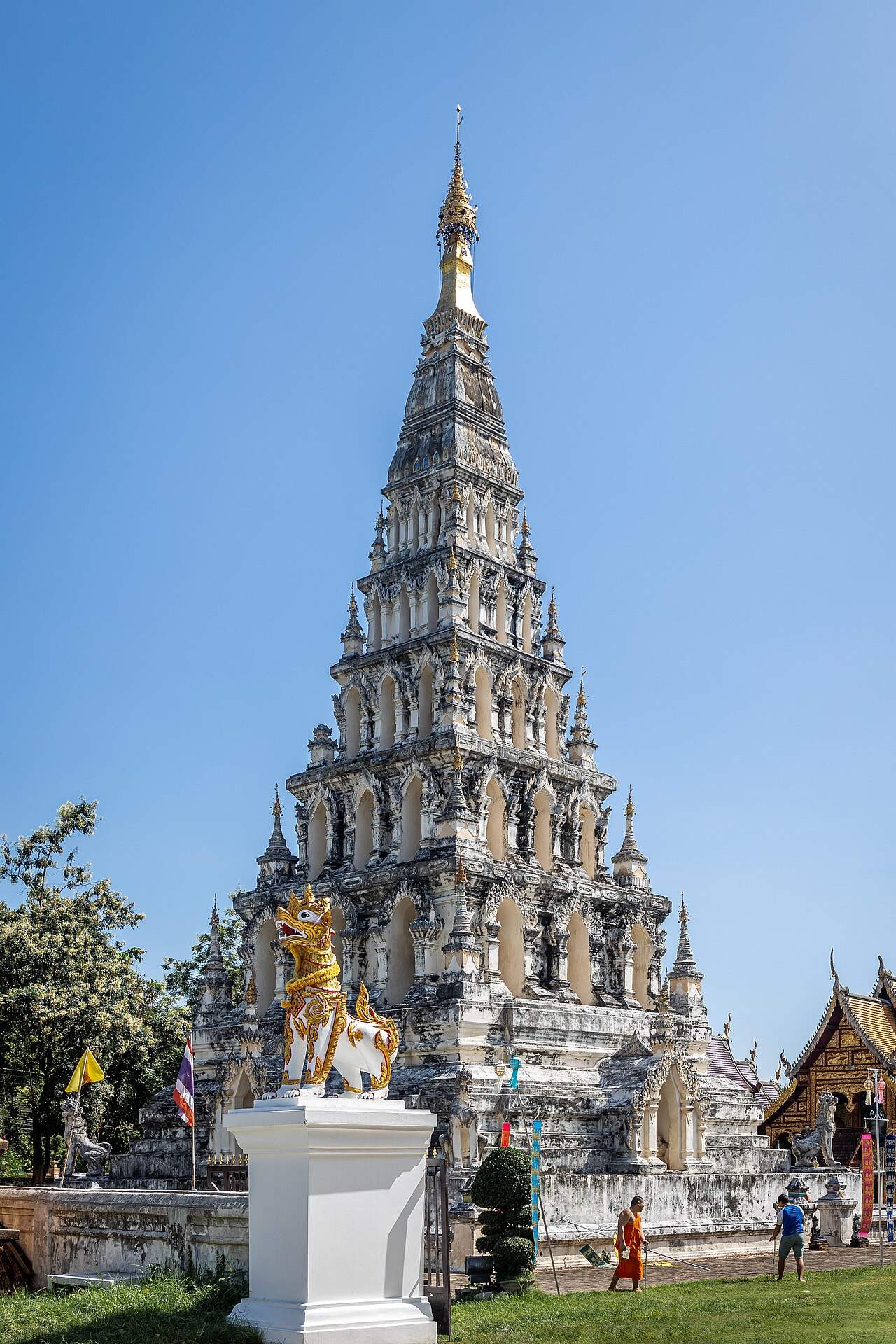
Featured photo: Chedi Liam stupa at Wat Chedi Liam. Photo by Supanut Arunoprayote, Wikimedia Commons, CC BY 4.0. Original file · license.
Wiang Kum Kam was a Lanna-era settlement associated with King Mangrai, built before Chiang Mai. Thailand’s government tourism account dates the city’s construction to 1286–1295 CE; the Thai Archaeology Database places it broadly in the 19th Buddhist century and notes that sources do not establish one uncontested founding year. The site should be understood as an archaeological landscape, not one enclosed ruin complex.
The Thai Archaeology Database describes the present area as a community with homes, farms and orchards among the archaeological remains. It also says the ancient city itself is not registered as one archaeological monument, while multiple individual remains within and around it are registered. Wiang Kum Kam is not a UNESCO World Heritage property; do not confuse it with other northern Thai heritage sites.
Wat Chedi Liam: The distinctive stepped chedi is one of the best-known landmarks in the area and a useful orientation point. It remains a religious site, so dress respectfully, keep clear of worshippers and follow local instructions.
Wat Chang Kham and Wat Kan Thom: These are among the archaeological locations documented in the government and archaeology sources. Names and transliterations vary between English-language listings. Confirm the stop with the local information center or your driver rather than relying only on a map pin.
Smaller excavated sites: Brick foundations, mounds and temple remains are distributed across the former settlement. They are meaningful as part of the larger landscape; some are modest in scale and may have limited interpretation on site. A guide or local tram can help connect the separate stops.
| Visit block | Suggested focus | Check before setting out |
|---|---|---|
| Start | Visitor information point and route choice | Current opening, local transport availability and fees |
| Main landmark | Wat Chedi Liam and nearby remains | Religious-site access, respectful dress and photography rules |
| Secondary stops | Two or three archaeological remains that interest you | Exact location, road conditions and time at each stop |
| Return | Travel back to Chiang Mai or continue to a nearby activity | Traffic and the rest of your day’s schedule |
The route above is a planning suggestion, not a guaranteed itinerary or a promise that every monument is open. Local official listings have published different opening hours, transport prices and service descriptions over time. Confirm details with the Thawang Tan Subdistrict Municipality or the visitor information point before travel; avoid using older online prices as current quotes.
Wiang Kum Kam lies several kilometers from central Chiang Mai and is not best treated as a compact old-town walking loop. A private vehicle, taxi or locally operated tram can reduce the gaps between monuments. Ask whether the quoted transport waits at each site, includes a guide, and covers the return to your hotel.
The archaeology database describes low-lying terrain near the Ping River and records historic flooding and sediment deposits. During heavy rain, check local weather, road access and monument notices; do not enter flooded paths or climb fragile structures. Bring water, sun protection and footwear suitable for uneven ground.
Residents live and work among the remains. Keep noise low, do not cross into private yards or farmland, avoid touching brickwork, and do not remove pottery or other material. At active temples, dress modestly and ask before photographing people or ceremonies. Use local services where practical and leave the area as you found it.
Allow around half a day for the information stop and several separated remains, with extra time if you want a guided tram route or a slow visit. This is a planning estimate, not an official duration.
No. The available Thai archaeology and government sources identify it as an archaeological area, not a UNESCO World Heritage property.
Yes, but the sites are spread out and some are not obvious from the road. A locally arranged tram, driver or guide can make the sequence easier; confirm availability and price directly before relying on it.
Not necessarily. Government and database pages may retain older operating details. Confirm current opening, transport service and fees with the local authority or visitor information point.
Thai official and research references checked 3 November 2026: Thailand.go.th: historical tourism at Wiang Kum Kam; Thai Archaeology Database: Wiang Kum Kam; Tourism Authority of Thailand: Wiang Kum Kam.
Editorial method: This desk-researched guide draws on Thailand’s government, tourism and archaeology listings. It does not claim a first-hand visit. Because published schedules and fees may be old, verify access and transport locally before departure.
Plan a Chiang Mai visit: Share your dates, preferred pace and interest in Lanna history in the trip-planning form. Ask whether the quote includes a local guide, waiting time, transport and any admissions.
“A private tailor-made journey in Wiang Kum Kam allows you to explore at your own unhurried pace, with private transfers and local guides revealing cultural layers that standard tours overlook.”
— Emily, Thailand Destination Specialist at My Way Travel
Explore key landmarks and points of interest across Wiang Kum Kam
Call our direct travel designer desk or request your complimentary bespoke proposal.


The World On Your Terms reveals what awaits when you explore the globe with our specialists. Covering six continents, this volume features handpicked routes, insider tips, and signature experiences.
Request Your Copy
Why journey with us
One expert owns your journey from first sketch to final boarding pass.
Closed doors open quietly: ateliers, cellars, private homes, museums after dark.
A real voice at 3 a.m. in any time zone, whatever the question.
Bonded, insured and transparent about every dollar before you commit.
Begin
Tell us how you dream of travelling. Within 24 business hours, an in-country specialist will curate the first sketch of your route — bespoke ideas first, commitment never.
Concierge available 24/7 across all Asian time zones · New York registered