

A dedicated designer
One expert owns your journey from first sketch to final boarding pass.
Last updated:
Quick answer: Pokhara is a lakeside city and the main gateway for many Annapurna journeys. Plan two or three nights for Phewa Lake, the old bazaar and Sarangkot; add more time if trekking. Nepal Tourism Board identifies three major lakes—Phewa, Rupa and Begnas—and highlights the Annapurna backdrop, but mountain visibility depends on weather. Trekking permits, route conditions and guide requirements differ by route, so decide your trek before treating Pokhara as a simple add-on.
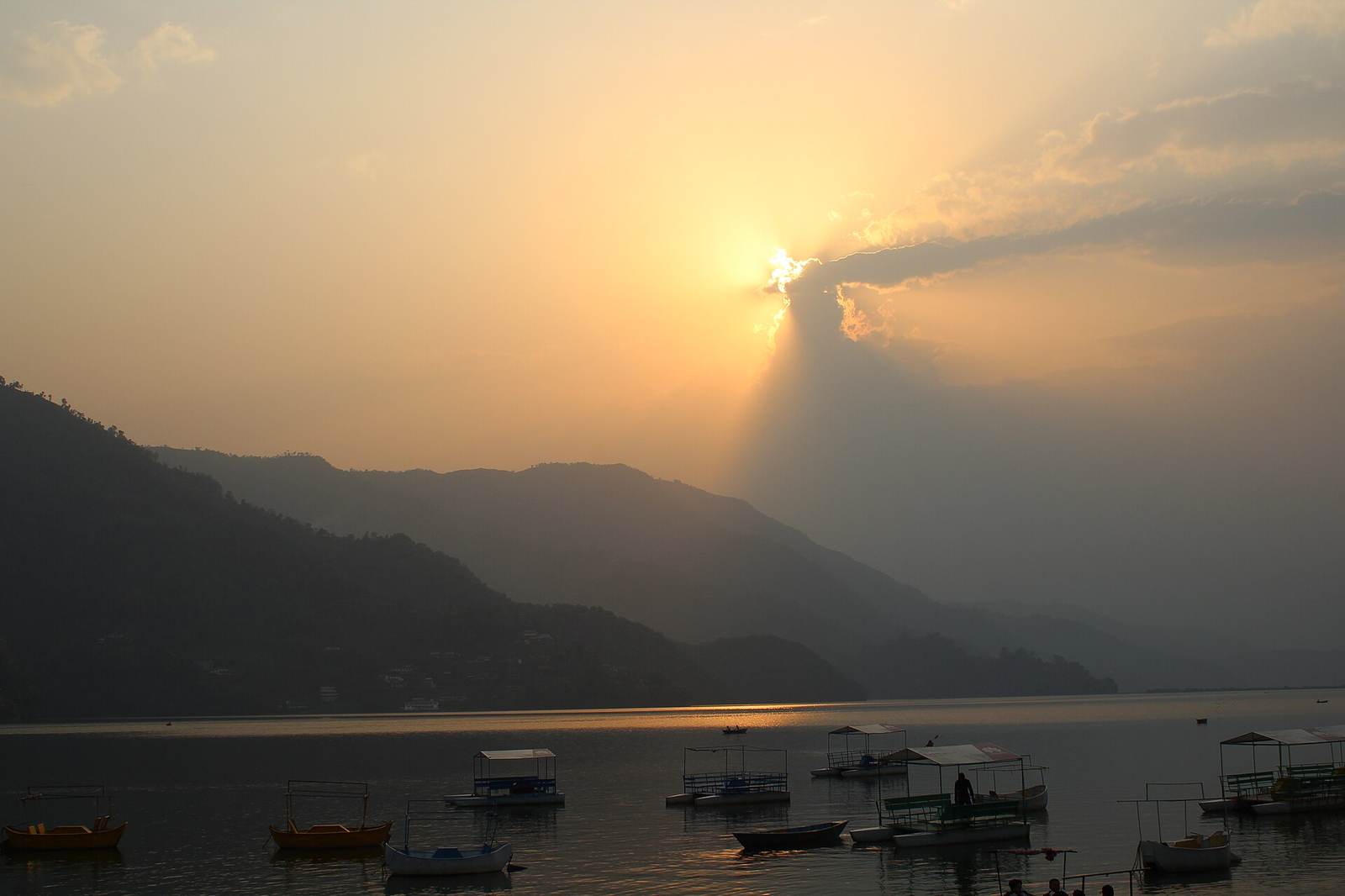
Featured photograph: Phewa Lake and Pokhara city. Photo by Iamavinashk via Wikimedia Commons, licensed under CC BY-SA 4.0.
Plan a private Pokhara stay: Request a tailored Pokhara itinerary. Share your dates, fitness and trekking experience, desired trail length, mobility needs and whether you want a licensed guide or porter. Ask the quote to separate hotel, lake activities, conservation-area fees, trekking permits, guide/porter costs and transfers.
Pokhara is known for Phewa Lake, mountain viewpoints, adventure sports and its role as a gateway to the Annapurna region. Lakeside (Baidam) has hotels, cafés and boat services, while the Old Bazaar and Bindhyabasini Temple offer a different view of the city. The city is not itself a Himalayan trekking trail: it is the staging point where visitors arrange gear, permits, transport and an appropriate route.
Nepal Tourism Board describes Pokhara as a cluster of nine lakes, with Phewa, Rupa and Begnas among the major three. Sarangkot offers a widely used viewpoint above the valley and launch area for paragliding. Clear views of Machhapuchhre and the Annapurna range are weather-dependent; build a second morning into the plan if a sunrise view matters, and avoid advertising it as guaranteed.
| Place or activity | Why include it | Planning check |
|---|---|---|
| Phewa Lake and Tal Barahi Temple | Boating and a temple on an island in the lake. | Check boat safety, life jackets, weather and any local worship guidance. |
| Sarangkot | Sunrise or sunset views and paragliding launch area. | Mountain visibility varies; use a qualified operator and confirm weather cancellation rules. |
| Old Bazaar and Bindhyabasini | Historic streets, local commerce and a religious site. | Dress respectfully and observe photography or worship restrictions. |
| World Peace Pagoda | A hilltop viewpoint across the lake and valley. | Choose a safe walking, boat or vehicle route and account for uphill sections. |
| Begnas and Rupa lakes | A quieter lake landscape outside the central Lakeside area. | Arrange transport and confirm boat service before leaving the city. |
| Annapurna trekking routes | Access to short hikes and multi-day mountain journeys. | Check permits, current route status, altitude, guide rules and acclimatization. |
Three nights work well for a first city stay: one arrival and lake day, one viewpoint or cultural day, and one flexible day for weather or a short hike. A trek requires its own itinerary beyond this baseline. Do not compress a multi-day trek into a city sightseeing schedule or plan a flight immediately after a route that could be delayed by weather or trail conditions.
| Day | Suggested route | Tour-planning note |
|---|---|---|
| Day 1 | Arrive, settle in and walk Lakeside; take a short boat outing if conditions permit. | Confirm airport/bus transfer, hotel location and boat safety equipment. |
| Day 2 | Visit Sarangkot early, then return for the Old Bazaar or Bindhyabasini. | Keep a flexible viewpoint window and check paragliding weather independently. |
| Day 3 | Choose World Peace Pagoda, Begnas Lake or a guided short hike. | Match transport and walking distance to fitness; add an extra night for a longer route. |
Start by selecting the named route and duration, then check the Nepal Tourism Board and relevant conservation-area guidance for current permits and access. The Annapurna Conservation Area requires an entry permit; permit requirements and fees depend on nationality, route and current rules. Some restricted areas require a separate trekking permit. Do not assume a Pokhara hotel or guide quote includes all permits.
Choose a route that matches altitude experience, fitness, season and available days. Build acclimatization and weather buffers into the schedule, and confirm whether a guide or porter is included, what emergency support is available and how accommodation is booked. Travelers with health concerns should seek appropriate medical advice before high-altitude travel. This city guide does not substitute for a route-specific safety plan.
Lakeside is convenient for restaurants, lake access and tour operators. A quieter property outside the central strip can offer more space but adds transfer time. Compare the precise location, road access, hot water, air conditioning or heating, breakfast time, luggage storage and whether the hotel can hold bags during a trek.
Walk or use local taxis for central visits; hire a driver for Sarangkot, Begnas or trailheads. Confirm pickup points because narrow or busy streets may limit vehicle access. For trekking departures, agree in writing on the transfer, equipment handover, permits, guide contact and contingency if weather delays travel. A private vehicle is not automatically included in a guided trek package.
Pokhara suits travelers who want a mix of lakeside rest, soft adventure and mountain access. Visibility, rain, road conditions and flight operations vary seasonally, and the monsoon can affect views and trails. Check current forecasts and official route notices rather than choosing a date on the assumption that the Himalaya will be visible every morning.
For a Nepal itinerary, Pokhara pairs with Kathmandu, Chitwan or a trek in the Annapurna region. Each connection needs its own time allowance. Decide whether your priority is sightseeing, trekking or wildlife, then set hotel nights and domestic transfers around that goal.
Allow two or three nights for the lake, Sarangkot and city sights. Add the full duration of any trek separately.
Yes, viewpoints around Pokhara look toward the Annapurna range, but clouds and haze affect visibility. Schedule a flexible viewpoint morning.
Permit rules depend on the route and protected area. Check the current Nepal Tourism Board and conservation-area requirements before departure.
Flights depend on weather and operator decisions. Confirm current season, pilot credentials, safety briefing and cancellation terms directly.
We can prepare a proposal for hotels, transfers and a guided trek subject to route and operator availability. The itinerary should list permits, guide/porter services, meals and emergency arrangements explicitly.
Official references checked 4 November 2026: Nepal Tourism Board: Pokhara; Nepal Tourism Board: Annapurna Conservation Area; Nepal Tourism Board: trekking permits; Nepal Tourism Board: park entry fees. Check live requirements for your route and nationality. Photo: Wikimedia Commons original, Iamavinashk, CC BY-SA 4.0.
Editorial method: This desk-researched guide uses Nepal Tourism Board information; it does not claim a first-hand trek or mountain-view experience. Permit rules, trail conditions, weather and flight schedules change. Reconfirm route-specific details before travel.
“A private tailor-made journey in Pokhara allows you to explore at your own unhurried pace, with private transfers and local guides revealing cultural layers that standard tours overlook.”
— Emily, Nepal Destination Specialist at My Way Travel
Tailor-made itineraries handcrafted by our specialists that include private guided stays in Pokhara
Call our direct travel designer desk or request your complimentary bespoke proposal.


The World On Your Terms reveals what awaits when you explore the globe with our specialists. Covering six continents, this volume features handpicked routes, insider tips, and signature experiences.
Request Your Copy
Why journey with us
One expert owns your journey from first sketch to final boarding pass.
Closed doors open quietly: ateliers, cellars, private homes, museums after dark.
A real voice at 3 a.m. in any time zone, whatever the question.
Registered in New York, with every cost itemised in your quote before you commit.
Begin
Tell us how you dream of travelling. Within 24 business hours, an in-country specialist will curate the first sketch of your route — bespoke ideas first, commitment never.
Planning team Mon–Sat 8am–8pm EST · 24/7 emergency line while you travel · New York registered