

A dedicated designer
One expert owns your journey from first sketch to final boarding pass.
Last updated:
Quick answer: Choose an Annapurna trek by altitude, available days and walking experience: Poon Hill or a village trek for a shorter trip, Annapurna Base Camp (ABC) for a high-mountain sanctuary route, or the Circuit for a longer crossing through Manang and over Thorong La. Pokhara is the usual gateway. The Nepal Tourism Board (NTB) says its Annapurna Circuit itinerary needs about three weeks; do not compress that route without checking road sections, acclimatization and current conditions. Several named Annapurna routes require a licensed guide and agency-issued TIMS under NTB’s published rule, and an ACAP entry permit applies. Confirm the exact requirements for your route and nationality before departure.
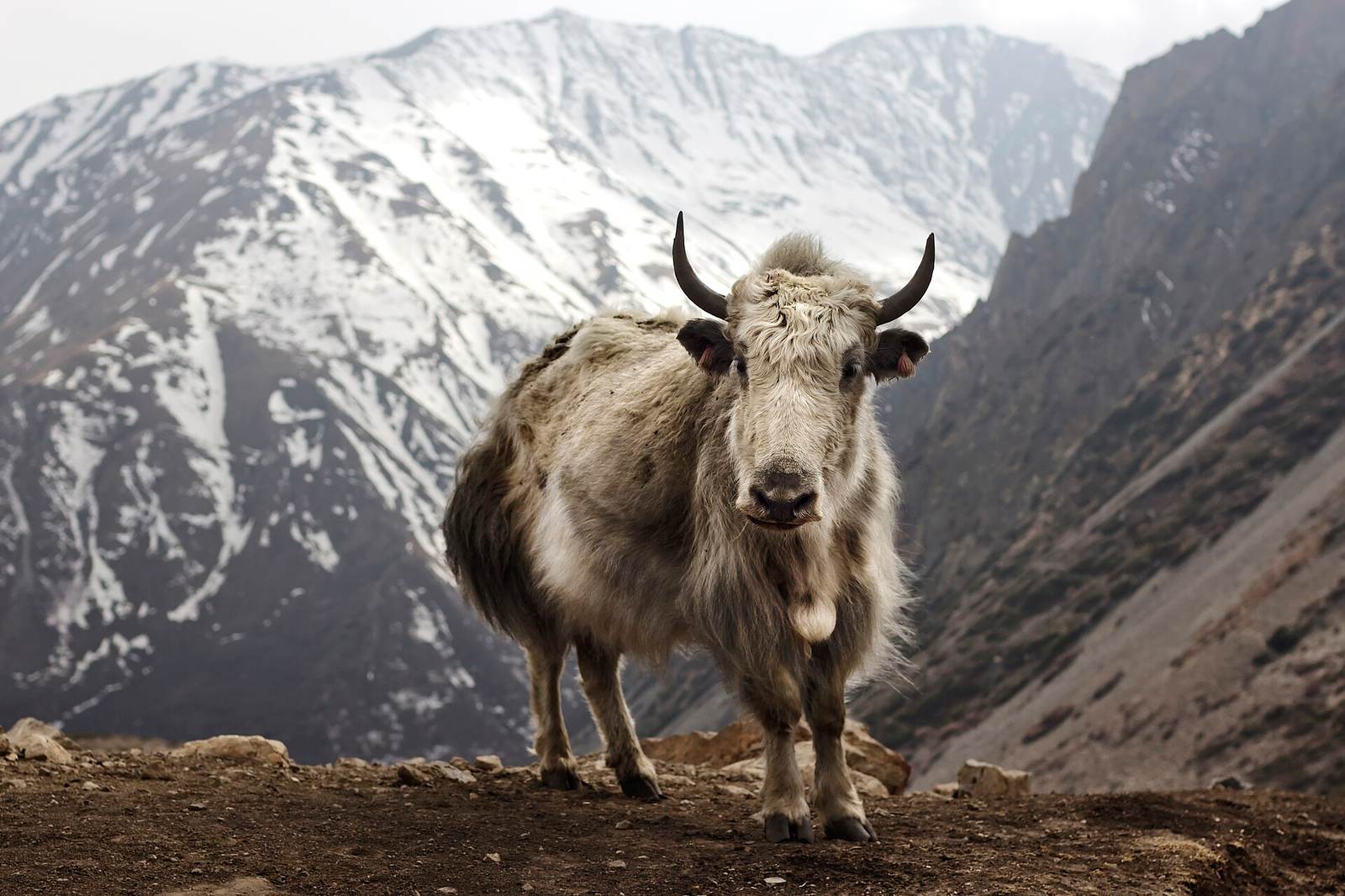
Featured photograph: Yaks on a high-altitude section near Letdar on the Annapurna Circuit. Photo by travelwayoflife via Wikimedia Commons, licensed under CC BY-SA 2.0.
Plan an Annapurna trip: Request a tailored Annapurna itinerary. Include your dates, trekking days, preferred route, group fitness and whether you need a guide, porter, private transfers or post-trek time in Pokhara. Ask for permits, accommodation, meals, transport, porter weight limits and evacuation arrangements to be itemized.
The routes begin from different trailheads and have different altitude profiles; they are not interchangeable day hikes. The table is a route-selection guide, not a substitute for a current day-by-day itinerary.
| Route | Best suited to | Planning considerations |
|---|---|---|
| Ghorepani–Poon Hill | First Himalayan trek or a shorter walking holiday. | Still involves steep climbs and altitude; use a conservative pace and verify the exact number of days with your operator. |
| Annapurna Base Camp / Sanctuary | Travelers seeking a high-mountain basin reached on foot. | Check current trail conditions, weather, guide/TIMS rule and planned sleeping elevations; the route is not low-risk simply because it is shorter than the Circuit. |
| Annapurna Circuit | Travelers with several weeks who want a broad cross-section of the massif. | NTB describes about three weeks as a minimum framework; road access changes the walk, and Thorong La reaches 5,416 m. |
| Mardi Himal | A more focused ridge and viewpoint trek from the Pokhara area. | Ask where the overnight stops fall, whether a guide is required for your route, and how the plan responds to snow or poor visibility. |
| Khopra / Khopra Ridge | Travelers looking for a quieter alternative linking village trails and high viewpoints. | Accommodation can be more limited than on the busiest corridors; confirm lodge availability and seasonal operation. |
| Sikles, Ghandruk or another village walk | A shorter culture-and-landscape stay without crossing the high pass. | These are not all equivalent in effort; confirm trail length, elevation gain, road access and guide requirements for the selected route. |
Build the trip around actual walking days plus arrival, recovery and weather flexibility. NTB’s approximate three-week minimum for the Circuit is a useful warning against treating a long crossing as a rushed add-on. A shorter Poon Hill or village route can fit a shorter holiday, while ABC, Mardi Himal and Khopra require their own route-specific elevation and transport plan. Add a buffer day before a fixed international departure if the trek ends far from your onward flight.
| Available time | Planning direction | Do not leave out |
|---|---|---|
| 3–5 trekking days | Compare a village-based walk or a compact Poon Hill plan. | Transfers from Pokhara, acclimatization appropriate to route, and a weather buffer. |
| 6–10 trekking days | Review ABC, Mardi Himal or Khopra options with exact sleeping elevations. | Check current access, daily ascent, rest opportunities and mandatory guide/TIMS rules. |
| About 3 weeks or more | Consider the full Circuit or a slower combination of regional routes. | Thorong La conditions, contingency days, permit scope, road changes and safe descent options. |
Do not assume one permit or a rule remembered from an older blog covers every route. NTNC’s current ACAP e-permit portal lists routes including Annapurna Circuit, ABC, Poon Hill/Ghorepani, Mardi Himal, Sikles and Nar Phu. The Nepal Tourism Board’s TIMS page lists specific Annapurna routes that require a licensed trekking guide and agency-issued TIMS: Annapurna Circuit, Nar Phu Annapurna Circuit, Mesokanto/Tilicho Pass, Poon Hill–ABC, Khopra, Mardi Himal and Sikleh Tara Hill. Route names and boundaries matter; verify your exact itinerary with the registered trekking agency and official pages before paying.
Upper Mustang is a restricted area and needs a separate restricted-area permit in addition to the relevant conservation-area arrangements. Fees, application channels, checkpoints and document requirements can change. Carry the permit required for your route, follow checkpoint instructions and do not treat an online fee screenshot as proof that your permit has been issued.
High altitude changes the risk profile even for fit hikers. The CDC advises gradual ascent and says travelers should not continue upward while experiencing altitude-illness symptoms; worsening symptoms at rest require descent and urgent assessment. Build acclimatization into the route rather than relying on fitness or medication. Ask a clinician familiar with high-altitude travel for personal advice, especially if you have a heart or lung condition or a prior altitude illness history.
Confirm that your travel insurance covers trekking at the maximum elevation on your itinerary and helicopter evacuation if relevant. Ask who makes the decision to pause, descend or evacuate; how weather affects flights; what communication equipment the guide carries; and what happens if a lodge or trail section is unavailable. A responsible operator should explain these arrangements before the trek, not after a problem develops.
NTB identifies March–May and September–November as favorable broad trekking periods for much of the region. Conditions still vary by altitude, aspect and year: high passes can have snow or closures, while monsoon rain affects lower trails and landslide exposure. Upper Mustang lies in a rain-shadow area and may suit a different seasonal plan, but it has restricted-area permit requirements. Check current weather, trail notices, transport and local advice close to departure.
Pokhara is the practical staging base for many Annapurna itineraries, with accommodation and services before and after walking. On the trail, teahouses and lodges are common on established routes, but room quality and availability vary by village and season. Ask for the overnight stops by name, whether rooms are reserved, what meals and drinking water arrangements are included, and whether you need a sleeping bag. In smaller settlements, carry cash and avoid assuming card or mobile connectivity will work.
NTB gives about three weeks as a minimum framework for going around the massif. Actual duration depends on the start and finish points, road sections, acclimatization days and pace.
NTB lists specific Annapurna routes requiring a licensed trekking guide and agency-issued TIMS. Check the live list against your precise route; do not generalize the rule from one trek to every village walk.
Most routes entering the Annapurna Conservation Area require the appropriate conservation-area entry permit. Use NTNC’s current e-permit system and verify any additional restricted-area permit for your route.
Do not plan a high pass around a rushed schedule. Thorong La is 5,416 m, and the CDC recommends gradual ascent; have a qualified guide set sleeping elevations and contingency options.
We can discuss a private Nepal itinerary and route logistics subject to local partner availability. Ask us to identify the registered trekking agency, guide credentials, permit responsibility, included meals and lodging, porter limits and evacuation cover in the written proposal.
Official references checked 4 November 2026: Nepal Tourism Board: Annapurna Region routes, season and route context; Nepal Tourism Board: current TIMS and guide route list; NTNC: ACAP online permits and route coverage; CDC: high-altitude travel and altitude illness; photo Wikimedia Commons original and CC BY-SA 2.0 license.
Editorial method: This is a desk-researched route-planning guide using Nepal Tourism Board, NTNC and CDC guidance; it is not a first-hand trek report or medical advice. Permit policy, trail access, weather, prices and transport can change. Confirm route-specific rules with official authorities and a registered local trekking agency before booking.
“A private tailor-made journey in Annapurna Region allows you to explore at your own unhurried pace, with private transfers and local guides revealing cultural layers that standard tours overlook.”
— Emily, Nepal Destination Specialist at My Way Travel
Call our direct travel designer desk or request your complimentary bespoke proposal.


The World On Your Terms reveals what awaits when you explore the globe with our specialists. Covering six continents, this volume features handpicked routes, insider tips, and signature experiences.
Request Your Copy
Why journey with us
One expert owns your journey from first sketch to final boarding pass.
Closed doors open quietly: ateliers, cellars, private homes, museums after dark.
A real voice at 3 a.m. in any time zone, whatever the question.
Registered in New York, with every cost itemised in your quote before you commit.
Begin
Tell us how you dream of travelling. Within 24 business hours, an in-country specialist will curate the first sketch of your route — bespoke ideas first, commitment never.
Planning team Mon–Sat 8am–8pm EST · 24/7 emergency line while you travel · New York registered