

A dedicated designer
One expert owns your journey from first sketch to final boarding pass.
Last updated:
Quick answer: Hakone is a mountain and hot-spring region in Kanagawa Prefecture that works best as a 1–2-night stay or a carefully timed day loop from Tokyo. The classic route links Hakone-Yumoto, Gora, Owakudani and Lake Ashi by train, cable car, ropeway, bus and sightseeing boat; weather or volcanic activity can interrupt parts of the route, so check live service notices before departure.
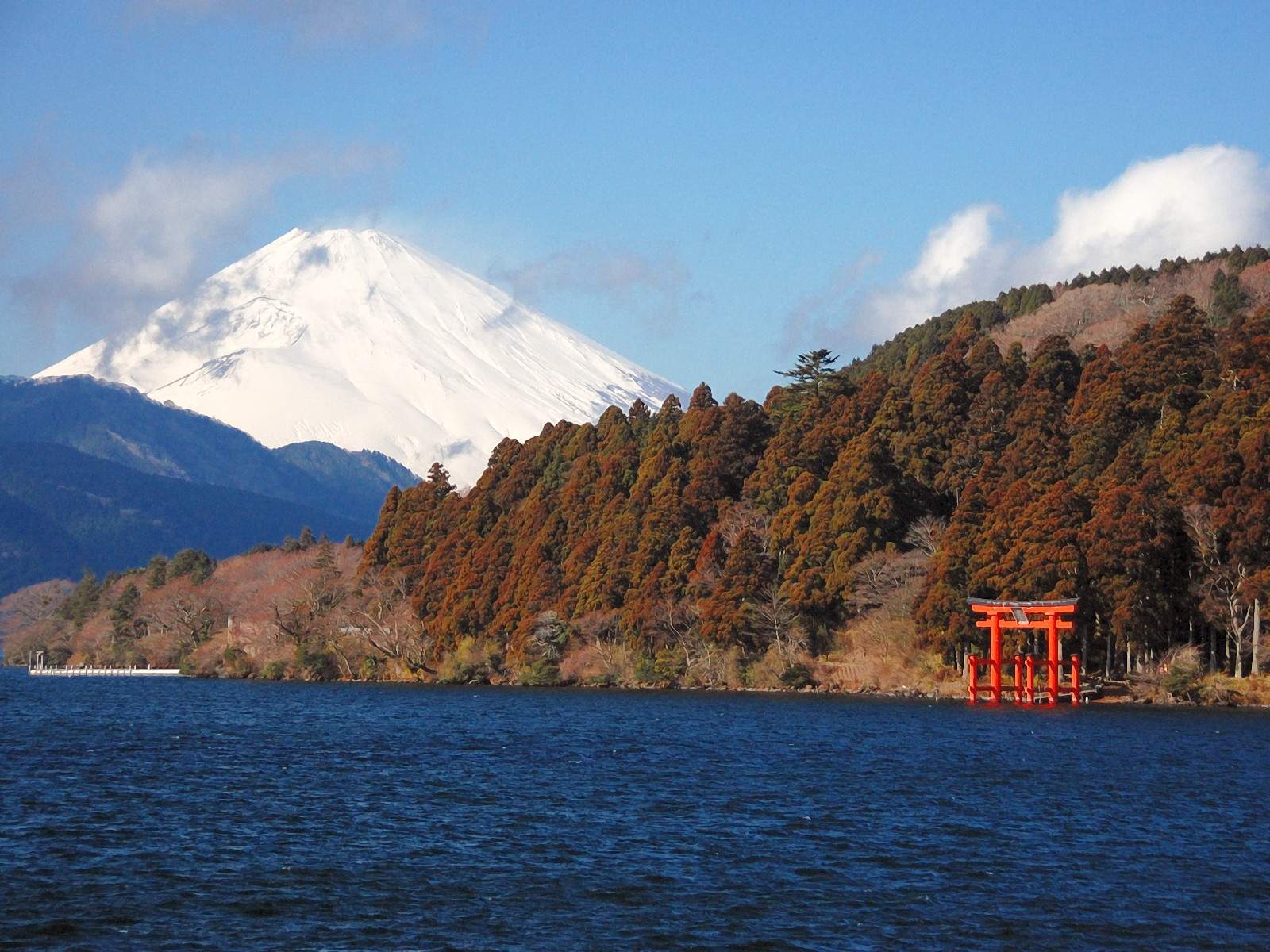
Featured photograph: Lake Ashi, Mount Fuji and Hakone Shrine. Photo by Kentagon, Wikimedia Commons, CC BY-SA 4.0. Original image and license information.
Plan a private Japan itinerary: Request a tailored Hakone trip. Share whether your priority is a ryokan and onsen, Lake Ashi, art museums, or a scenic transport loop. Ask us to confirm pass coverage, luggage forwarding, hotel access, meal times and service conditions for your dates.
Hakone combines hot-spring inns, forested mountain scenery, volcanic landscapes and views across Lake Ashi toward Mount Fuji when conditions are clear. It is not a single town: Hakone-Yumoto, Miyanoshita, Gora, Sengokuhara and the Lake Ashi shore each suit different travelers. Choose a base around the experiences you care about instead of assuming every hotel is near every attraction.
The “Hakone Golden Course” is a linked journey through several types of transport rather than one continuous train ride. Hakone Navi explains that the Hakone Freepass covers eight transport services within designated areas, including the Tozan train, cable car, ropeway, sightseeing cruise and specific buses. Some services or sections may be excluded, and the Odakyu train segment and Romancecar conditions are separate. Read the current pass details before purchase. Official Hakone Navi: Hakone Freepass.
| Area | Good for | Plan around |
|---|---|---|
| Hakone-Yumoto | Gateway convenience, shops and a range of hot-spring hotels | Useful for arriving by rail; check how far your inn is from the station and whether it offers a shuttle. |
| Miyanoshita / Kowakudani | Historic ryokan, forest setting and museum access | Hilly roads and local bus timing; confirm dinner arrival cutoffs. |
| Gora | Mountain rail/cable connections, gardens and art museums | Good for a transport-focused stay; many properties sit uphill from the station. |
| Sengokuhara | Open highland scenery and museums | Less convenient for walking to train stations; plan buses or a car. |
| Lake Ashi / Moto-Hakone | Lake views, shrine visit and cruise access | Check boat schedules and visibility; Mount Fuji is not guaranteed to appear. |
A day trip can work if you start early and accept that you may skip a museum or long onsen visit. One overnight gives more room for a hot-spring stay and a relaxed route; two nights allow an art museum or lakeside walk without rushing through multiple transfers. If you have a fixed onward train, keep a generous return buffer because queues, weather and service disruptions can affect the loop.
It is worth comparing when your itinerary uses several included transport services over two or three days. The pass validity is generally two or three days, and coverage is limited to defined sections. A one-day visitor using only a round trip plus one attraction should compare individual fares; a traveler taking train, cable car, ropeway, cruise and buses may benefit more. The pass does not make a service run during weather stoppages and does not automatically include every premium train seat or attraction admission. Hakone Navi real-time service information.
Hakone is a year-round destination, but the best fit depends on foliage, temperature, crowds and onsen plans. Spring and autumn can be popular, while summer is greener and more humid and winter can bring cold mountain conditions. Lake and mountain visibility varies daily. Check weather, ropeway service notices and local volcanic activity advisories close to departure; change the route if authorities restrict access.
Yes, but start early and choose a shorter route. A full transport loop plus museums and an onsen can be too much for one day.
No. It covers listed services only within specified sections. Check the current map and conditions, and budget separately for excluded transport and attractions.
Not necessarily. Visibility depends on weather and cloud; treat the view as a bonus and plan around Hakone’s other experiences.
Check official service notices and follow local alternatives. Do not assume a boat, bus or bypass route is operating without verifying the day’s service.
Check the transport status before leaving your hotel and again before boarding a linked service. Mountain routes involve platform changes, stairs, waiting outdoors and busy transfer points. Travelers with luggage or limited mobility should ask their hotel and each transport operator about step-free access, elevator locations, luggage size and boarding assistance rather than assuming a pass resolves these needs. For families, keep snacks and water available and plan a warm or indoor break between the ropeway and lakeside stops.
If the ropeway or cruise is suspended, do not try to force the full circuit by improvising a tight bus connection. Use the official map to choose a shorter route around Gora, a museum or a hot-spring stay, then confirm onward service. Set a latest return time before you begin; queues and weather can make the same loop take longer than expected. Hakone is enjoyable even when Mount Fuji is hidden, so choose one or two experiences that remain worthwhile in cloudy conditions.
Pass inclusions and transport orientation were checked against Hakone Navi; current service disruptions against its transport status page. This is desk research, not a recent personal route report. Pass coverage, timetables, ropeway status, volcanic restrictions, museum schedules and hotel details can change and should be checked for the travel date.
“A private tailor-made journey in Hakone allows you to explore at your own unhurried pace, with private transfers and local guides revealing cultural layers that standard tours overlook.”
— Emily, Japan Destination Specialist at My Way Travel
Explore key landmarks and points of interest across Hakone
Call our direct travel designer desk or request your complimentary bespoke proposal.


The World On Your Terms reveals what awaits when you explore the globe with our specialists. Covering six continents, this volume features handpicked routes, insider tips, and signature experiences.
Request Your Copy
Why journey with us
One expert owns your journey from first sketch to final boarding pass.
Closed doors open quietly: ateliers, cellars, private homes, museums after dark.
A real voice at 3 a.m. in any time zone, whatever the question.
Registered in New York, with every cost itemised in your quote before you commit.
Begin
Tell us how you dream of travelling. Within 24 business hours, an in-country specialist will curate the first sketch of your route — bespoke ideas first, commitment never.
Planning team Mon–Sat 8am–8pm EST · 24/7 emergency line while you travel · New York registered