
A dedicated designer
One expert owns your journey from first sketch to final boarding pass.
Welcome to our specialist guide to exploring Indonesia. From iconic landmarks to hidden local gems, our destination experts share their curated insights to help you craft the perfect tailor-made holiday.
Every journey with My Way Travel is individually designed around your dates, pace, and passions. Read on for our recommendations on must-see highlights, insider tips, and practical travel advice.

“Exploring Indonesia with private guides and hand-picked boutique stays uncovers a depth and intimacy that ordinary group travel simply cannot provide.”
It is one of the most common travel questions: is Bali a country? The short answer is no. Bali is an island, and a province of Indonesia. Here are the basics.
Bali lies in Southeast Asia, in the Indonesian archipelago, just east of Java and west of Lombok, a few degrees south of the equator. So yes, Bali is in Asia, specifically Southeast Asia.
Denpasar, in the south of the island, is the provincial capital and Bali’s largest city. Most visitors fly into Ngurah Rai International Airport near Denpasar and head straight to resorts in Seminyak, Ubud, Uluwatu or Nusa Dua.
Indonesia is mainly Muslim, but Bali is overwhelmingly Hindu, with the great majority of its people following a unique local form of Hinduism blended with ancestral and animist traditions. That is why you see small offerings of flowers and incense on pavements and temple gates everywhere, why every village has temples, and why Bali has a calendar of ceremonies and festivals different from the rest of the country.
Every Balinese home and business makes small offerings, called canang sari, several times a day: palm-leaf trays of flowers, rice and incense placed at shrines, doorways and crossroads. Community life is organized around the banjar, a neighborhood council that runs ceremonies, cremations and local affairs. Religious life follows the 210-day Pawukon calendar, so major festivals such as Galungan and Kuningan, when tall decorated bamboo poles called penjor line the streets, take place twice in most Western calendar years.
Many Balinese names show the order of birth: Wayan, Putu or Gede for the first child, Made or Kadek for the second, Nyoman or Komang for the third, and Ketut for the fourth. With a fifth child, the cycle starts again. This is why you may meet several guides called Wayan or Made during your trip.
Nyepi, the Balinese New Year, is the island’s most sacred festival. For 24 hours, usually in March or April, the whole island falls silent: no lights, no work, no travel, no entertainment. The airport closes for the day, and visitors must stay in their hotels. The evening before, villages parade giant monster statues called ogoh-ogoh through the streets and burn them to cleanse the island of evil spirits. If your trip falls near Nyepi, plan around it. The date changes each year according to the Balinese Saka calendar.
The night before Nyepi, villages parade giant papier-mâché demons called ogoh-ogoh through the streets and then burn them, a spectacular sight. On Nyepi itself, the airport closes for the day, and visitors are asked to stay inside their hotels, with lights low and no noise. Hotels provide meals, and many travelers find the quiet unexpectedly beautiful, with clear night skies full of stars. If your dates are flexible, check the Nyepi date before booking so that you do not arrive or depart that day.
Bali is generally a safe and welcoming destination. The main risks are practical ones: traffic (especially for visitors who rent scooters without experience), strong currents on some surf beaches, bag snatching from passing motorbikes in busy areas, and stomach upsets from food or water. Use a driver or ride-hailing app instead of riding a scooter, swim only between the flags, and keep your phone and bag on the side away from the road. Mount Agung and Mount Batur are active volcanoes. Follow official guidance on exclusion zones and treks.
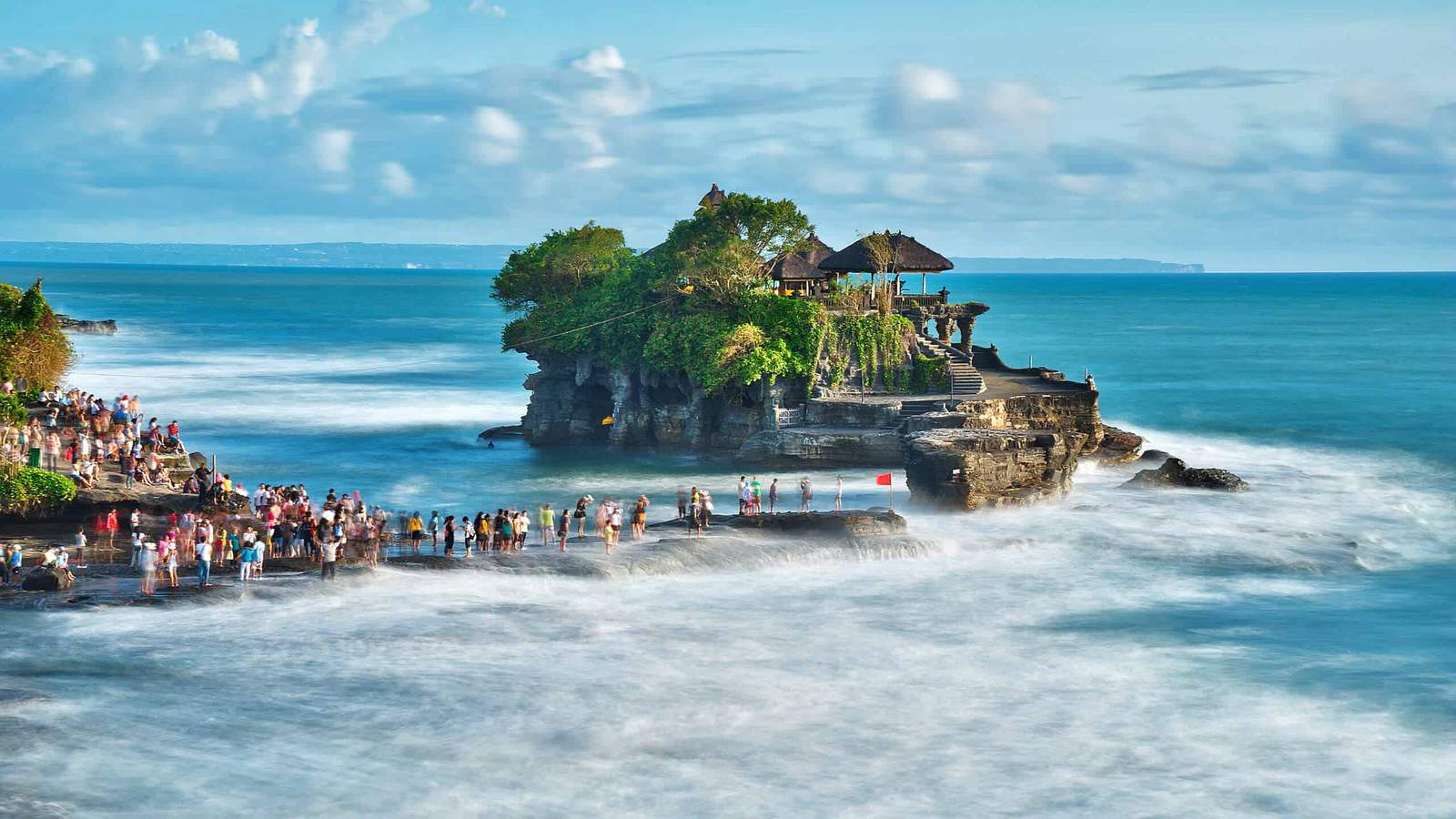
Bali has thousands of temples, which is one reason it is called the Island of the Gods: every village has several temples, every family compound has a shrine, and the great temples of Besakih, Tanah Lot, Uluwatu and Ulun Danu Beratan draw pilgrims from across the island.
April to October is the dry season. See our best time to visit Bali and our guide to Bali’s beaches.
Explore our Bali tours and the Family Adventure on Bali.
No. It is an island and province of Indonesia.
Indonesia.
Yes, in Southeast Asia.
Denpasar.
Mainly Balinese Hinduism.
The Southern Hemisphere, about eight degrees south of the equator.
Balinese and Indonesian. English is widely spoken in hotels, restaurants and tourist areas.
The ideal travel season generally falls during the dry, sunny months. Speak with our specialists for month-by-month climate recommendations tailored to your specific itinerary.
Yes, 100%. All My Way Travel itineraries are bespoke. We adjust durations, accommodations, activities, and destinations to suit your exact preferences.
All our private journeys are 100% tailor-made around your dates, pace, and passions. Talk to our specialists to customize any itinerary below or create a completely bespoke trip.
Direct advice: +1 (888) 898-0888 • Free tailor-made proposal
Why journey with us
One expert owns your journey from first sketch to final boarding pass.
Closed doors open quietly: ateliers, cellars, private homes, museums after dark.
A real voice at 3 a.m. in any time zone, whatever the question.
Bonded, insured and transparent about every dollar before you commit.
Begin
Tell us how you dream of travelling. Within 24 business hours, an in-country specialist will curate the first sketch of your route — bespoke ideas first, commitment never.
Concierge available 24/7 across all Asian time zones · New York registered