

A dedicated designer
One expert owns your journey from first sketch to final boarding pass.
Last updated:
Quick answer: Varanasi is a living religious city on the Ganges, best planned around the ghats, Kashi Vishwanath Temple and a separate visit to Sarnath. The Varanasi District Government lists 88 ghats; UNESCO inscribed the Ancient Buddhist Site of Sarnath on the World Heritage List in 2026. Allow three nights for a dawn riverfront walk, temple visit and Sarnath, while checking current temple notices, crowd conditions and river access.
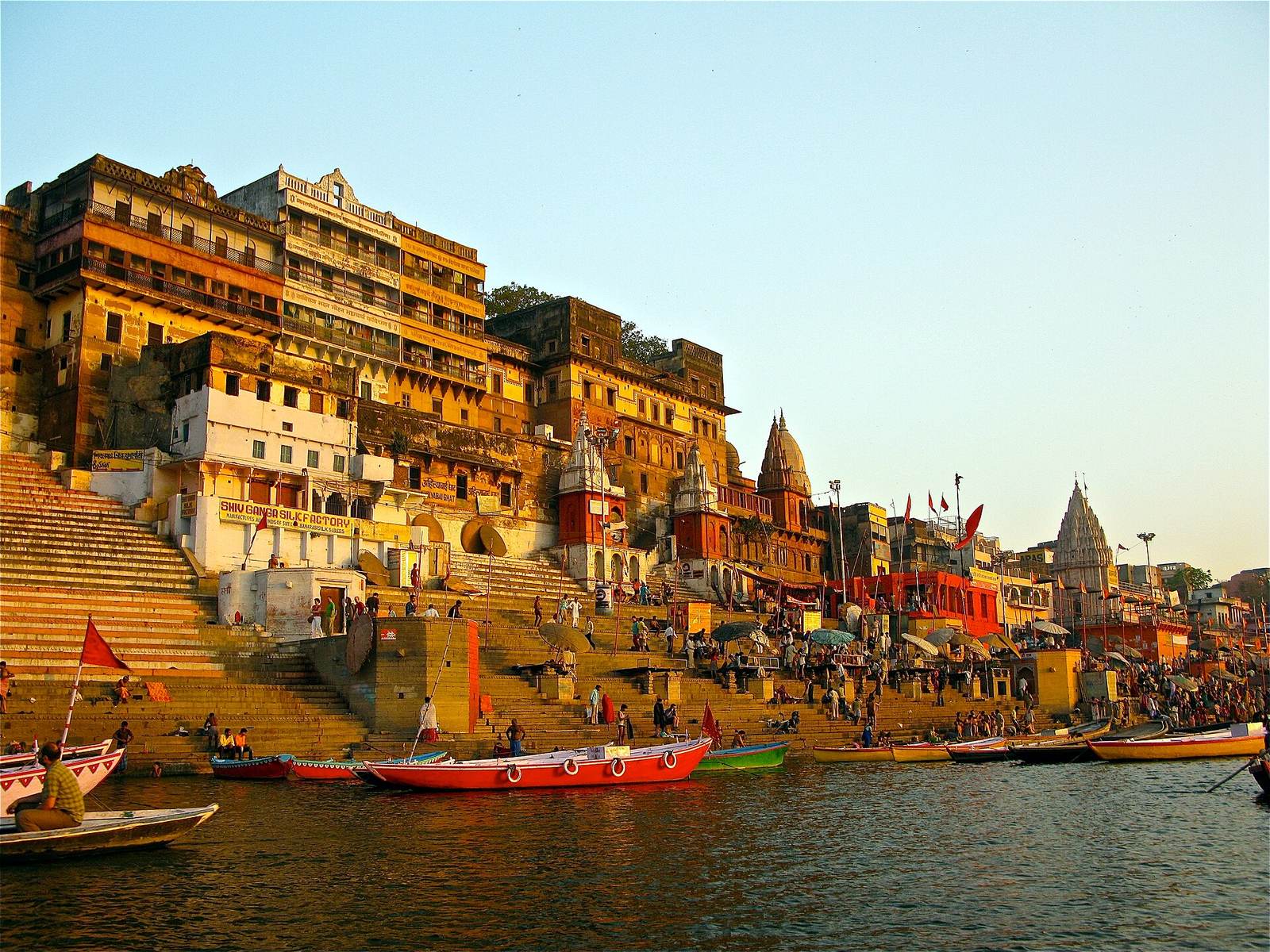
Featured photograph: Ahilya Ghat on the Ganges in Varanasi. Photo by Ken Wieland on Wikimedia Commons, licensed under CC BY-SA 2.0.
Plan a private Varanasi and Buddhist heritage route: Request a tailored Varanasi itinerary. Share your dates, temple priorities, mobility needs, preferred guide language and interest in Sarnath. Ask the planner to distinguish temple appointments, boat fees, guide service and transfers in the written proposal.
Varanasi, also known as Kashi or Banaras, is both a pilgrimage city and a densely inhabited urban centre. Its ghats are not a single attraction: the riverfront supports worship, bathing, local transport, public gathering and cremation rites. The district government lists 88 ghats and notes that most serve bathing and puja while two are used exclusively as cremation sites. Plan the riverfront as a living sacred landscape, not a staged viewing platform.
Sarnath adds a different religious and historical perspective. It lies about 10 km north-east of Varanasi, according to the district administration. UNESCO’s 2026 inscription for the Ancient Buddhist Site of Sarnath covers two component parts: Chaukhandi Stupa and the archaeological remains. The Sarnath Archaeological Museum is a separate visit and is not itself the same thing as the UNESCO-listed property.
| Place | Why it matters | Plan respectfully |
|---|---|---|
| Ganga ghats | A sequence of riverfront steps and civic-religious spaces along the Ganges. | Choose a short walking segment; ask before photographing people, rituals or cremation areas. |
| Dashashwamedh and nearby riverfront | A busy central area associated with boat departures and evening religious activity. | Agree the boat route, duration, price and return point before boarding; follow current water-safety instructions. |
| Shri Kashi Vishwanath Temple | A major Shiva temple and active pilgrimage destination. | Check the Trust’s current notification for permitted items, gates, aarti tickets and crowd-related access changes. |
| Sarnath archaeological site | Chaukhandi Stupa and the archaeological remains connected with the ancient Buddhist site. | Keep enough time for the site itself; check current entry arrangements and conservation rules. |
| Sarnath Archaeological Museum | An on-site museum with objects recovered from archaeological work at Sarnath. | Confirm museum opening days and visitor rules separately from the archaeological site. |
| Old-city lanes | Markets, shrines, food and everyday life beyond the riverfront. | Use a local guide for orientation; keep routes short and avoid blocking narrow lanes. |
Two nights can cover one riverfront block, a temple visit and Sarnath if your arrival is early and transfers are smooth. Three nights create more flexibility for dawn and evening activity, crowds, temple entry and a separate Sarnath visit. Four nights suit slower walking, festival dates or travellers who want time for neighbourhoods and museums.
| Stay | Sample structure | Best fit |
|---|---|---|
| 1 night | Choose one priority: the ghats or a pre-planned temple visit; do not squeeze in Sarnath after a late arrival. | A transit stop only. |
| 2 nights | One block for the ghats and old city; a separate half-day for Sarnath and its museum. | A focused first visit with confirmed access. |
| 3 nights | Dawn riverfront walk, temple visit, separate Sarnath day and a flexible block for traffic or crowd changes. | Most travellers seeking a balanced itinerary. |
| 4 nights | Keep an additional day for neighbourhoods, museums or a slower pace. | Visitors with mobility needs or festival-season dates. |
Use the official Shri Kashi Vishwanath Temple Trust website for the current darshan and aarti process. The Trust’s notifications say temple activity times may change on special dates and that the Ganga Dwar can be restricted when river flow or safety requires it. Its current guidance also identifies a no-vehicle zone and prohibits electronic devices inside the temple premises. Check the latest notice before leaving your hotel, carry only permitted items and avoid relying on a tout or an unofficial “skip the line” offer.
Aarti participation, general darshan and ticketed services are separate planning decisions. If aarti is central to your visit, confirm the exact booking and reporting requirements through the Trust. For general temple visits, allow extra time for security, queues and the walk through the old-city approach.
Early morning gives a quieter view of river activity, while evening brings larger gatherings and ceremony. A boat is optional; you can also experience the ghats on foot. Before boarding, agree the route, duration, boat capacity, price and return point with the operator. Check the vessel’s life jackets and follow the boatman’s instructions, especially when river level or currents are high.
Respect privacy. Do not photograph cremations, grieving families, worshippers or private ceremonies without explicit permission. Keep distance from ritual bathing and do not touch offerings or enter the river unless local safety guidance permits it. The riverfront is a place of worship and daily life for residents.
Set aside a separate block for Sarnath rather than treating it as another ghat stop. UNESCO’s 2026 World Heritage inscription covers Chaukhandi Stupa and the archaeological remains; the Archaeological Survey of India is responsible for conserving the property. The district government places Sarnath about 10 km north-east of Varanasi, but road time depends on traffic and departure point.
Check opening conditions for the archaeological site and museum separately. The museum visit can add context to the excavated remains, but its schedule and entry requirements may differ from the outdoor archaeological area. Do not plan tightly timed rail or flight departures immediately after the return drive.
Weather, crowd size, festivals and river conditions can change the feel of the city. Cooler months are often easier for extended walks, while major pilgrimage dates can make roads and temple queues much busier. Heat affects the old-city walk and Sarnath excursion; carry water, sun protection and comfortable footwear. Check the local forecast and the temple’s current announcements close to your dates.
The Varanasi District Government lists 88 ghats. Their uses differ; most are bathing and puja ghats, while two are used exclusively as cremation sites.
Yes. UNESCO inscribed the Ancient Buddhist Site of Sarnath in 2026. The listed property includes Chaukhandi Stupa and archaeological remains; the nearby museum is a separate institution.
The district administration places it about 10 km north-east of the city. Actual drive time varies with traffic and starting point.
The Temple Trust currently prohibits electronic devices inside the premises. Check its latest official notification for permitted items and access rules before your visit.
Official sources checked 3 November 2026: Varanasi District Government, Ganga Ghat (88 ghats and visitor context); Varanasi District Government, tourist places (Sarnath distance and city sites); Shri Kashi Vishwanath Temple Trust, current notifications (access and prohibited items); UNESCO World Heritage Centre, Ancient Buddhist Site of Sarnath (2026 inscription and property components); Press Information Bureau, Government of India, Sarnath inscription announcement; Incredible India, Sarnath Museum. Photo: Ken Wieland on Wikimedia Commons, CC BY-SA 2.0.
Editorial method: This desk-researched guide uses district, temple, Government of India and UNESCO sources; it does not claim a first-hand pilgrimage. Temple access, river operations, festival crowds and museum schedules should be reconfirmed for each date. Route tables are planning frameworks.
“A private tailor-made journey in Varanasi allows you to explore at your own unhurried pace, with private transfers and local guides revealing cultural layers that standard tours overlook.”
— Emily, India Destination Specialist at My Way Travel
Explore key landmarks and points of interest across Varanasi
Call our direct travel designer desk or request your complimentary bespoke proposal.


The World On Your Terms reveals what awaits when you explore the globe with our specialists. Covering six continents, this volume features handpicked routes, insider tips, and signature experiences.
Request Your Copy
Why journey with us
One expert owns your journey from first sketch to final boarding pass.
Closed doors open quietly: ateliers, cellars, private homes, museums after dark.
A real voice at 3 a.m. in any time zone, whatever the question.
Registered in New York, with every cost itemised in your quote before you commit.
Begin
Tell us how you dream of travelling. Within 24 business hours, an in-country specialist will curate the first sketch of your route — bespoke ideas first, commitment never.
Planning team Mon–Sat 8am–8pm EST · 24/7 emergency line while you travel · New York registered