

A dedicated designer
One expert owns your journey from first sketch to final boarding pass.
Last updated:
Quick answer: Ahmedabad is best planned as a two-night heritage stay: spend one day in the walled city’s pol neighborhoods, mosques and markets, then use another half-day for Sabarmati Ashram or a stepwell outside the center. The historic city was founded in 1411 and is a UNESCO World Heritage property; its pols are living residential lanes, so visit with care and confirm opening arrangements for each site.
Plan a private Gujarat journey: Request an Ahmedabad itinerary. Tell us whether you want architecture, crafts, food, Gandhi-related history or a wider Ahmedabad–Patan–Modhera route. Ask the proposal to identify the hotel area, transport, guiding, site tickets and any meal inclusions separately.
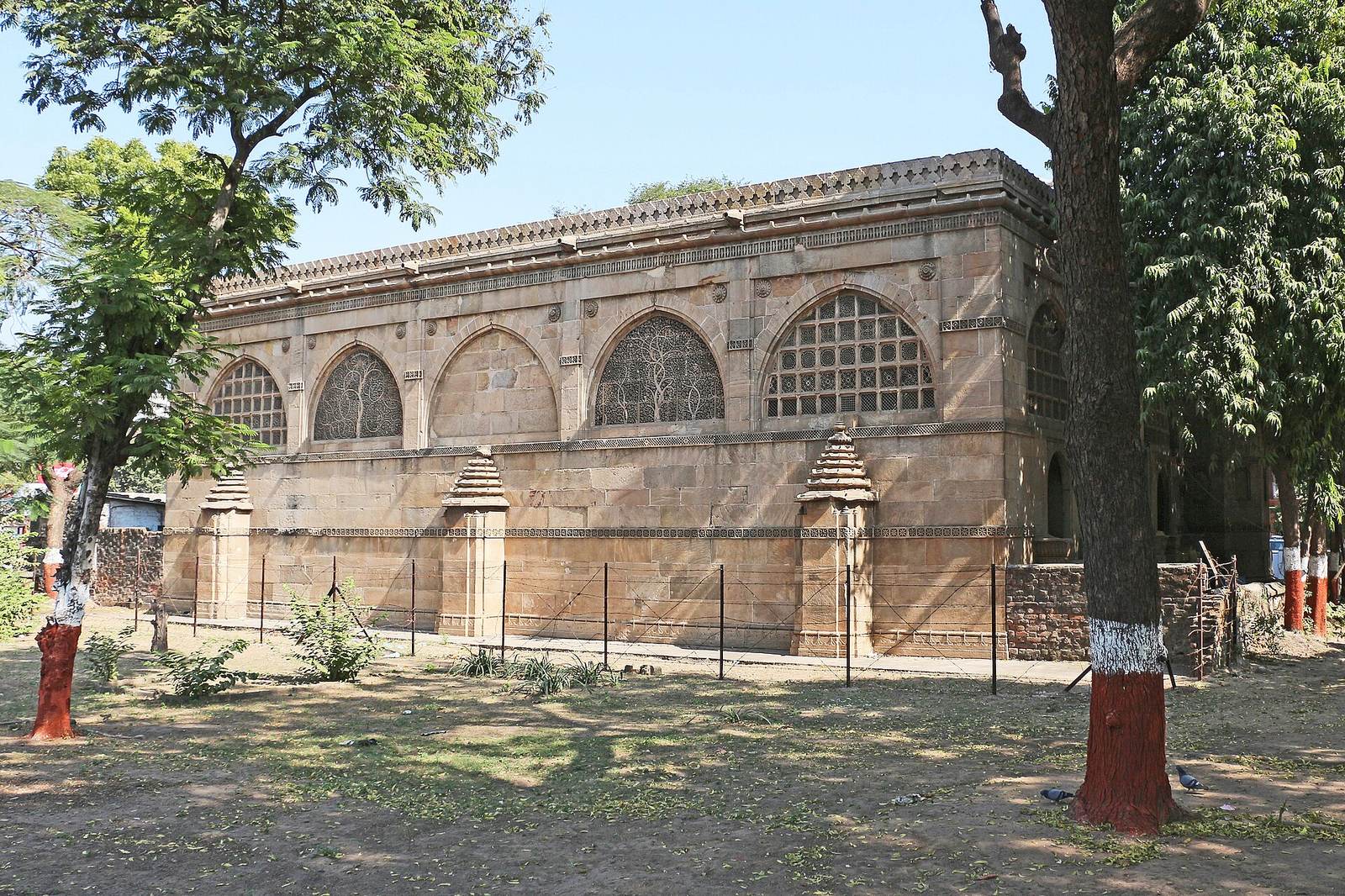
Featured photograph: Sidi Saiyyed Mosque, Ahmedabad. Photo by Bernard Gagnon, Wikimedia Commons, CC BY-SA 3.0. Original image and license.
Ahmedabad’s historic center is a lived-in city rather than a fenced archaeological site. UNESCO describes a street pattern of gated residential lanes called pols, dense timber houses, public wells, bird-feeding towers and religious institutions. Sultan Ahmad Shah founded the walled city on the Sabarmati’s eastern bank in 1411. The combination of Sultanate-era monuments and neighborhood architecture makes the place rewarding for travelers interested in how communities shaped a city, not only in isolated landmarks. UNESCO: Historic City of Ahmadabad.
The scale is substantial: UNESCO’s property record notes 28 nationally protected monuments and 2,696 important buildings protected through Ahmedabad’s municipal heritage framework. These numbers describe the broader historic property and its protections; they do not mean that every building is open to visitors. Treat the pols as residential neighborhoods where people live and work. UNESCO’s property and conservation details.
For a first visit, group the old-city landmarks into a walk and reserve a separate transfer for sights outside the center. The Gujarat Tourism heritage brochure includes a heritage walk and the Sidi Saiyyed Mosque among its recommended experiences; check the current route, organizer, timing and fee before booking. Gujarat Tourism: Heritage of Ahmedabad.
| Area or sight | Why it matters | Planning note |
|---|---|---|
| Pol neighborhoods and old-city lanes | Gated streets, carved wooden houses, courtyards and community landmarks show the historic urban pattern. | Go with a knowledgeable local guide; keep the group small, avoid blocking entrances and ask before photographing residents. |
| Sidi Saiyyed Mosque | Its stone lattice windows, especially the celebrated tree-of-life screen, are a major example of Ahmedabad craftsmanship. | Incredible India dates its construction to 1572–73. It remains a place of prayer, so check visitor access and dress respectfully. |
| Jama Masjid and Teen Darwaza | The mosque and historic gateway help explain the old city’s ceremonial and commercial core. | Incredible India dates Jama Masjid to 1423. Confirm access, prayer times and any local restrictions before arrival. |
| Sabarmati Ashram | A Gandhi-related heritage stop connected with the Sabarmati River and the modern history of India. | Opening hours, exhibitions and visitor arrangements can change; check the Ashram’s current visitor notice before making it the anchor of your day. |
| Adalaj stepwell | A finely carved stepwell that makes a useful contrast with the dense urban fabric of the walled city. | It is outside the central walking area. Combine it with a planned vehicle transfer rather than assuming it is a short walk from old-city sights. |
The Sidi Saiyyed Mosque is particularly easy to misread as a purely photographic stop. Incredible India notes that it continues to function as a place of worship. The latticework deserves close attention, but visitors should follow signs and the instructions of caretakers, avoid entering prayer areas when access is restricted, and never use a tripod or flash where prohibited. Incredible India: religious sites in and around Ahmedabad.
Two days work well when the first is dedicated to the old city and the second is kept flexible for a museum, ashram or stepwell. The route below is a planning framework, not a fixed operator schedule; site hours, entry policies, traffic and restoration work can change.
| Day | Morning | Afternoon | Evening |
|---|---|---|---|
| Day 1: Walled city | Begin with a guided walk through selected pol lanes and historic gates while the streets are active but before the strongest heat. | Visit Sidi Saiyyed Mosque and Jama Masjid if open to visitors; take a meal break and allow time for the old-city market streets. | Choose a relaxed riverfront or dining stop. Keep the schedule loose if the group spends longer at the heritage walk. |
| Day 2: Heritage beyond the core | Visit Sabarmati Ashram or a museum after confirming current access. | Arrange a separate transfer to Adalaj stepwell or another outlying heritage site; avoid cramming several distant stops into one half-day. | Return to the hotel, or continue toward Gandhinagar/Patan only if the next transport and overnight plan are confirmed. |
If you have only one full day, choose either the old-city walk or a city-plus-stepwell combination. Trying to cover every mosque, museum and outlying monument creates long vehicle transfers and leaves little time to understand the neighborhood. Travelers with more time can add Patan or Modhera as a separate extension; treat those as a regional journey rather than local Ahmedabad stops.
Choose accommodation by the experience you want. Staying near the old city can make early walks easier, while a modern central district may offer more contemporary hotel choice and dining. Confirm the exact address and road access: a hotel described as “heritage” may be in a busy lane with limited vehicle approach, and luggage may need to be carried from a drop-off point.
For the historic core, walking with a local guide is usually more useful than trying to navigate every lane by car. Use a prearranged vehicle for the airport, rail station and outlying sites. Ahmedabad’s local traffic and heat affect transfer times, so do not schedule a stepwell visit immediately before a timed departure. Confirm which transfer, parking, guide and entry charges are included in any private-tour proposal.
Plan outdoor walks for cooler parts of the day and check the local forecast, especially during the hottest months and monsoon periods. Carry water, sun protection and footwear suited to uneven paving and steps. If heavy rain is forecast, ask whether the walk, stepwell or riverside areas remain accessible; wet stone surfaces can be slippery.
Pols are homes and community spaces, not open-air sets. Keep voices low in narrow lanes, do not enter courtyards or photograph people through doorways without permission, and follow religious-site rules. At mosques and temples, dress modestly and check whether shoes, photography or entry are restricted. Use a guide who explains the neighborhood’s religious and social context rather than promising access to private homes.
Yes. UNESCO inscribed the Historic City of Ahmadabad in 2017. The property includes historic monuments and the traditional urban fabric of pol neighborhoods; it is a lived-in district, not a single ticketed enclosure.
Two nights allow a full old-city day and another half-day for an ashram, museum or stepwell. Add time if you want to include Patan or Modhera, which require separate route planning.
It is a functioning place of worship. Visitor access can depend on prayer schedules and local instructions; confirm current entry arrangements and dress respectfully.
No. It is outside the central walking area, so plan a separate vehicle transfer and check the site’s current access and opening information before travel.
Historic-city facts and conservation context were checked against UNESCO’s Historic City of Ahmadabad record. Landmark descriptions were checked against Incredible India’s Ahmedabad guide and its religious-sites guide. The heritage-walk reference comes from Gujarat Tourism’s heritage brochure. This is desk research, not a first-hand visit report. Opening hours, restoration status, guide availability and entry conditions should be reconfirmed for the travel date.
“A private tailor-made journey in Ahmedabad allows you to explore at your own unhurried pace, with private transfers and local guides revealing cultural layers that standard tours overlook.”
— Emily, India Destination Specialist at My Way Travel
Call our direct travel designer desk or request your complimentary bespoke proposal.


The World On Your Terms reveals what awaits when you explore the globe with our specialists. Covering six continents, this volume features handpicked routes, insider tips, and signature experiences.
Request Your Copy
Why journey with us
One expert owns your journey from first sketch to final boarding pass.
Closed doors open quietly: ateliers, cellars, private homes, museums after dark.
A real voice at 3 a.m. in any time zone, whatever the question.
Registered in New York, with every cost itemised in your quote before you commit.
Begin
Tell us how you dream of travelling. Within 24 business hours, an in-country specialist will curate the first sketch of your route — bespoke ideas first, commitment never.
Planning team Mon–Sat 8am–8pm EST · 24/7 emergency line while you travel · New York registered