

A dedicated designer
One expert owns your journey from first sketch to final boarding pass.
Last updated:
Quick answer: Pingyao is a preserved historic city in Shanxi, known for its walls, courtyard houses, merchant streets and early modern banking history. The UNESCO property includes the walled city plus Shuanglin Temple, 6 km southwest, and Zhenguo Temple, 12 km northeast. Give the old town one full day and add another half or full day if you want to visit the outlying temples without rushing.
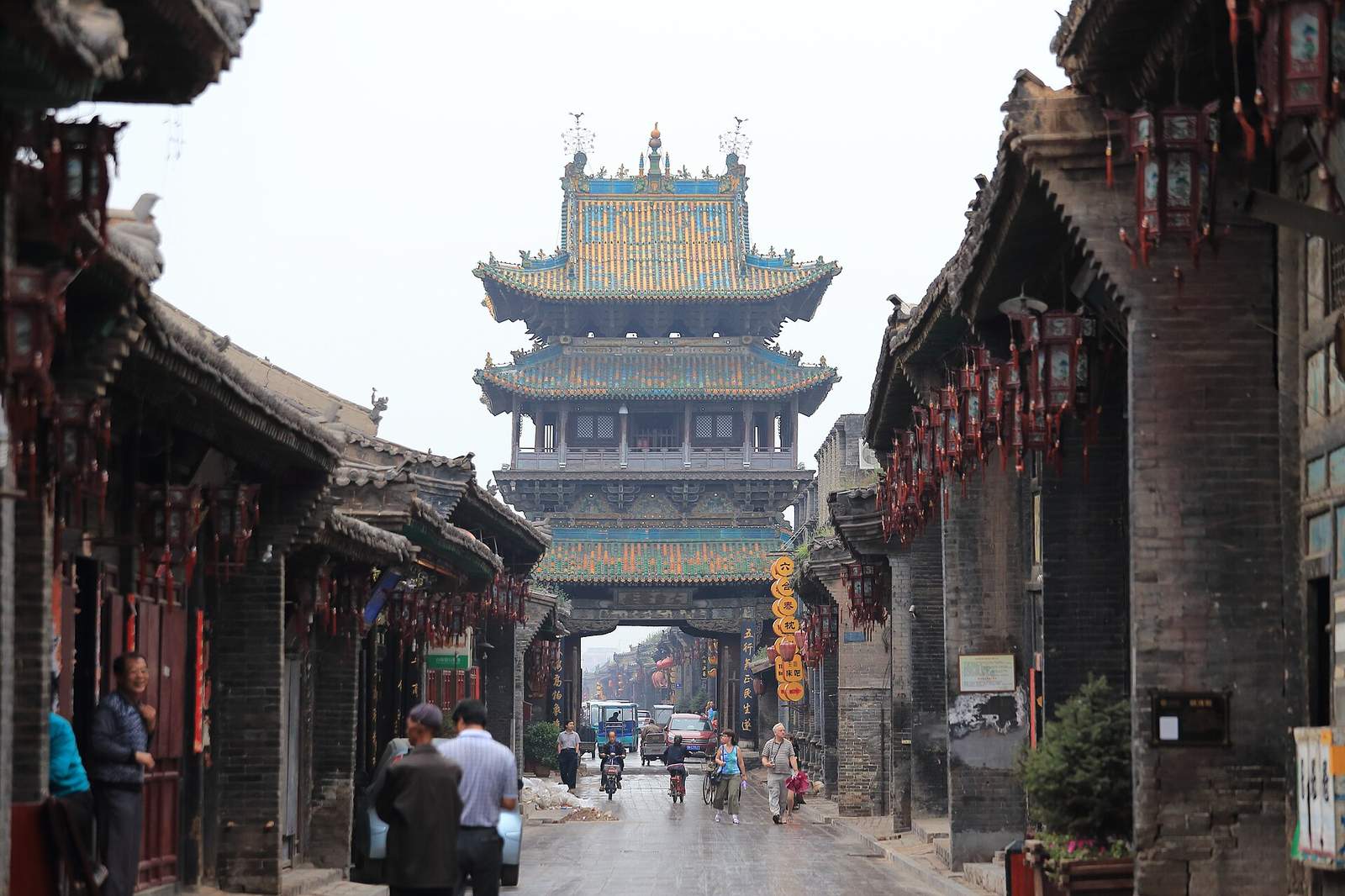
Featured photograph: Historic city tower and street in Pingyao. Photo by Zhangzhugang via Wikimedia Commons, licensed under CC BY-SA 3.0.
Add Pingyao to a Shanxi heritage journey: Request a tailored Pingyao itinerary. Share dates, walking pace, rail arrival, interest in temples or old-town accommodation, and whether you want a guide. Ask the proposal to separate rail transfers, local vehicle, tickets, guide time and overnight stay.
Pingyao offers a legible historic street plan rather than a single monument. UNESCO describes it as a well-preserved example of a traditional Han Chinese county-level city founded in the 14th century, with streets, lanes, shops, dwellings, temples and defensive walls. It also became a major financial centre in the 19th and early 20th centuries. That context helps visitors understand why merchant residences, commercial streets and banking buildings are part of the attraction.
UNESCO’s listed property is broader than the central walled area: it also includes Shuanglin Temple and Zhenguo Temple. That distinction matters when arranging transport and choosing how many nights to stay. A city-wall ticket or old-town walk should not be assumed to include those separate sites.
| Stop | Why it matters | Planning advice |
|---|---|---|
| City wall and gates | The defensive perimeter frames Pingyao’s historic street grid and roofline. | Check current access points, opening hours and ticket rules; allow time for steps and exposed weather on the wall. |
| South Street and central lanes | A walk through shops, courtyards and restored façades shows how the old commercial centre is laid out. | Explore side lanes slowly; avoid treating working homes as open exhibits and ask before photographing residents. |
| Former banking and merchant buildings | They explain Pingyao’s role in regional trade and finance, beyond its visual appeal. | Confirm which museums are open and whether interpretation is available in your language on the day. |
| Courtyard residences and temples | Traditional domestic architecture and religious sites add detail to the city’s social history. | Follow posted rules and respect worship or private property boundaries. |
| Shuanglin Temple | An associated UNESCO component known for its painted sculpture collection. | It is outside the central walled area; reserve a separate transfer and verify current conservation access. |
| Zhenguo Temple | A second associated component with an early timber shrine. | UNESCO locates it northeast of the county seat; check route, site hours and transport before adding it. |
UNESCO records Shuanglin Temple about 6 km southwest and Zhenguo Temple about 12 km northeast of the county seat. These are source-site distances, not door-to-door travel guarantees. Build a time buffer for local roads, traffic, ticket queues and any closed sections.
One night is a practical minimum for an unhurried old-town walk and one main museum or wall visit. Two nights give enough flexibility to add one or both associated temples and enjoy the streets after day visitors leave. Your route may also depend on whether you are arriving from Taiyuan or continuing toward another Shanxi destination; verify the current railway and transfer schedule before fixing a same-day connection.
| Stay | Sample plan | Suitable for |
|---|---|---|
| Day trip | Focus on the old city, one wall section and a selected merchant-history museum. | Travellers with a confirmed early arrival and late departure; little room for delays. |
| 1 night / 2 days | Day 1: arrive, explore central lanes. Day 2: visit a temple outside the walls or revisit the old city before departure. | Most first-time visitors. |
| 2 nights / 3 days | Keep a full old-city day, then schedule Shuanglin and Zhenguo as separate or combined transfers if current hours allow. | Heritage-focused travellers who want more than a quick city-wall visit. |
Staying inside or immediately beside the historic area makes early walks and evening visits easier, but check vehicle access and luggage transfer: some lanes are pedestrianised or difficult for cars. Accommodation outside the walls may simplify vehicle access but adds daily transfers. Ask whether the quoted room is in a protected courtyard property, what facilities are available, how far the vehicle can approach and whether staff help carry luggage.
Historic guesthouses vary in sound insulation, stairs, heating or cooling and room size. Request photographs of the exact room type and written confirmation of bathroom, lift, breakfast and cancellation conditions. A “courtyard” label alone does not establish the building’s age or preservation status.
Pingyao’s outdoor streets and wall are easiest to enjoy when temperatures are comfortable and visibility is good. Summer can bring heat and busy holiday periods; winter can be cold, with shorter daylight. Check the local forecast and official site notices for your dates, and dress for wind and sun if walking the wall. Festival dates may affect room demand and local traffic.
Confirm whether your rail ticket arrives at Pingyao Railway Station or Pingyao Gucheng Station: they are different stations and imply different transfer plans. Use the arrival station printed on your ticket when arranging a pickup. The central historic area is best explored on foot; a pre-arranged car or licensed local vehicle is more practical for the outlying temples. Confirm pickup location, wait time, luggage allowance and whether the vehicle can enter the old-town zone.
Yes. UNESCO lists the Ancient City of Ping Yao, including the walled city and the associated Shuanglin and Zhenguo temple components.
They are outside the central walled area. Arrange transport and check their current opening and conservation access rather than assuming they are part of a walk through the old town.
One full day covers a focused old-town visit. Add a second day for one or both outlying temples and a slower pace.
No. It is a living urban area with residents, businesses and active religious sites. Respect private homes, ask before photographing people and follow local preservation rules.
Official reference checked 3 November 2026: UNESCO World Heritage Centre: Ancient City of Ping Yao (heritage significance, city fabric and distances to Shuanglin and Zhenguo); Pingyao Ancient City official site (current visitor information, where available). Photo original and license are linked above.
Editorial method: This is desk research based on UNESCO and the destination’s official site. Suggested time is a planning recommendation, not an official minimum or first-hand report. Check local schedules, tickets, conservation closures and transport on the day; no specific room, guide or museum opening is guaranteed.
“A private tailor-made journey in Pingyao allows you to explore at your own unhurried pace, with private transfers and local guides revealing cultural layers that standard tours overlook.”
— Emily, China Destination Specialist at My Way Travel
Explore key landmarks and points of interest across Pingyao
Call our direct travel designer desk or request your complimentary bespoke proposal.


The World On Your Terms reveals what awaits when you explore the globe with our specialists. Covering six continents, this volume features handpicked routes, insider tips, and signature experiences.
Request Your Copy
Why journey with us
One expert owns your journey from first sketch to final boarding pass.
Closed doors open quietly: ateliers, cellars, private homes, museums after dark.
A real voice at 3 a.m. in any time zone, whatever the question.
Bonded, insured and transparent about every dollar before you commit.
Begin
Tell us how you dream of travelling. Within 24 business hours, an in-country specialist will curate the first sketch of your route — bespoke ideas first, commitment never.
Concierge available 24/7 across all Asian time zones · New York registered