

A dedicated designer
One expert owns your journey from first sketch to final boarding pass.
Last updated:
Quick answer: Chengde is best planned around the Mountain Resort and its outlying Qing-era temples, a UNESCO World Heritage property of 611.2 hectares. Allow one full day for the garden-palace landscape and another for one or two temples; the sites are separate and their tickets and transfers are not automatically bundled. Two nights suit a focused visit from Beijing, while three nights allow a slower heritage route.
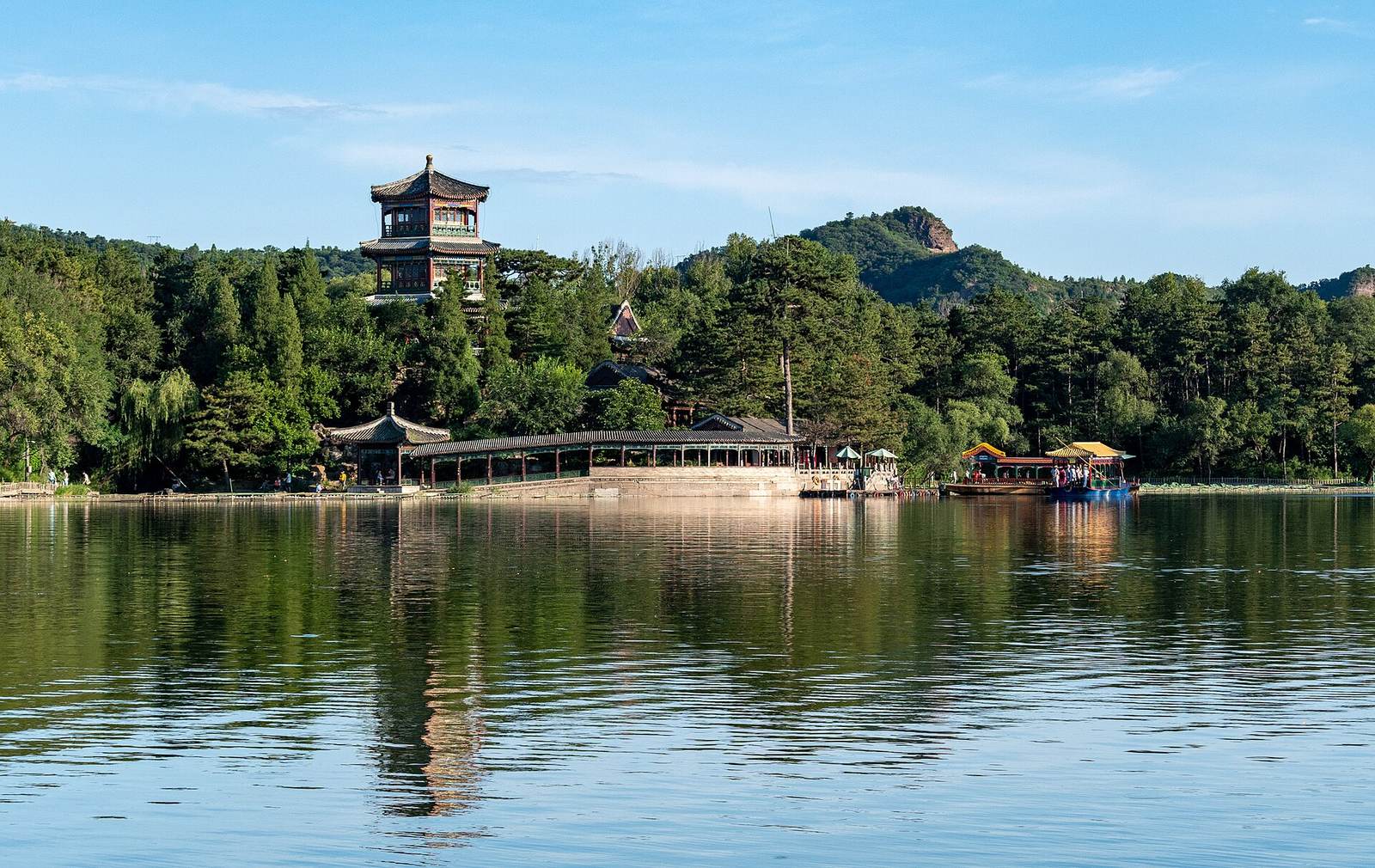
Featured photograph: Lakeside scenery at Chengde Mountain Resort. Photo by xiquinhosilva on Wikimedia Commons, licensed under CC BY 2.0; resized and optimized for web display.
Plan a private Beijing–Chengde heritage extension: Request a tailored Chengde itinerary. Share your Beijing arrival, dates, temple interests, walking pace and preferred rail or private-car transfer. Ask for separate ticket lines, guide language, hotel location and the order of each site in the written proposal.
The Mountain Resort was built from 1703 to 1792 as a Qing imperial summer residence and administrative base. UNESCO describes it together with the Outlying Temples as a 611.2-hectare property and the largest existing imperial palace-garden and temple complex in China. The resort uses a landscape of lakes, plains and hills rather than a single monumental building; the wider property also reflects Qing governance and relations with different communities across the empire.
UNESCO identifies 12 outlying imperial temples distributed across the eastern and northern hills outside the palace-and-garden area. Several use architectural styles associated with communities beyond the Han Chinese court. The scale and spread make transport planning essential: a ticket to the main Mountain Resort is not the same visit as a temple such as Putuo Zongcheng or Puning Temple.
| Visit area | Why it matters | Planning check |
|---|---|---|
| Mountain Resort palace area | Qing court buildings and the starting point for understanding the imperial site. | Entry gate, museum inclusion, ticket validity and how much walking your group wants. |
| Lake and garden landscape | Water, islands, bridges and pavilions show how the resort used topography and borrowed landscape forms. | Distance, current sightseeing vehicle or boat service, weather and accessible routes. |
| Outlying temples | Compare different architectural traditions and the political purpose of the temple network. | Choose one or two by interest; verify each temple’s separate opening, ticket and transport. |
| Chengde city heritage | Add local museum or urban context without overloading the main heritage day. | Check current exhibition hours and allow time for the transfer back to your hotel or station. |
One day is a compressed visit and works only if you focus on the Mountain Resort or a single temple cluster. Two full days are a practical baseline for the main garden-palace site plus selected temples. Three days allow a more measured pace, weather flexibility and time for city context.
| Time | Sample route | Best for |
|---|---|---|
| 1 day | Spend the main block at the Mountain Resort; add a temple only if current opening and transfer time make the connection realistic. | A short stop with an early arrival and confirmed tickets. |
| 2 days | Day one: Mountain Resort palace, lakes and garden areas. Day two: one or two outlying temples selected by architecture and access. | Most first-time heritage visitors. |
| 3 days | Keep two days for the UNESCO property and use the third for a slower city or museum visit, or a weather buffer. | Photography, specialist history interests or a relaxed private tour. |
The attraction’s current 2026 notice lists the Mountain Resort ticket at RMB 130 in the peak season from 1 April to 31 October and RMB 90 from 1 November to 31 March. It describes the resort ticket as including the palace area and says it is valid for one entry within two days of purchase. Separate tickets apply to the Putuo Zongcheng and Xumi Fushou temple area and other scenic areas; do not assume one ticket covers every outlying temple. Confirm whether the museum is included in the product selected, along with current eligibility, online reservation and entry gate, before purchase.
| Published product | Seasonal reference | What is included / to confirm |
|---|---|---|
| Mountain Resort | RMB 130 peak season; RMB 90 off-season | The current notice specifies the palace area and two-day validity; verify museum inclusion on the ticket product. |
| Putuo Zongcheng and Xumi Fushou temple area | Separate ticket; official notice lists a separate seasonal rate. | Verify whether the selected product covers both temples and the correct gate. |
| Additional outlying sites | May use separate ticket products. | Confirm admission and transport for each temple rather than buying on an assumption. |
Chengde is a common heritage extension from Beijing, but the right transfer depends on your rail schedule, luggage and whether you want to return the same day. A private vehicle gives more flexibility between the resort and temples; rail can work for the intercity leg when arrival and departure times line up. Check the exact station, current train timetable, local hotel transfer and the resort’s entry gate before fixing a same-day itinerary. Avoid booking the last onward connection immediately after a full day inside the large site.
For a private guided tour, specify whether the quote includes a licensed guide, vehicle and driver hours, parking, attraction tickets, meals and any temple-specific entry. Ask the guide to distinguish the Mountain Resort from the separate outlying temples and to schedule breaks for the long walking distances.
Late spring through early autumn offers greener garden scenery, while the official ticket schedule treats April–October as peak season. Winter has a different, quieter landscape and the official notice classifies November–March as off-season, but cold weather can affect comfort and some services. Hours can vary by month and site; the Chengde Cultural Heritage Bureau publishes current notices. Check those notices and the weather close to departure, especially if your plan depends on a temple or a boat or sightseeing vehicle.
Yes. The UNESCO property is named Mountain Resort and its Outlying Temples, Chengde, inscribed in 1994. It covers 611.2 hectares.
UNESCO describes 12 outlying imperial temples associated with the Mountain Resort. Visitor access and ticketing are handled by individual site arrangements.
It is possible to see a portion, but the resort is large and the temples are separate sites. Two days provide a more realistic first-visit plan.
No. The official ticket notice lists separate products for the Mountain Resort and other temple or scenic areas. Confirm the current inclusions before buying.
Official sources checked 3 November 2026: UNESCO World Heritage Centre, Mountain Resort and its Outlying Temples (dates, area, 12 temples and heritage context); Chengde Mountain Resort official 2026 visitor notice (seasonal admission prices, ticket validity and stated palace-area inclusion); Chengde Municipal Government, seasonal hours and entry arrangements. Photo by xiquinhosilva on Wikimedia Commons, CC BY 2.0.
Editorial method: This desk-researched guide relies on UNESCO, the scenic-area operator and Chengde government notices. Ticket and operating information is date-sensitive; the itinerary is a planning suggestion and does not claim first-hand access. Recheck transport, openings and admissions for your exact date.
“A private tailor-made journey in Chengde allows you to explore at your own unhurried pace, with private transfers and local guides revealing cultural layers that standard tours overlook.”
— Emily, China Destination Specialist at My Way Travel
Explore key landmarks and points of interest across Chengde
Call our direct travel designer desk or request your complimentary bespoke proposal.


The World On Your Terms reveals what awaits when you explore the globe with our specialists. Covering six continents, this volume features handpicked routes, insider tips, and signature experiences.
Request Your Copy
Why journey with us
One expert owns your journey from first sketch to final boarding pass.
Closed doors open quietly: ateliers, cellars, private homes, museums after dark.
A real voice at 3 a.m. in any time zone, whatever the question.
Registered in New York, with every cost itemised in your quote before you commit.
Begin
Tell us how you dream of travelling. Within 24 business hours, an in-country specialist will curate the first sketch of your route — bespoke ideas first, commitment never.
Planning team Mon–Sat 8am–8pm EST · 24/7 emergency line while you travel · New York registered