

A dedicated designer
One expert owns your journey from first sketch to final boarding pass.
Last updated:
Quick answer: Trashigang is a useful base for eastern Bhutan’s dzong, river valleys and routes toward Gom Kora, Trashi Yangtse, Merak and Sakteng. It is far from the western Paro–Thimphu circuit: the Tourism Council of Bhutan’s visitor material describes a two-day road journey from Thimphu, while Yonphula domestic airport serves the district but can face weather-related delays or cancellations. Allow several nights for the east and keep transport flexible. Check whether your chosen villages or protected areas require a guide, permit or local arrangement before setting out.
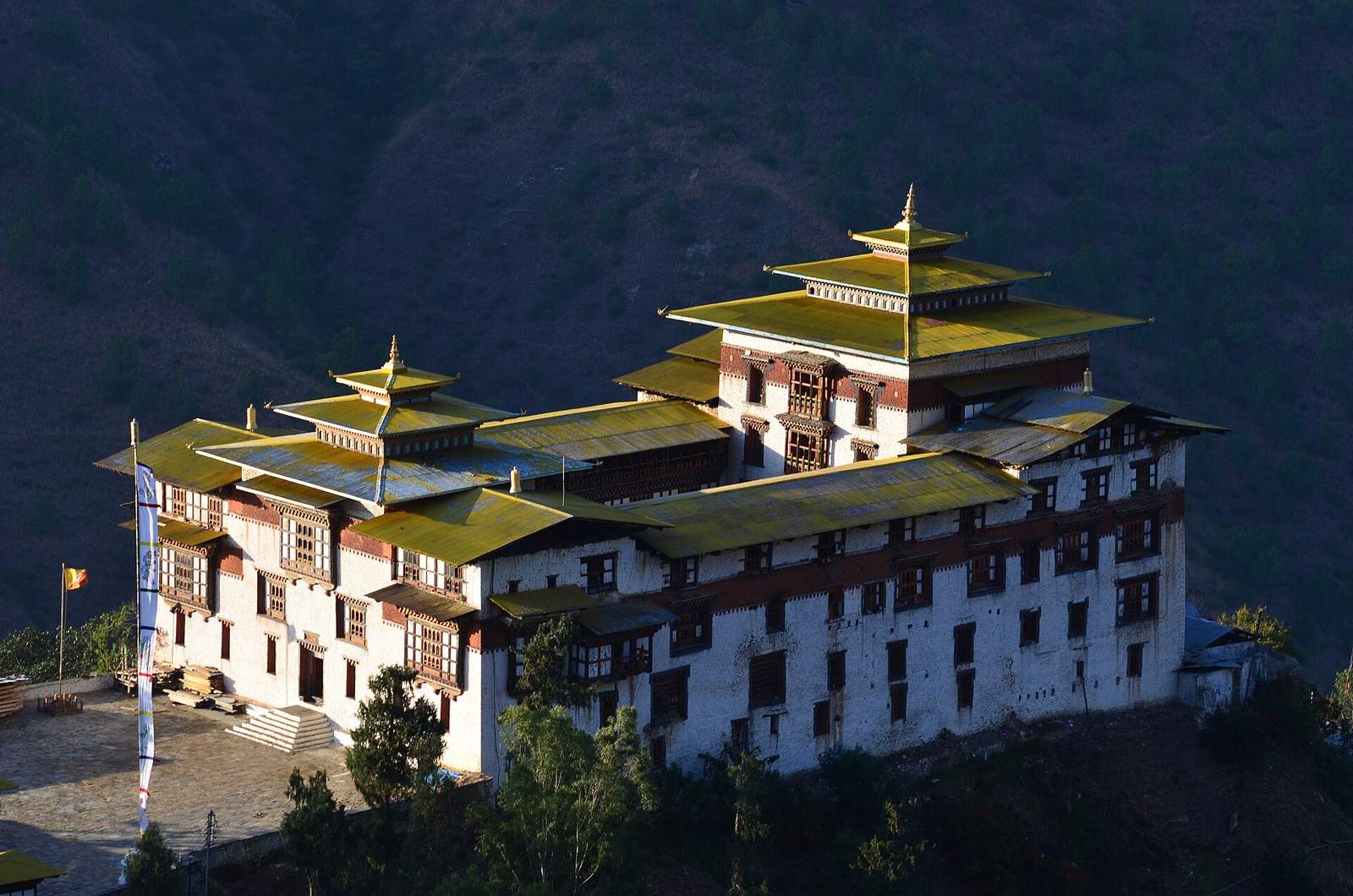
Featured photograph: Trashigang Dzong above the valley. Photo by Christopher J. Fynn via Wikimedia Commons, licensed under CC BY-SA 3.0.
Plan an eastern Bhutan journey: Request a tailored Trashigang itinerary. Share your arrival city, total nights, interest in dzongs, community visits or trekking, and tolerance for long drives. Ask us to itemize private vehicle and guide days, internal flight alternatives, SDF, visa, accommodation and cancellation terms.
Trashigang lies in the country’s east, where travel distances and road time make a short detour from Paro or Thimphu impractical. The district has a wide elevation range and includes the Dangme Chhu valley, Sakteng Wildlife Sanctuary and the semi-nomadic communities of Merak and Sakteng. The town is a regional hub rather than a single attraction: use it to connect a group of eastern cultural and landscape stops.
| Stop | Why include it | Planning note |
|---|---|---|
| Trashigang Dzong | Historic religious and administrative fortress above the town. | Confirm visitor access and any restrictions because it remains an active religious/government site. |
| Gom Kora | A sacred site and pilgrimage stop on the eastern route. | Allow time for respectful visit; check festival or ceremony dates with a local guide. |
| Trashi Yangtse | A separate district route with cultural and craft interests. | Plan as a road excursion or onward route, not an assumed short walk from town. |
| Merak and Sakteng | Highland villages and Brokpa cultural landscape in the protected area. | Arrange local access, guide, accommodation and trail conditions in advance; respect community privacy. |
| Yonphula | Domestic air access that may shorten some journeys. | Weather can affect flight reliability; preserve a road fallback and buffer days. |
Three or four nights in the east gives more room to absorb long road transfers and visit a small number of places without rushing. A longer stay is needed if you plan a trek or community visit to Merak and Sakteng. When driving from western Bhutan, consider breaking the trip in central Bhutan rather than treating the route as a single continuous transfer. Build at least one flexible day around any flight connection or fixed international departure.
| Trip length in the east | Possible focus | Do not assume |
|---|---|---|
| 1–2 nights | Trashigang town, dzong access and one nearby cultural stop. | That this is enough for Merak/Sakteng and Trashi Yangtse as well. |
| 3–4 nights | Trashigang plus Gom Kora or Trashi Yangtse, with a flexible transfer day. | That road times are fixed; weather, road works and event traffic can change them. |
| 5+ nights | Add a carefully arranged Merak–Sakteng experience or slower east Bhutan route. | That protected-area access, village stays or a guide are available without prior arrangement. |
Bhutan’s tourism authority notes that domestic airports connect parts of the country, including Yonphula in the east, but weather can disrupt flights. Check the operating schedule close to travel and allow a buffer if connecting to an international flight. Road travel takes longer but can form part of a broader eastbound journey with cultural stops. The most practical choice depends on your total nights, road tolerance and the reliability of your onward connection.
Bhutan does not offer self-drive car rental to visitors according to its official travel guidance; travelers should arrange a licensed vehicle and driver through a tourism service provider or other approved local arrangement. Ask for realistic drive durations, planned meal and rest stops, luggage capacity and a contingency if a road or flight is delayed.
Dzongs combine religious and civic functions. Access may be limited to designated courtyards or visitor areas, particularly during ceremonies or administrative work. Wear modest clothing, follow photography signs, remove shoes where requested and avoid interrupting worship. A local guide can explain the distinction between a functioning religious complex, an historic structure and the areas open to visitors.
Gom Kora and other sacred places are not theme-park stops. Ask before photographing people, walk clockwise where locally indicated, and respect ritual objects and private areas. Festival dates follow the Bhutanese calendar and can shift against the Gregorian calendar, so verify the relevant year’s schedule before planning around a tshechu.
Merak and Sakteng are remote highland communities within the broader protected landscape. Trashigang district’s official site describes Sakteng as a semi-nomadic community in a remote eastern area. Arrange access through a Bhutan-licensed operator and confirm road conditions, overnight options, guide requirements, permits and whether community-hosted visits are available on your dates. Do not promise a cultural encounter or wildlife sighting; both depend on local consent, season and conditions.
Travel respectfully: ask before entering homes or photographing residents, purchase crafts directly when possible, follow local instructions and avoid presenting a community’s dress or traditions as a staged performance. A visit should be planned with local hosts rather than improvised as a drive-by stop.
Most international travelers need a visa and Sustainable Development Fee (SDF); the amount and any incentives depend on nationality, age, dates and current policy. Bhutan Travel currently lists the standard SDF and visa process, while separate rules can apply to Indian nationals and specific border-town stays. Check the official portal for the rate and eligibility for your exact trip before paying. Ask your tour quote to state whether SDF, visa fee, guide, vehicle, meals, accommodation and monument entry are included or billed separately.
You can travel by road across Bhutan or check domestic flights to Yonphula. Flights can be affected by weather; road travel takes substantially longer than the western circuit, so keep a buffer.
Allow at least three nights in the east for a comfortable town-and-nearby-sites plan. Add more time for Trashi Yangtse, Merak/Sakteng or trekking.
Arrange access, guide, transport, permits and accommodation in advance through an authorized Bhutan operator. Confirm local conditions and community-hosted options for your dates.
Access can depend on religious and administrative use. Ask your local guide or the district authority about current visitor areas and restrictions.
We can propose an eastern Bhutan itinerary subject to local operator and transport availability. Ask for a written breakdown of road or flight options, SDF/visa, guide, hotel, meals and contingency terms.
Official references checked 4 November 2026: Tourism Council of Bhutan: eastern district context, access and Yonphula; Trashigang Dzongkhag Administration: Sakteng community profile; Trashigang Dzongkhag Administration: heritage and culture; Bhutan Travel: entry, visa and in-country transport guidance; Bhutan Travel: current SDF announcements; photo Wikimedia Commons original and CC BY-SA 3.0 license.
Editorial method: This guide is desk researched using government and official tourism sources. It is not a first-hand report from eastern Bhutan. Flights, roads, access permissions, SDF rules, festival dates and services can change; reconfirm them with the official tourism portal and local operator before booking.
“A private tailor-made journey in Trashigang allows you to explore at your own unhurried pace, with private transfers and local guides revealing cultural layers that standard tours overlook.”
— Emily, Bhutan Destination Specialist at My Way Travel
Explore key landmarks and points of interest across Trashigang
Call our direct travel designer desk or request your complimentary bespoke proposal.


The World On Your Terms reveals what awaits when you explore the globe with our specialists. Covering six continents, this volume features handpicked routes, insider tips, and signature experiences.
Request Your Copy
Why journey with us
One expert owns your journey from first sketch to final boarding pass.
Closed doors open quietly: ateliers, cellars, private homes, museums after dark.
A real voice at 3 a.m. in any time zone, whatever the question.
Registered in New York, with every cost itemised in your quote before you commit.
Begin
Tell us how you dream of travelling. Within 24 business hours, an in-country specialist will curate the first sketch of your route — bespoke ideas first, commitment never.
Planning team Mon–Sat 8am–8pm EST · 24/7 emergency line while you travel · New York registered